


Myofibrillar and Mitochondrial Protein Synthesis Rates Do Not Differ in Young Men Following the Ingestion of Carbohydrate with Milk Protein, Whey, or Micellar Casein after Concurrent Resistance- and Endurance-Type Exercise
- PMID: 30698725
- PMCID: PMC6561606
- DOI: 10.1093/jn/nxy244
Myofibrillar and Mitochondrial Protein Synthesis Rates Do Not Differ in Young Men Following the Ingestion of Carbohydrate with Milk Protein, Whey, or Micellar Casein after Concurrent Resistance- and Endurance-Type Exercise
Erratum in
-
Erratum.J Nutr. 2019 Jun 1;149(6):1097. doi: 10.1093/jn/nxz027. J Nutr. 2019. PMID: 31149706 Free PMC article. No abstract available.
Abstract
Background: Whey and micellar casein are high-quality dairy proteins that can stimulate postprandial muscle protein synthesis rates. How whey and casein compare with milk protein in their capacity to stimulate postprandial myofibrillar (MyoPS) and mitochondrial (MitoPS) protein synthesis rates during postexercise recovery is currently unknown.
Objective: The objective of this study was to compare postprandial MyoPS and MitoPS rates after protein-carbohydrate co-ingestion with milk protein, whey, or micellar casein during recovery from a single bout of concurrent resistance- and endurance-type exercise in young healthy men.
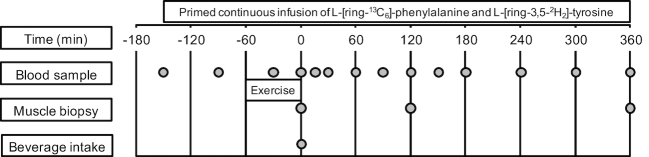
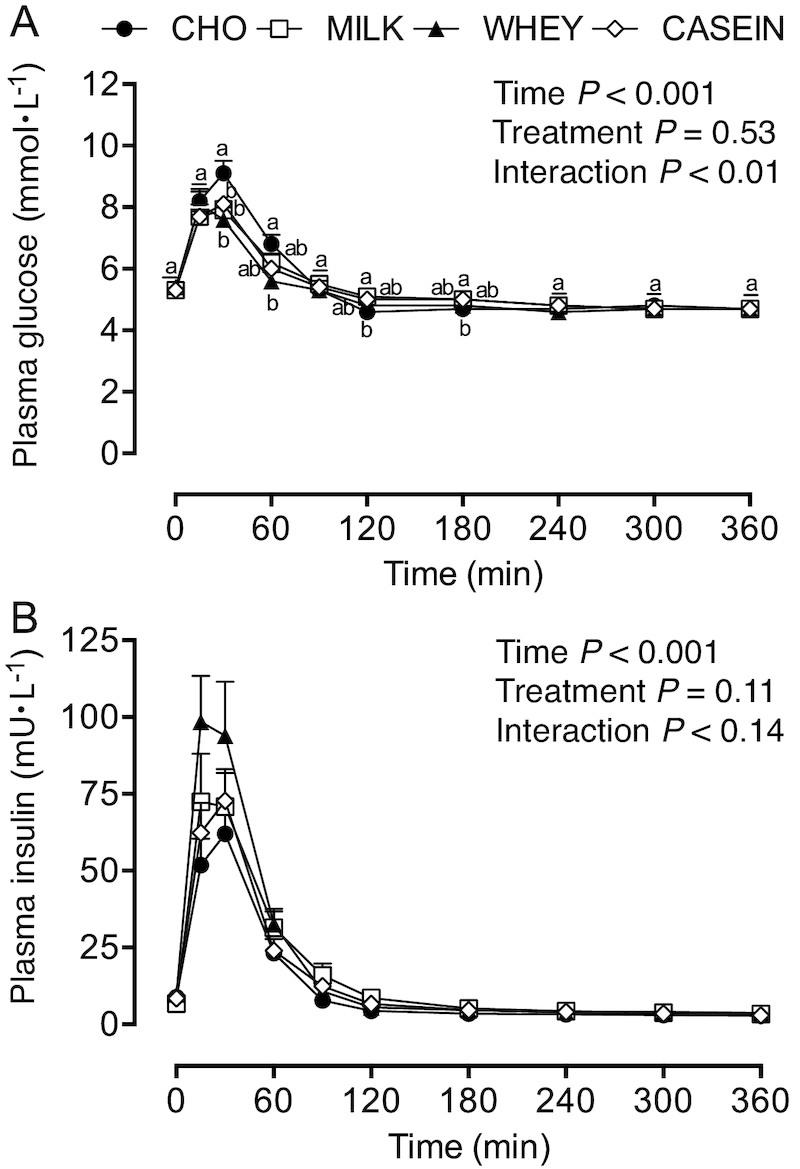
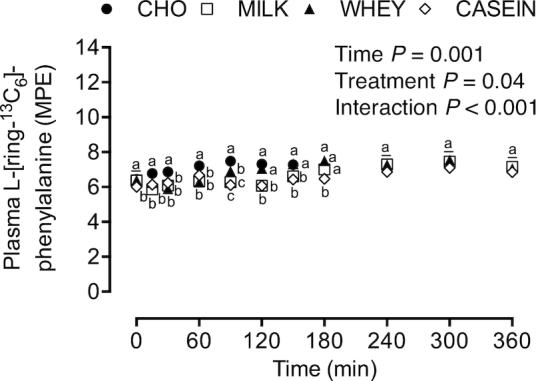
Methods: In a randomized, double-blind, parallel-group design, 48 healthy, young, recreationally active men (mean ± SEM age: 23 ± 0.3 y) received a primed continuous infusion of L-[ring-13C6]-phenylalanine and L-[ring-3,5-2H2]-tyrosine and ingested 45 g carbohydrate with 0 g protein (CHO), 20 g milk protein (MILK), 20 g whey protein (WHEY), or 20 g micellar casein protein (CASEIN) after a sequential bout of resistance- and endurance-type exercise (i.e., concurrent exercise). Blood and muscle biopsies were collected over 360 min during recovery from exercise to assess MyoPS and MitoPS rates and signaling through mammalian target of rapamycin complex 1 (mTORC1).
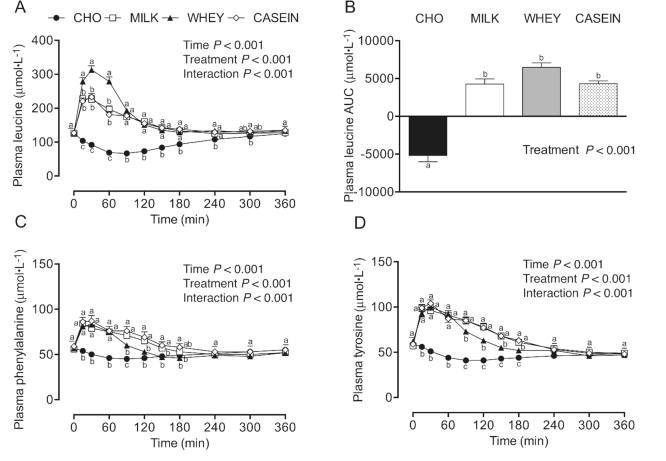
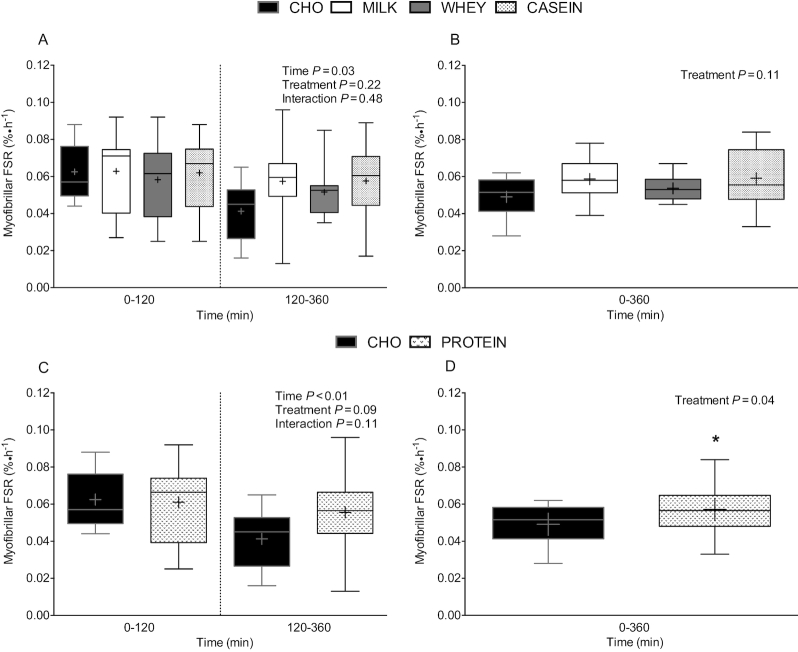
Results: Despite temporal differences in postprandial plasma leucine concentrations between treatments (P < 0.001), MyoPS rates over 360 min of recovery did not differ between treatments (CHO: 0.049% ± 0.003%/h; MILK: 0.059% ± 0.003%/h; WHEY: 0.054% ± 0.002%/h; CASEIN: 0.059% ± 0.005%/h; P = 0.11). When MILK, WHEY, and CASEIN were pooled into a single group (PROTEIN), protein co-ingestion resulted in greater MyoPS rates compared with CHO (PROTEIN: 0.057% ± 0.002%/h; CHO: 0.049% ± 0.003%/h; P = 0.04). MitoPS rates and signaling through the mTORC1 pathway were similar between treatments.
Conclusion: MyoPS and MitoPS rates do not differ after co-ingestion of either milk protein, whey protein, or micellar casein protein with carbohydrate during recovery from a single bout of concurrent resistance- and endurance-type exercise in recreationally active young men. Co-ingestion of protein with carbohydrate results in greater MyoPS, but not MitoPS rates, when compared with the ingestion of carbohydrate only during recovery from concurrent exercise. This trial was registered at Nederlands Trial Register: NTR5098.
Keywords: dietary protein; milk; whey; micellar casein; concurrent exercise; muscle protein synthesis; young men; carbohydrate.
© 2019 American Society for Nutrition.
Figures


References
-
- Bennet WM, Connacher AA, Scrimgeour CM, Smith K, Rennie MJ. Increase in anterior tibialis muscle protein synthesis in healthy man during mixed amino acid infusion: studies of incorporation of [1-13C]leucine. Clin Sci (Lond). 1989;76:447–54. - PubMed
-
- Rennie MJ, Edwards RH, Halliday D, Matthews DE, Wolman SL, Millward DJ. Muscle protein synthesis measured by stable isotope techniques in man: the effects of feeding and fasting. Clin Sci (Lond). 1982;63:519–23. - PubMed
-
- Moore DR, Robinson MJ, Fry JL, Tang JE, Glover EI, Wilkinson SB, Prior T, Tarnopolsky MA, Phillips SM. Ingested protein dose response of muscle and albumin protein synthesis after resistance exercise in young men. Am J Clin Nutr. 2009;89:161–8. - PubMed
-
- Cuthbertson D, Smith K, Babraj J, Leese G, Waddell T, Atherton P, Wackerhage H, Taylor PM, Rennie MJ. Anabolic signaling deficits underlie amino acid resistance of wasting, aging muscle. FASEB J. 2005;19:422–4. - PubMed
-
- Dickinson JM, Fry CS, Drummond MJ, Gundermann DM, Walker DK, Glynn EL, Timmerman KL, Dhanani S, Volpi E, Rasmussen BB. Mammalian target of rapamycin complex 1 activation is required for the stimulation of human skeletal muscle protein synthesis by essential amino acids. J Nutr. 2011;141:856–62. - PMC - PubMed
Publication types
MeSH terms
Substances
LinkOut - more resources
Full Text Sources
Medical
Miscellaneous
