


Sirtuin 6 overexpression relieves sepsis-induced acute kidney injury by promoting autophagy
- PMID: 30700227
- PMCID: PMC6422466
- DOI: 10.1080/15384101.2019.1568746
Sirtuin 6 overexpression relieves sepsis-induced acute kidney injury by promoting autophagy
Abstract
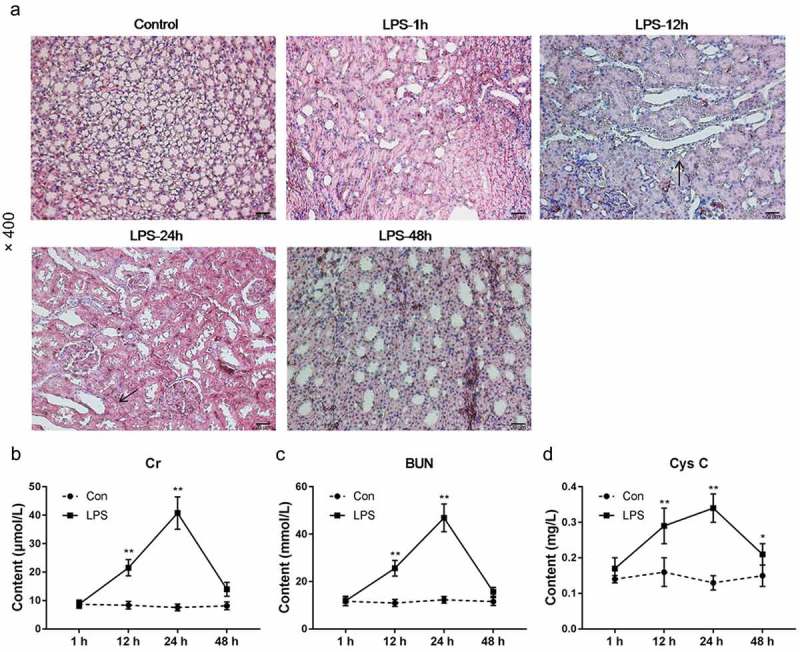
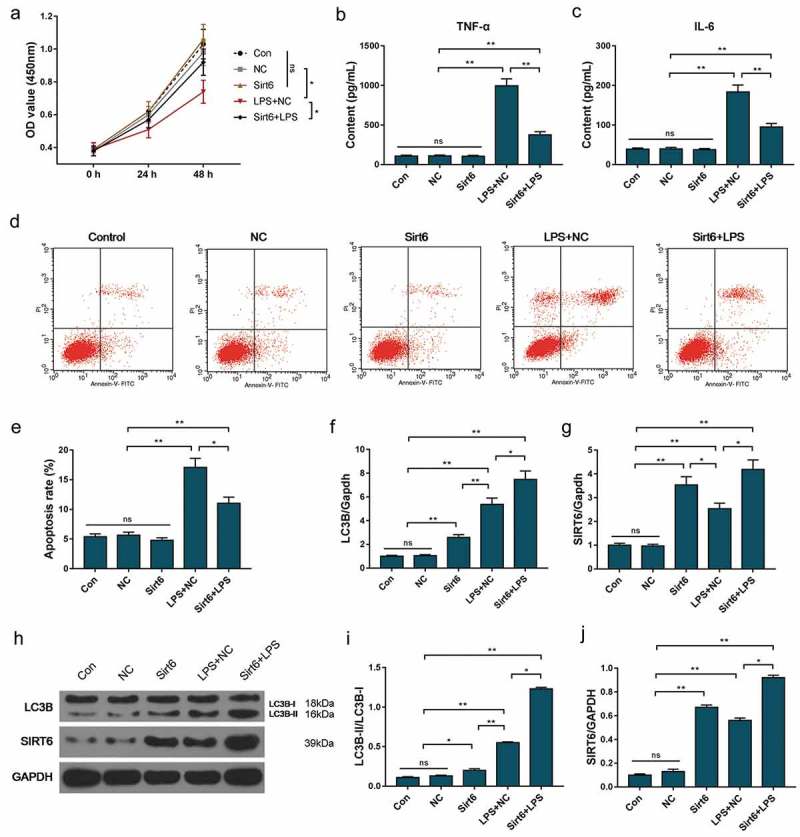
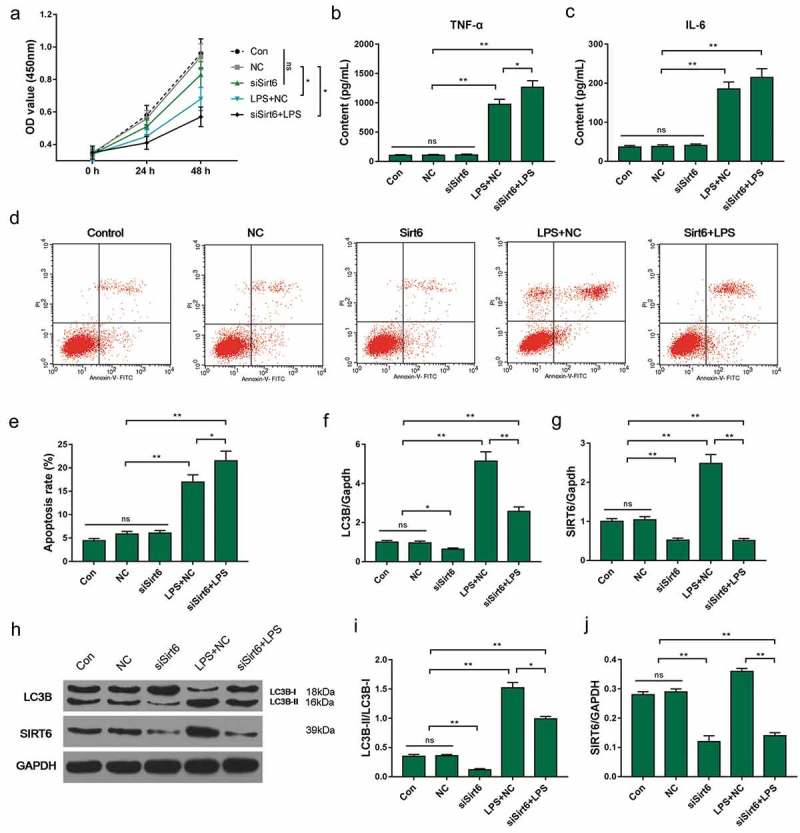
Sirtuin 6 (SIRT6) has the function of regulating autophagy. The aim of this study was to investigate the mechanism through which SIRT6 relieved acute kidney injury (AKI) caused by sepsis. The AKI model was established with lipopolysaccharides (LPS) using mice. Hematoxylin-eosin (HE) staining and streptavidin-perosidase (SP) staining was used to observe kidney tissue and test SIRT6 and LC3B proteins in kidney. Enzyme-linked immunosorbent assay (ELISA) was performed to detected the tumor necrosis factor-α (TNF-α) and interleukin-6 (IL-6) concentrations. Cell counting kit-8 (CCK-8) assay and flow cytometry were carried out to test the cell viability and apoptosis rate respectively. Protein and mRNA were determined by Western blot and quantitative real-time polymerase chain reaction (qRT-PCR). AKI induced by LPS had self-repairing ability. At 12 h after modeling, the expression levels of TNF-α, IL-6, SIRT6 and LC3B-II/LC3B-I were first significantly increased and were then significantly decreased at 48 h after modeling. LPS inhibited the growth of HK-2 cells and promoted the expressions of TNF-α, IL-6, SIRT6 and LC3B. Overexpression of SIRT6 down-regulated the secretion of TNF-α and IL-6 induced by LPS. SIRT6 overexpression inhibited apoptosis induced by LPS and promoted autophagy in HK-2 cells. Silencing of the SIRT6 gene not only promoted the secretion of TNF-α and IL-6 by HK-2 cells, but also promoted apoptosis and reduced autophagy. LPS up-regulated the expression of SIRT6 gene in HK-2 cells. Overexpression of the SIRT6 gene could inhibit apoptosis and induce autophagy, which might be involved in repairing kidney damage caused by LPS.
Keywords: Sirtuin 6; acute kidney injury; apoptosis; autophagy.
Figures


References
-
- Dellinger RP, Levy MM, Rhodes A, et al. Surviving sepsis campaign: international guidelines for management of severe sepsis and septic shock: 2012. Crit Care Med. 2013. February;41(2):580–637. PubMed PMID: 23353941; eng. - PubMed
-
- Rhodes A, Evans LE, Alhazzani W, et al. Surviving Sepsis campaign: international guidelines for management of sepsis and septic shock: 2016. Crit Care Med. 2017. March;45(3):486–552. PubMed PMID: 28098591; eng. - PubMed
-
- Sossdorf M, Otto GP, Menge K, et al. Potential effect of physiotherapeutic treatment on mortality rate in patients with severe sepsis and septic shock: a retrospective cohort analysis. J Crit Care. 2013. December;28(6):954–958. PubMed PMID: 23958242; eng. - PubMed
-
- Poukkanen M, Wilkman E, Vaara ST, et al. Hemodynamic variables and progression of acute kidney injury in critically ill patients with severe sepsis: data from the prospective observational FINNAKI study. Crit Care. 2013. December 13;17(6):R295 PubMed PMID: 24330815; PubMed Central PMCID: PMCPMC4056430. eng. - PMC - PubMed
Publication types
MeSH terms
Substances
LinkOut - more resources
Full Text Sources
Medical
