


Myocardial triglycerides in cardiac amyloidosis assessed by proton cardiovascular magnetic resonance spectroscopy
- PMID: 30700314
- PMCID: PMC6354424
- DOI: 10.1186/s12968-019-0519-6
Myocardial triglycerides in cardiac amyloidosis assessed by proton cardiovascular magnetic resonance spectroscopy
Abstract
Background: Cardiac involvement of amyloidosis leads to left-ventricular (LV) wall thickening with progressive heart failure requiring rehospitalization. Cardiovascular magnetic resonance (CMR) is a valuable tool to non-invasively assess myocardial thickening as well as structural changes. Proton CMR spectroscopy (1H-CMRS) additionally allows assessing metabolites including triglycerides (TG) and total creatine (CR). However, opposing results exist regarding utilization of these metabolites in LV hypertrophy or thickening. Therefore, the aim of this study was to measure metabolic alterations using 1H-CMRS in a group of patients with thickened myocardium caused by cardiac amyloidosis.
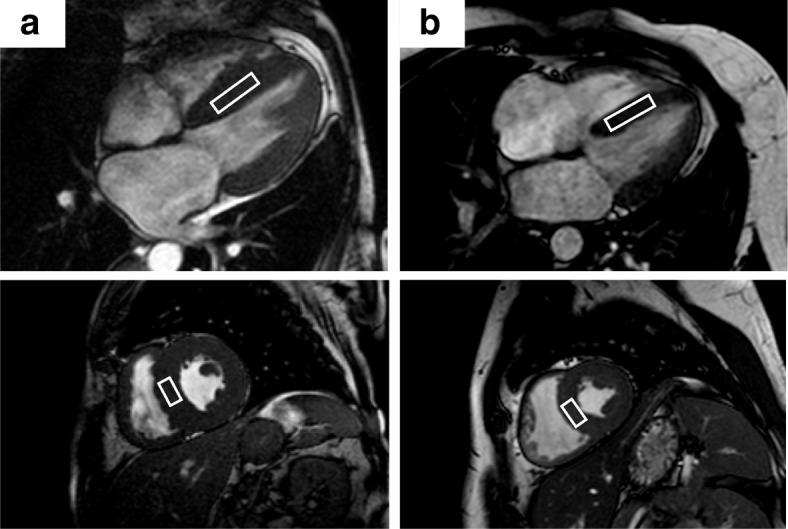
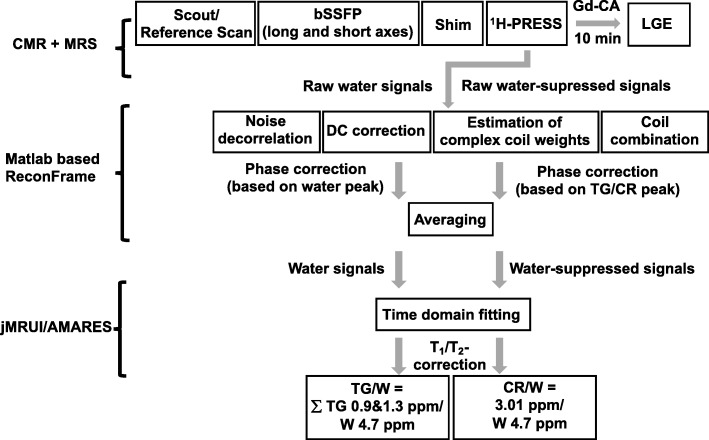
Methods: 1H-CMRS was performed on a 1.5 T system (Achieva, Philips Healthcare, Best, The Netherlands) using a 5-channel receive coil in 11 patients with cardiac amyloidosis (60.5 ± 11.4 years, 8 males) and 11 age- and gender-matched controls (63.2 ± 8.9 years, 8 males). After cardiac morphology and function assessment, proton spectra from the interventricular septum (IVS) were acquired using a double-triggered PRESS sequence. Post-processing was performed using a customized reconstruction pipeline based on ReconFrame (GyroTools LLC, Zurich, Switzerland). Spectra were fitted in jMRUI/AMARES and the ratios of triglyceride-to-water (TG/W) and total creatine-to-water (CR/W) were calculated.
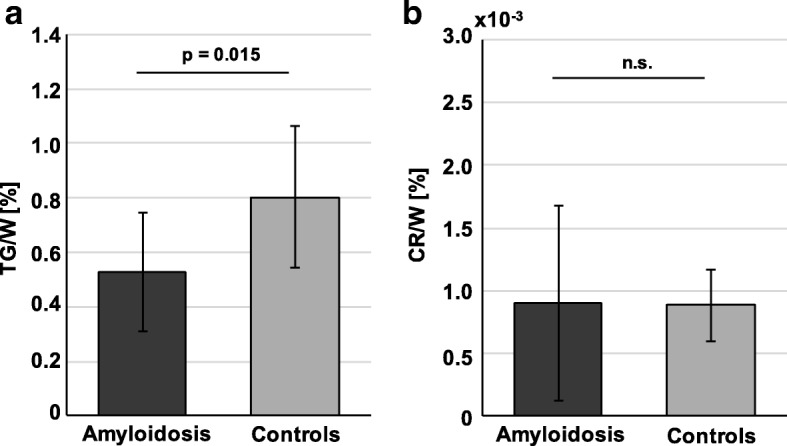
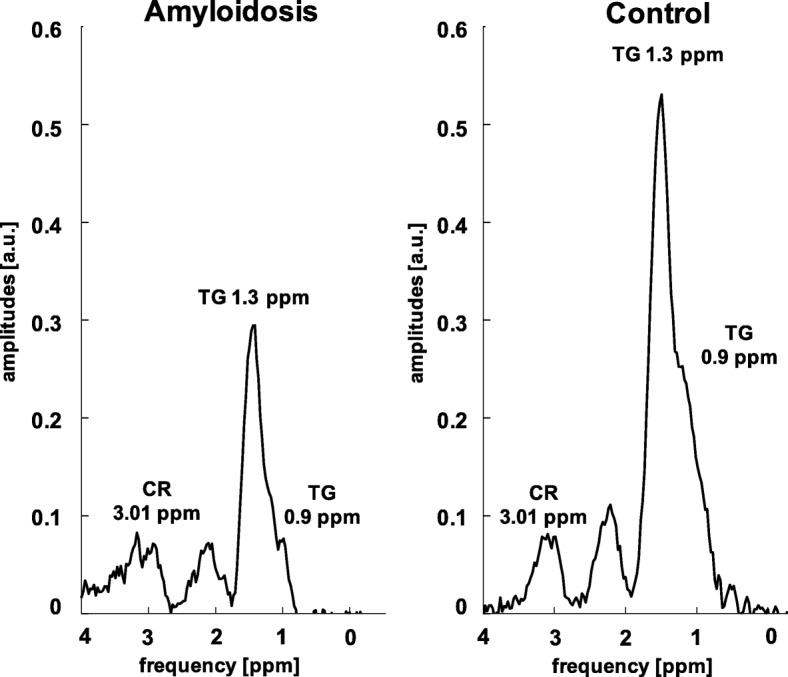
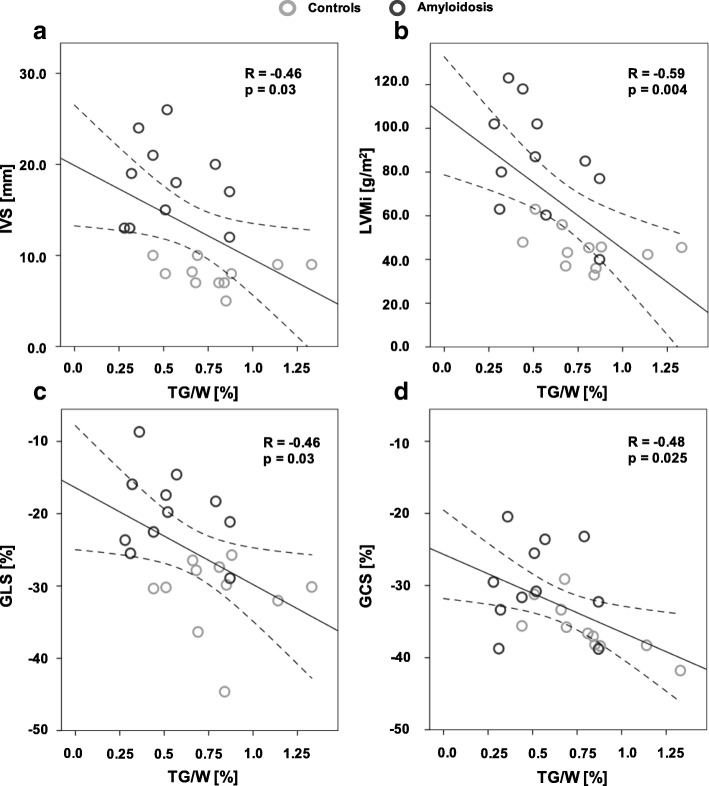
Results: Besides an increased LV mass and a thickened IVS concomitant to the disease characteristics, patients with cardiac amyloidosis presented with decreased global longitudinal (GLS) and circumferential (GCS) strain. LV ejection fraction was preserved relative to controls (60.0 ± 13.2 vs. 66.1 ± 4.3%, p = 0.17). Myocardial TG/W ratios were significantly decreased compared to controls (0.53 ± 0.23 vs. 0.80 ± 0.26%, p = 0.015). CR/W ratios did not show a difference between both groups, but a higher standard deviation in patients with cardiac amyloidosis was observed. Pearson correlation revealed a negative association between elevated LV mass and TG/W (R = - 0.59, p = 0.004) as well as GCS (R = - 0.48, p = 0.025).
Conclusions: A decrease in myocardial TG/W can be detected in patients with cardiac amyloidosis alongside impaired cardiac function with an association to the degree of myocardial thickening. Accordingly, 1H-CMRS may provide an additional diagnostic tool to gauge progression of cardiac amyloidosis along with standard imaging sequences.
Trial registration: EK 2013-0132.
Keywords: Cardiac amyloidosis; Cardiovascular magnetic resonance; Left-ventricular thickening; Myocardial metabolism; Proton spectroscopy.
Conflict of interest statement
Ethics approval and consent to participate
The study design was approved by the local ethics committee (Kantonale Ethikkommission Zürich) and was conducted according to the Declaration of Helsinki.
Consent for publication
Written informed consent was obtained from all study participants.
Competing interests
All authors declare no competing interests.
Publisher’s Note
Springer Nature remains neutral with regard to jurisdictional claims in published maps and institutional affiliations.
Figures
References
-
- Gillmore JD, Maurer MS, Falk RH, Merlini G, Damy T, Dispenzieri A, et al. Nonbiopsy diagnosis of Cardiac transthyretin Amyloidosis. Circulation. 2016;133:2404–12. - PubMed
Publication types
MeSH terms
Substances
LinkOut - more resources
Full Text Sources
Medical
Research Materials
Miscellaneous
