


Rheumatoid factor as predictor of response to treatment with anti-TNF alpha drugs in patients with rheumatoid arthritis: Results of a cohort study
- PMID: 30702571
- PMCID: PMC6380754
- DOI: 10.1097/MD.0000000000014181
Rheumatoid factor as predictor of response to treatment with anti-TNF alpha drugs in patients with rheumatoid arthritis: Results of a cohort study
Abstract
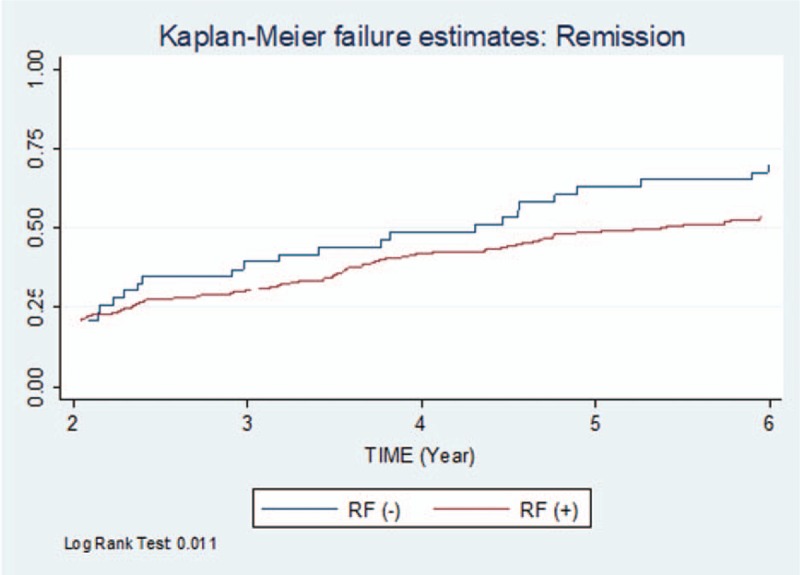
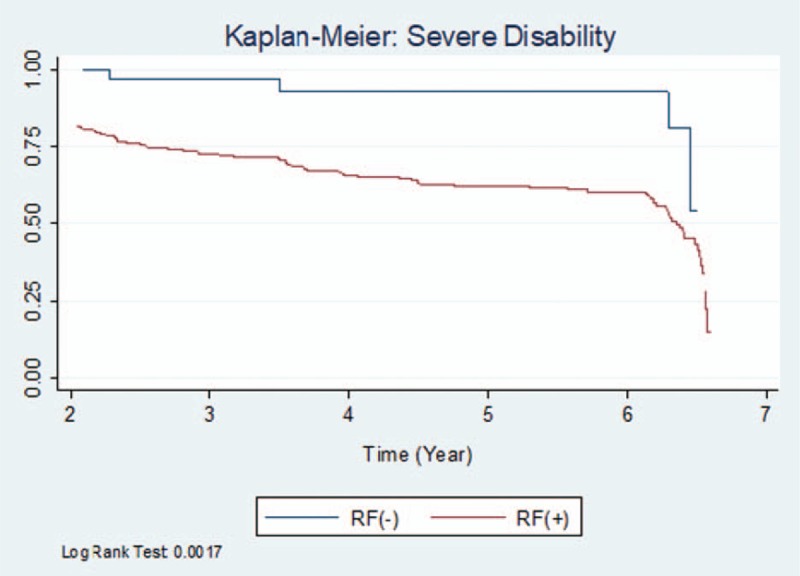
We determined whether rheumatoid factor (RF) and anti-cyclic citrullinated peptide antibody (ACPA) can predict remission or severe disability in rheumatoid arthritis (RA) patients treated with anti-tumor necrosis factor (TNF) alpha drugs.We performed a cohort study based on the clinical data from a referral center for the treatment of RA in Bogotá, Colombia, were included patients aged ≥18 years with diagnosis of RA with an active disease and for whom a treatment scheme was begun with anti-TNF alpha medication, with a minimum follow-up time of 12 months. Disease activity of Rheumatoid Arthritis was assessed through measurement of RF, ACPA, disease activity score (DAS28), and health assessment questionnaire (HAQ). We calculated the incidence rates (IRs) for remission and severe disability. We also calculated the incidence rate ratio (IRR) for each outcome by adjusting for possible confounders using the Poisson regression method. The hypothesis was tested with a P value of <.05. Statistical analysis was performed in Stata 15.We included 400 patients receiving an anti-TNF alpha agent. Median age was 60 years, and 322 patients were women (80.5%). RF was positive in 357 patients (89%), ACPA in 348 patients (87%), and co-positivity in 324 patients (81%). Median follow-up was 41 months (range, 12-79 months). The IR for remission was 23 per 100 person-years in RF-negative patients and 16 per 100 person-years in RF-positive patients. The adjusted IRR (age sex, treatment, and ACPA) was 1.51 (95%CI, 1.05-2.18). The IR for severe disability was 10.8 per 100 person-years in the RF-positive cohort and 2.3 per 100 person-years in the RF-negative cohort. The IRR adjusted for these factors was 4.37 (95%CI, 1.6-12). Co-positivity had a similar behavior to RF. No differences were recorded in the rates of remission or disability in ACPA-positive and ACPA-negative patients.Our findings suggest that remission is less frequent and severe disability more frequent in RF-positive patients treated with anti-TNF alpha agents than in RF-negative patients.
Conflict of interest statement
The authors have no conflicts of interest to disclose.
Figures
References
-
- Lee DM, Weinblatt ME. Rheumatoid arthritis. Lancet 2001;358:903–11. - PubMed
-
- Boonen A, Severens JL. The burden of illness of rheumatoid arthritis. Clin Rheumatol 2011;30suppl 1:S3–8. - PubMed
-
- Widdifield J, Paterson JM, Bernatsky S, et al. The epidemiology of rheumatoid arthritis in Ontario, Canada. Arthritis Rheumatol 2014;66:786–93. - PubMed
Publication types
MeSH terms
Substances
LinkOut - more resources
Full Text Sources
Other Literature Sources
Medical
