


Cardiorenal and endocrine effects of synthetic canine BNP1-32 in dogs with compensated congestive heart failure caused by myxomatous mitral valve disease
- PMID: 30703246
- PMCID: PMC6430907
- DOI: 10.1111/jvim.15416
Cardiorenal and endocrine effects of synthetic canine BNP1-32 in dogs with compensated congestive heart failure caused by myxomatous mitral valve disease
Abstract
Background: The effects of synthetic brain natriuretic peptide (BNP1-32) on cardiorenal and renin angiotensin aldosterone system in dogs with naturally occurring congestive heart failure (CHF) are unknown.
Objectives: To evaluate the cardiorenal and endocrine effects of SC administered synthetic canine BNP1-32, with or without furosemide, in dogs with CHF caused by myxomatous mitral valve disease (MMVD).
Animals: Seven client-owned male dogs with compensated American College of Veterinary Internal Medicine stage C CHF caused by MMVD on chronic treatment with furosemide, benazepril, and pimobendan.
Methods: A single-dose, crossover, pilot study. Each dog received a dose of BNP1-32 (5 μg/kg), furosemide (2 mg/kg), and both BNP1-32/furosemide (5 μg/kg and 2 mg/kg, respectively) SC with a 2-week washout period among each treatment. Between- and within-treatment effects were evaluated using linear mixed modeling with restricted maximum likelihood estimation and evaluation of least square differences.
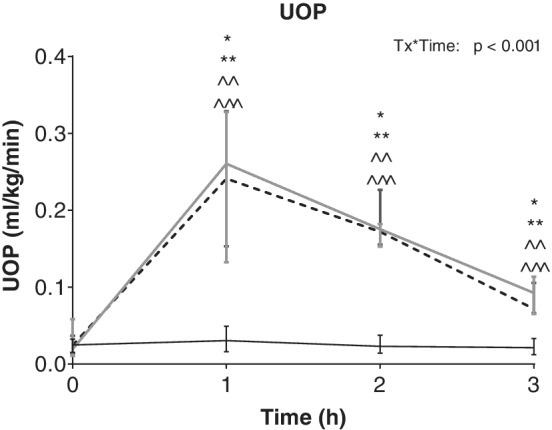
Results: Rapid absorption of BNP1-32 and a corresponding rise in urinary cyclic guanosine monophosphate excretion was observed at 1-2 hours after any treatment containing BNP1-32 (P < .05). However, BNP1-32 did not influence measured cardiorenal variables. Plasma aldosterone concentrations were below quantifiable levels in majority of the samples.
Conclusions and clinical importance: No beneficial cardiorenal effects were detected. It is possible that dogs with chronic CHF have a reduction in natriuretic peptide responsiveness.
Keywords: RAAS; aldosterone; brain natriuretic peptide; cGMP; canine.
© 2019 The Authors. Journal of Veterinary Internal Medicine published by Wiley Periodicals, Inc. on behalf of the American College of Veterinary Internal Medicine.
Conflict of interest statement
Authors declare no conflict of interest.
Figures



References
-
- Borgarelli M, Buchanan JW. Historical review, epidemiology and natural history of degenerative mitral valve disease. J Vet Cardiol. 2012;14:93‐101. - PubMed
-
- Atkins CE, Bonagura JD, Ettinger SJ, et al. Guidelines for the diagnosis and treatment of canine chronic valvular heart disease. J Vet Intern Med. 2009;23:1142‐1150. - PubMed
-
- Häggström J, Boswood A, O'Grady MR, et al. Effect of pimobendan or benazepril hydrochloride on survival times in dogs with congestive heart failure caused by naturally occurring myxomatous mitral valve disease: the QUEST study. J Vet Intern Med. 2008;22:1124‐1135. - PubMed
-
- Lombard CW, Jöns O, Bussadori CM. Clinical efficacy of pimobendan versus benazepril for the treatment of acquired atrioventricular valvular disease in dogs. J Am Anim Hosp Assoc. 2006;42:249‐261. - PubMed
MeSH terms
Substances
Grants and funding
LinkOut - more resources
Full Text Sources
Medical
