


Review
doi: 10.3390/ijms20030590.
Cardiotonic Steroids-A Possible Link Between High-Salt Diet and Organ Damage
Affiliations
- PMID: 30704040
- PMCID: PMC6386955
- DOI: 10.3390/ijms20030590
Item in Clipboard
Review
Cardiotonic Steroids-A Possible Link Between High-Salt Diet and Organ Damage
Int J Mol Sci.
.
Abstract
High dietary salt intake has been listed among the top ten risk factors for disability-adjusted life years. We discuss the role of endogenous cardiotonic steroids in mediating the dietary salt-induced hypertension and organ damage.
Keywords: fibrosis; hypertension; marinobufagenin; ouabain; salt.
Conflict of interest statement
The authors declare no conflict of interest.
Figures
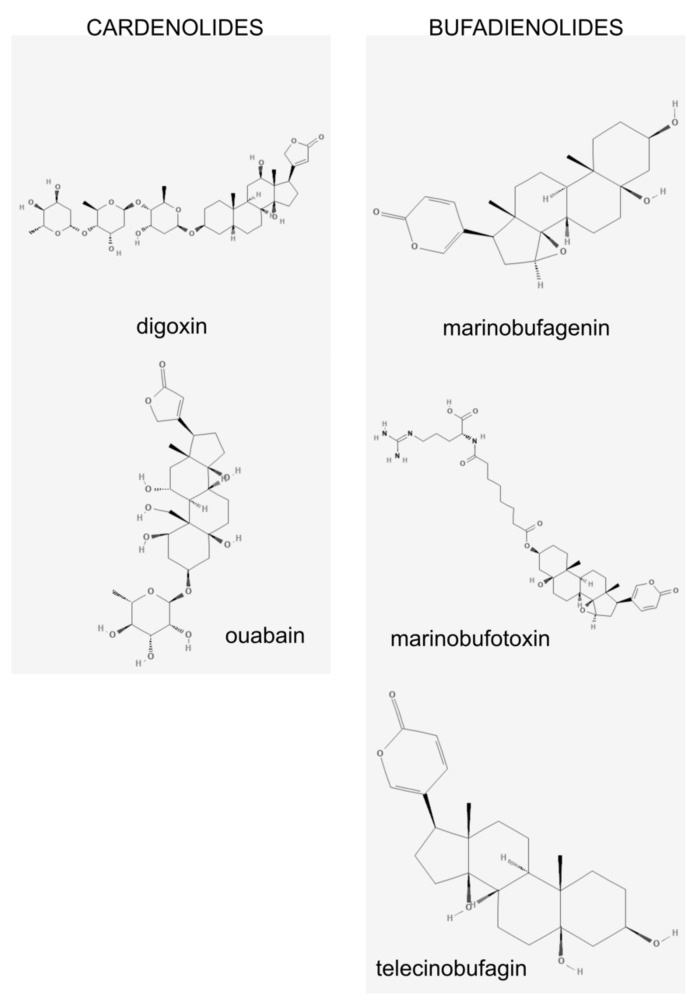
Chemical structure of cardiotonic steroids.
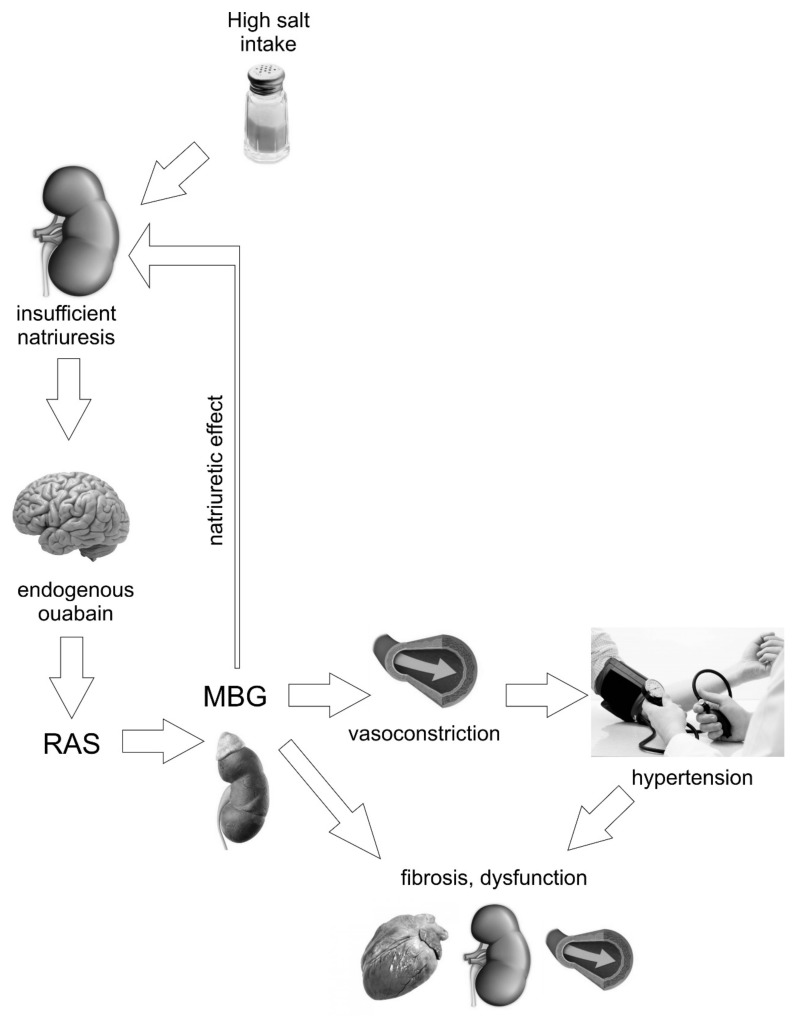
A possible mechanism of salt-induced hypertension and organ damage in humans. NaCl loading stimulates brain endogenous ouabain. Endogenous ouabain in the brain activates the local renin-angiotensin system (RAS) as well as sympathetic nervous system (SNS). These actions stimulate renin-angiotensin system in adrenal cortex and release of adrenocortical marinobufagenin (MBG). MBG is secreted in order to facilitate natriuresis, but at the same time MBG induces vasoconstriction which increases blood pressure and promotes fibrosis leading to permanent heart, kidney, and arterial damage and dysfunction.
References
-
- GBD 2015 Risk Factors Collaborators Global, regional, and national comparative risk assessment of 79 behavioural, environmental and occupational, and metabolic risks or clusters of risks, 1990-2015: A systematic analysis for the Global Burden of Disease Study 2015. Lancet. 2016;388:1659–1724. doi: 10.1016/S0140-6736(16)31679-8. - DOI - PMC - PubMed
-
- Appel L.J., Moore T.J., Obarzanek E., Vollmer W.M., Svetkey L.P., Sacks F.M., Bray G.A., Vogt T.M., Cutler J.A., Windhauser M.M., et al. A clinical trial of the effects of dietary patterns on blood pressure. DASH Collaborative Research Group. N. Engl. J. Med. 1997;336:1117–1124. doi: 10.1056/NEJM199704173361601. - DOI - PubMed
Publication types
MeSH terms
Substances
LinkOut - more resources
Full Text Sources
Medical
