


Cholesteryl Ester Transfer Protein Inhibition for Preventing Cardiovascular Events: JACC Review Topic of the Week
- PMID: 30704580
- PMCID: PMC6354546
- DOI: 10.1016/j.jacc.2018.10.072
Cholesteryl Ester Transfer Protein Inhibition for Preventing Cardiovascular Events: JACC Review Topic of the Week
Abstract
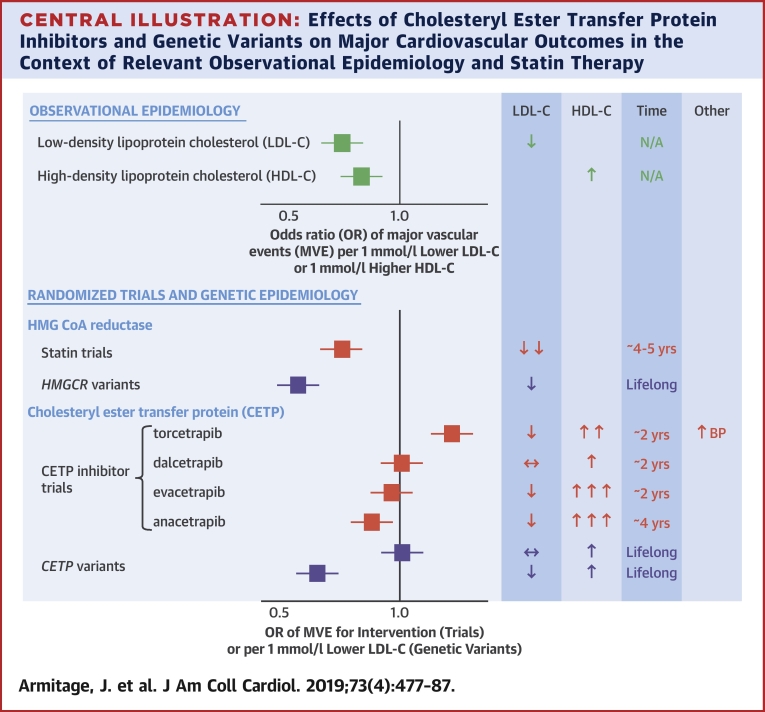
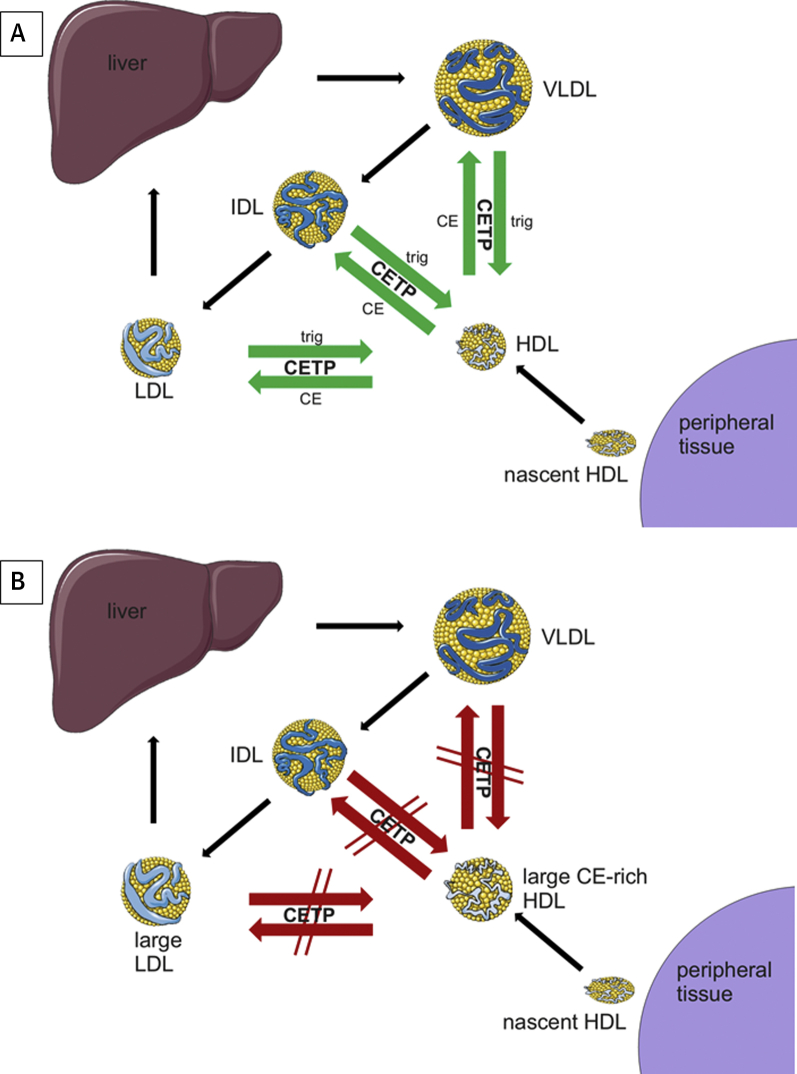
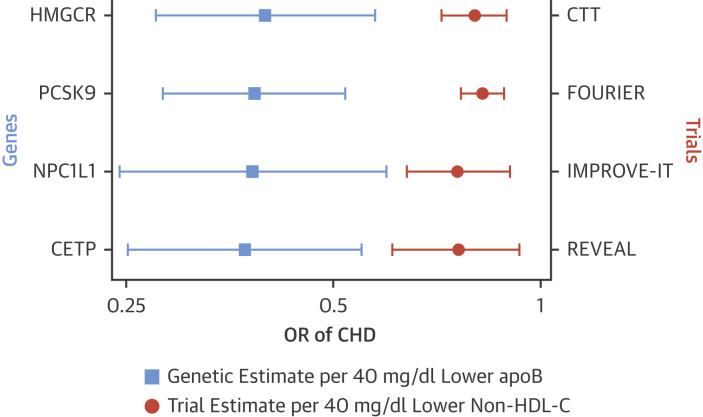
Cholesteryl ester transfer protein (CETP) facilitates exchange of triglycerides and cholesteryl ester between high-density lipoprotein (HDL) and apolipoprotein B100-containing lipoproteins. Evidence from genetic studies that variants in the CETP gene were associated with higher blood HDL cholesterol, lower low-density lipoprotein cholesterol, and lower risk of coronary heart disease suggested that pharmacological inhibition of CETP may be beneficial. To date, 4 CETP inhibitors have entered phase 3 cardiovascular outcome trials. Torcetrapib was withdrawn due to unanticipated off-target effects that increased risk of death, and major trials of dalcetrapib and evacetrapib were terminated early for futility. In the 30,000-patient REVEAL (Randomized Evaluation of the Effects of Anacetrapib through Lipid Modification) trial, anacetrapib doubled HDL cholesterol, reduced non-HDL cholesterol by 17 mg/dl (0.44 mmol/l), and reduced major vascular events by 9% over 4 years, but anaceptrapib was found to accumulate in adipose tissue, and regulatory approval is not being sought. Therefore, despite considerable initial promise, CETP inhibition provides insufficient cardiovascular benefit for routine use.
Keywords: CETP; CETP inhibitor; HDL cholesterol; LDL cholesterol; Mendelian randomization; cardiovascular disease; randomized trial.
Copyright © 2019 The Authors. Published by Elsevier Inc. All rights reserved.
Figures
References
-
- Inazu A., Brown M.L., Hesler C.B. Increased high-density lipoprotein levels caused by a common cholesteryl-ester transfer protein gene mutation. N Engl J Med. 1990;323:1234–1238. - PubMed
-
- Qiu X., Mistry A., Ammirati M.J. Crystal structure of cholesteryl ester transfer protein reveals a long tunnel and four bound lipid molecules. Nat Struct Mol Biol. 2007;14:106–113. - PubMed
-
- Lauer M.E., Graff-Meyer A., Rufer A.C. Cholesteryl ester transfer between lipoproteins does not require a ternary tunnel complex with CETP. J Struct Biol. 2016;194:191–198. - PubMed
Publication types
MeSH terms
Substances
Grants and funding
LinkOut - more resources
Full Text Sources
Other Literature Sources
