


Endonuclease and redox activities of human apurinic/apyrimidinic endonuclease 1 have distinctive and essential functions in IgA class switch recombination
- PMID: 30705092
- PMCID: PMC6442068
- DOI: 10.1074/jbc.RA118.006601
Endonuclease and redox activities of human apurinic/apyrimidinic endonuclease 1 have distinctive and essential functions in IgA class switch recombination
Abstract
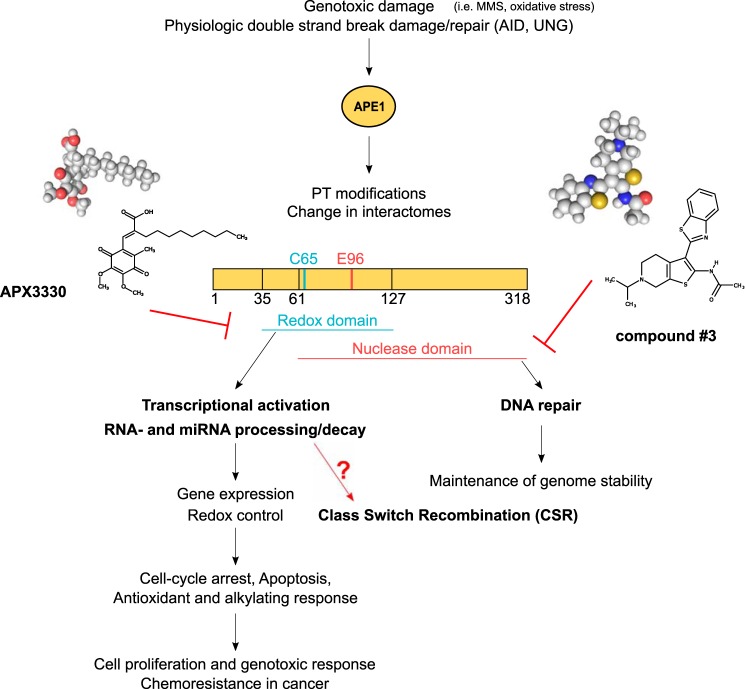
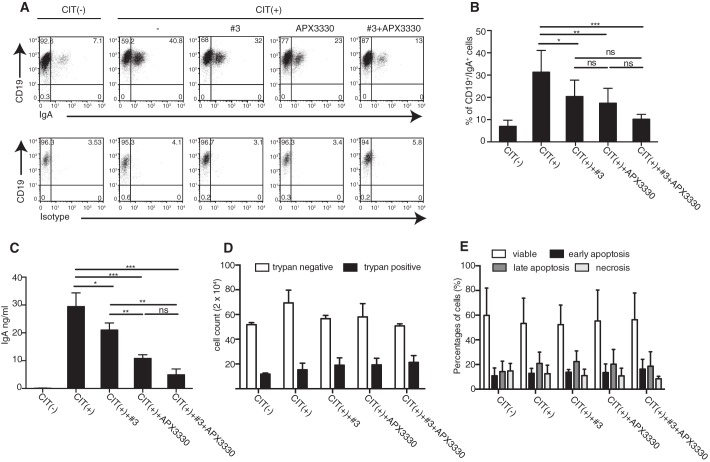
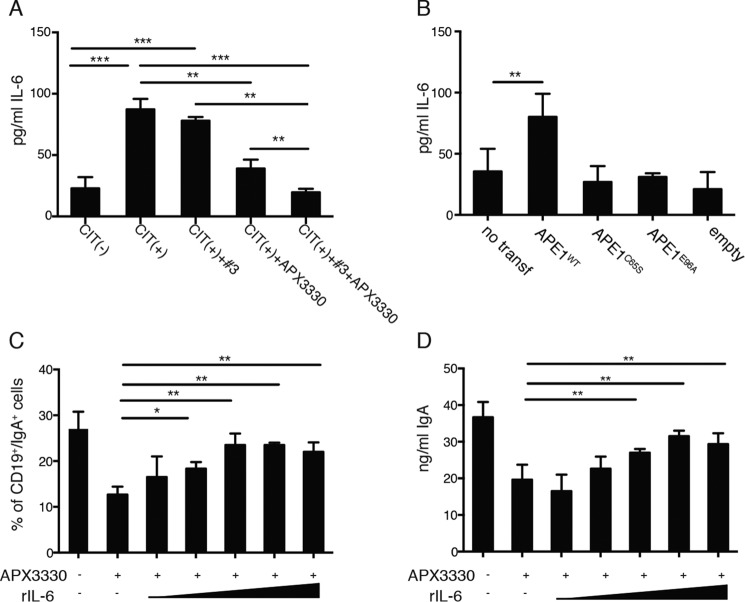
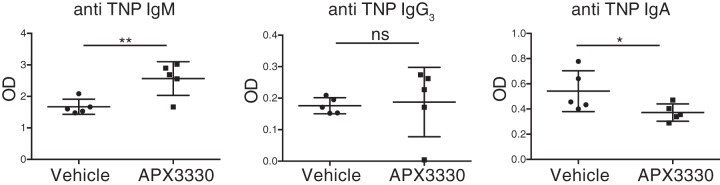
The base excision repair (BER) pathway is an important DNA repair pathway and is essential for immune responses. In fact, it regulates both the antigen-stimulated somatic hypermutation (SHM) process and plays a central function in the process of class switch recombination (CSR). For both processes, a central role for apurinic/apyrimidinic endonuclease 1 (APE1) has been demonstrated. APE1 acts also as a master regulator of gene expression through its redox activity. APE1's redox activity stimulates the DNA-binding activity of several transcription factors, including NF-κB and a few others involved in inflammation and in immune responses. Therefore, it is possible that APE1 has a role in regulating the CSR through its function as a redox coactivator. The present study was undertaken to address this question. Using the CSR-competent mouse B-cell line CH12F3 and a combination of specific inhibitors of APE1's redox (APX3330) and repair (compound 3) activities, APE1-deficient or -reconstituted cell lines expressing redox-deficient or endonuclease-deficient proteins, and APX3330-treated mice, we determined the contributions of both endonuclease and redox functions of APE1 in CSR. We found that APE1's endonuclease activity is essential for IgA-class switch recombination. We provide evidence that the redox function of APE1 appears to play a role in regulating CSR through the interleukin-6 signaling pathway and in proper IgA expression. Our results shed light on APE1's redox function in the control of cancer growth through modulation of the IgA CSR process.
Keywords: DNA endonuclease; DNA transcription; apurinic/apyrimidinic endonuclease 1 (APE1); base excision repair (BER); class switch recombination; immunoglobulin A (IgA); immunology; redox-inhibitor.
© 2019 Frossi et al.
Conflict of interest statement
Mark R. Kelley is Chief Scientific Officer of Apexian Pharmaceuticals, the biotech company that has licensed APX3330 used in these studies. Apexian Pharmaceuticals had neither control nor oversight of the studies, interpretation, or presentation of the data in this manuscript. They did not have to approve the manuscript in any way prior to its submission
Figures

References
-
- Vuong B. Q., Herrick-Reynolds K., Vaidyanathan B., Pucella J. N., Ucher A. J., Donghia N. M., Gu X., Nicolas L., Nowak U., Rahman N., Strout M. P., Mills K. D., Stavnezer J., and Chaudhuri J. (2013) A DNA break- and phosphorylation-dependent positive feedback loop promotes immunoglobulin class-switch recombination. Nat. Immunol. 14, 1183–1189 10.1038/ni.2732 - DOI - PMC - PubMed
Publication types
MeSH terms
Substances
Grants and funding
LinkOut - more resources
Full Text Sources
Research Materials
Miscellaneous
