


Microplastics in marine mammals stranded around the British coast: ubiquitous but transitory?
- PMID: 30705316
- PMCID: PMC6355900
- DOI: 10.1038/s41598-018-37428-3
Microplastics in marine mammals stranded around the British coast: ubiquitous but transitory?
Abstract
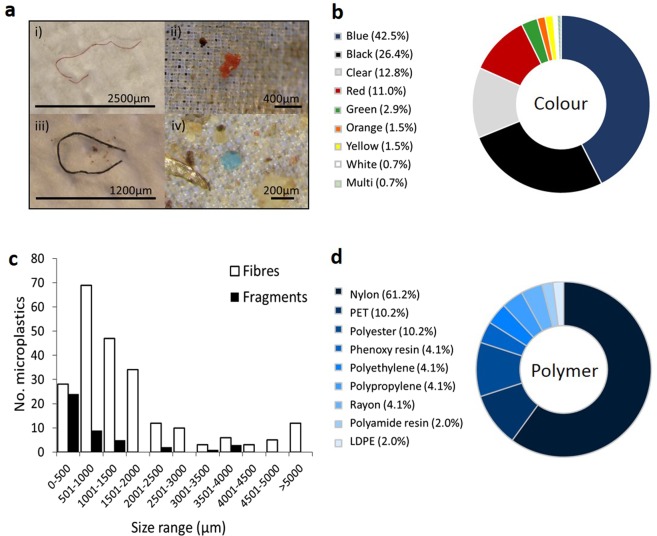
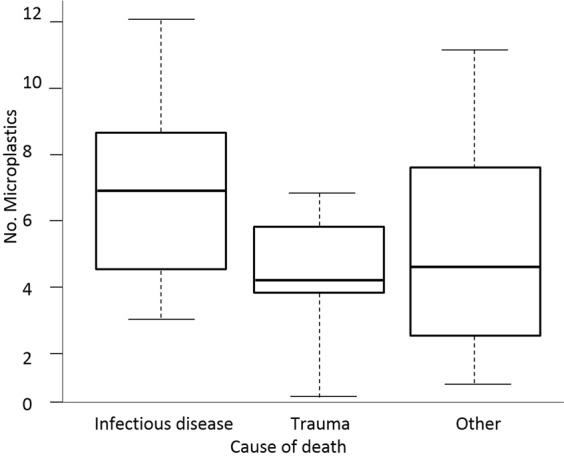
Plastic pollution represents a pervasive and increasing threat to marine ecosystems worldwide and there is a need to better understand the extent to which microplastics (<5 mm) are ingested by high trophic-level taxa, such as marine mammals. Here, we perform a comprehensive assessment by examining whole digestive tracts of 50 individuals from 10 species whilst operating strict contamination controls. Microplastics were ubiquitous with particles detected in every animal examined. The relatively low number per animal (mean = 5.5) suggests these particles are transitory. Stomachs, however, were found to contain a greater number than intestines, indicating a potential site of temporary retention. The majority of particles were fibres (84%) while the remaining 16% was fragments. Particles were mainly blue and black (42.5% and 26.4%) in colour and Nylon was the most prevalent (60%) polymer type. A possible relationship was found between the cause of death category and microplastic abundance, indicating that animals that died due to infectious diseases had a slightly higher number of particles than those that died of trauma and other drivers of mortality. It is not possible, however, to draw any firm conclusions on the potential biological significance of this observation and further research is required to better understand the potential chronic effects of microplastic exposure on animal health, particularly as marine mammals are widely considered important sentinels for the implications of pollution for the marine environment.
Conflict of interest statement
The authors declare no competing interests.
Figures


References
-
- Pierce GJ, et al. Bioaccumulation of persistent organic pollutants in female common dolphins (Delphinus delphis) and harbour porpoises (Phocoena phocoena) from western European seas: Geographical trends, causal factors and effects on reproduction and mortality. Environ. Pollut. 2008;153:401–415. doi: 10.1016/j.envpol.2007.08.019. - DOI - PubMed
Publication types
MeSH terms
Substances
LinkOut - more resources
Full Text Sources
