. 2019 Jan 31;24(3):514.
doi: 10.3390/molecules24030514.

Therapeutic Effect of Chitooligosaccharide Tablets on Lipids in High-Fat Diets Induced Hyperlipidemic Rats

Affiliations

Therapeutic Effect of Chitooligosaccharide Tablets on Lipids in High-Fat Diets Induced Hyperlipidemic Rats

Di Yang et al. Molecules. .

Abstract

Chitooligosaccharide is beneficial for inhibiting dyslipidemia and reducing atherosclerotic and hyperlipidemic risk. The purpose of this study was to investigate the cholesterol-regulating effects and potential mechanisms of Chitooligosaccharide tablets (CFTs) in high-fat diet-induced hyperlipidemic rats. The results revealed that CFTs can regulate serum lipid levels in hyperlipidemic rats in a dosage-dependent manner. Synchronously, gene expressions related to cholesterol excretion were upregulated in a dosage-dependent manner, including cholesterol 7α-hydroxylase (CYP7A1), liver X receptor α (LXRA), peroxisome proliferation-activated receptor-α (PPARα) and low-density lipoprotein receptor (LDLR), whereas cholesterol synthetic gene expressions including 3-hydroxy-3-methylglutaryl-coenzyme A reductase (HMGCR) and sterol-responsive element binding protein-2 (SREBP2) were reduced. This work highlights that CFTs have potential as natural products to prevent and treat metabolic hyperlipidemia syndrome, probably due to the reduction of cholesterol biosynthesis and through cholesterol elimination; they also improve the pathological changes of liver tissue in rats, alleviate liver damage, maintain normal lipid metabolism in the liver, ameliorate hepatic glycolipid disorders and accelerate TC operation, and reduce blood lipid levels.

Keywords: HMGCR; antihyperlipidemic; chitooligosaccharide; gene difference expression; lipid metabolism.


Conflict of interest statement

The authors have declared that no competing interest exists.

Figures
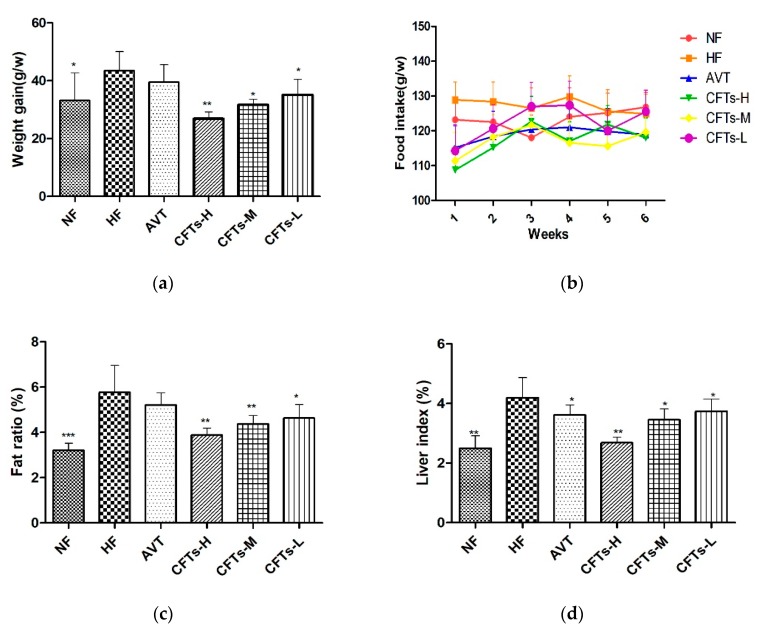
Figure 1
Figure 1
The main index of rats. (a) weight gain; (b) food intake; (c) fat ratio; (d) liver index. The data are presented as the means ± SD (n = 10). Compared to HF group, * p < 0.05; ** p < 0.01; *** p < 0.001.
Figure 2
Figure 2
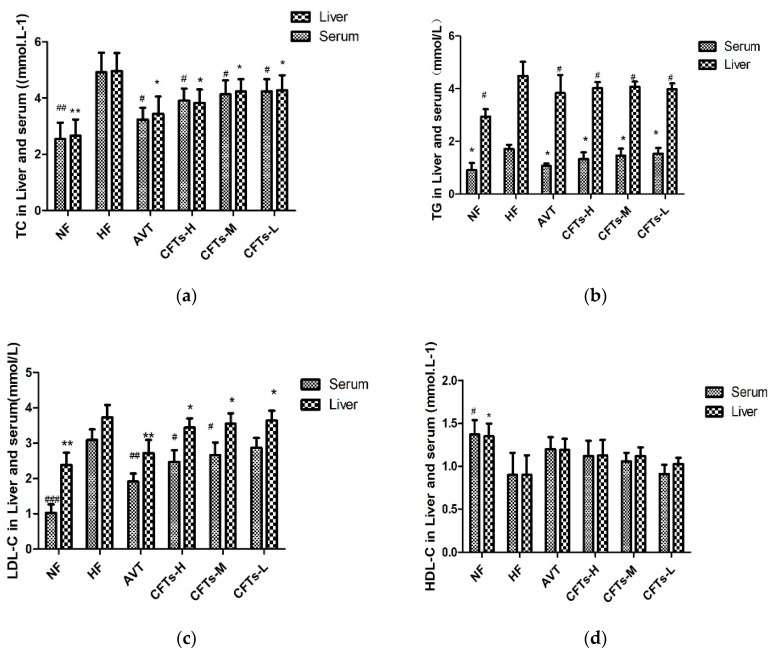
The effect of CFTs on lipid levels in the serum and liver. (a) TC levels in serum and liver; (b) TG levels in the serum and liver; (c) LDL-C levels in the serum and liver; (d) serum and liver HDL-C levels. These data are presented as the means ± SD (n = 10). (*,#) Significant difference at p < 0.05, (**,##) significance difference at p < 0.01 and (###) significance difference at p < 0.001 VS the HF group.
Figure 3
Figure 3
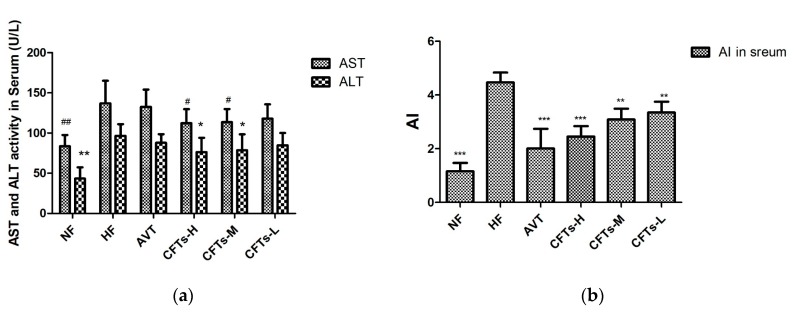
Serum aminotransferase and arteriosclerosis levels. (a) AST and ALT index in serum; (b) AI index in serum. The data are presented as the means ± SD (n = 10). (*,#) Significant difference at p < 0.05, (**,##) significance difference at p < 0.01 and (###) significance difference at p < 0.001 VS the HF group.
Figure 4
Figure 4
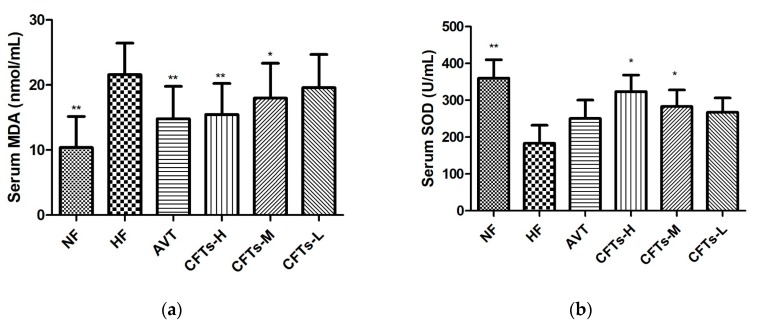
Serum MDA, SOD in rats. (a) Serum MDA; (b) Serum SOD. (*) Significant difference at p < 0.05 and (**) signficant difference at p < 0.01 VS the HF group. Malondialdehyde (MDA) and Superoxide dismutase (SOD) are important factors affecting the amount of lipid deposition in the liver.
Figure 5
Figure 5
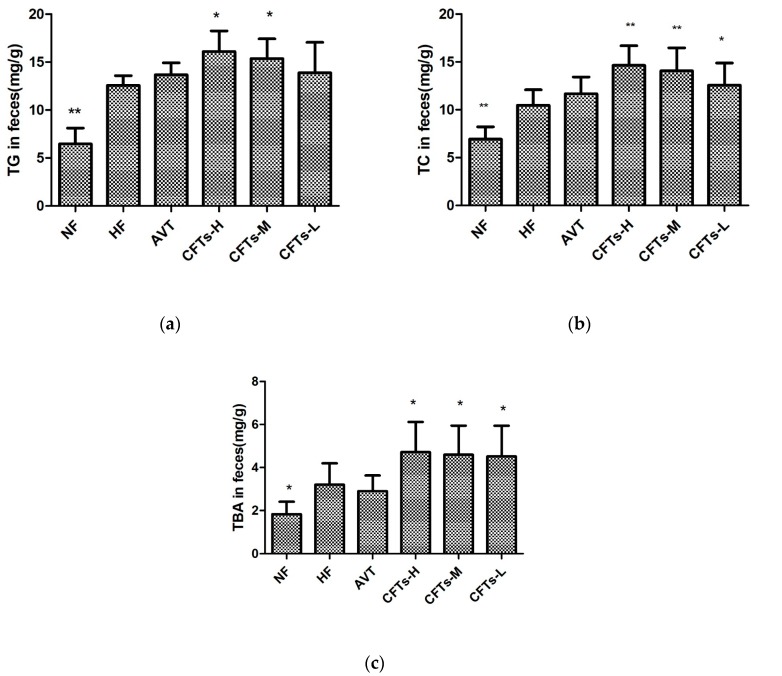
The main index in rats feces. Fecal TC (a), TG (b) and TBA (c). These data are presented as means ± SD (n = 10). Compared to HF, * p < 0.05; ** p < 0.01.
Figure 6
Figure 6
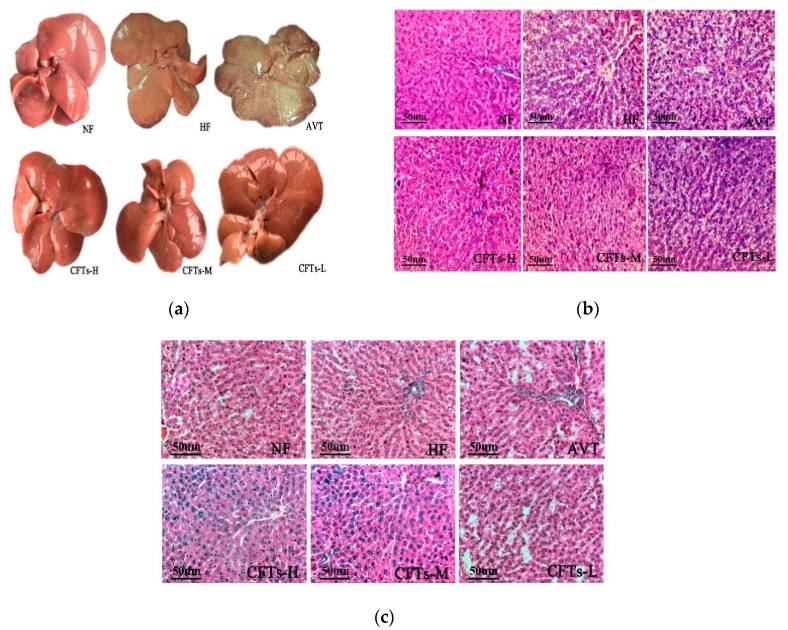
The whole liver (a), slices of liver (b) and kidney (c) from different groups of rats (200×) after 6 weeks of treatment. Tissue sections were stained with hematoxylin and eosin (H & E).
Figure 7
Figure 7
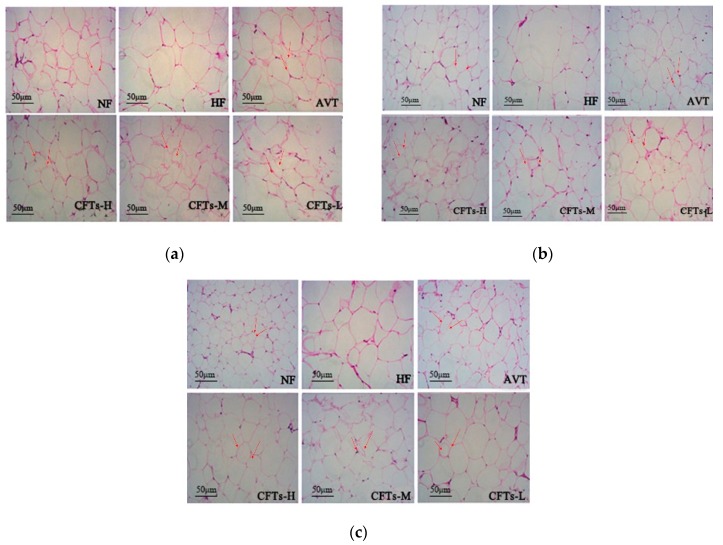
Adipose tissues histology. (a) perirenal adipose tissues, (b) subcutaneous adipose tissues, and (c) epididymal adipose tissues from different groups of rats (200×) after 6 weeks of treatment. Tissue sections were stained with hematoxylin and eosin (H & E).
Figure 8
Figure 8
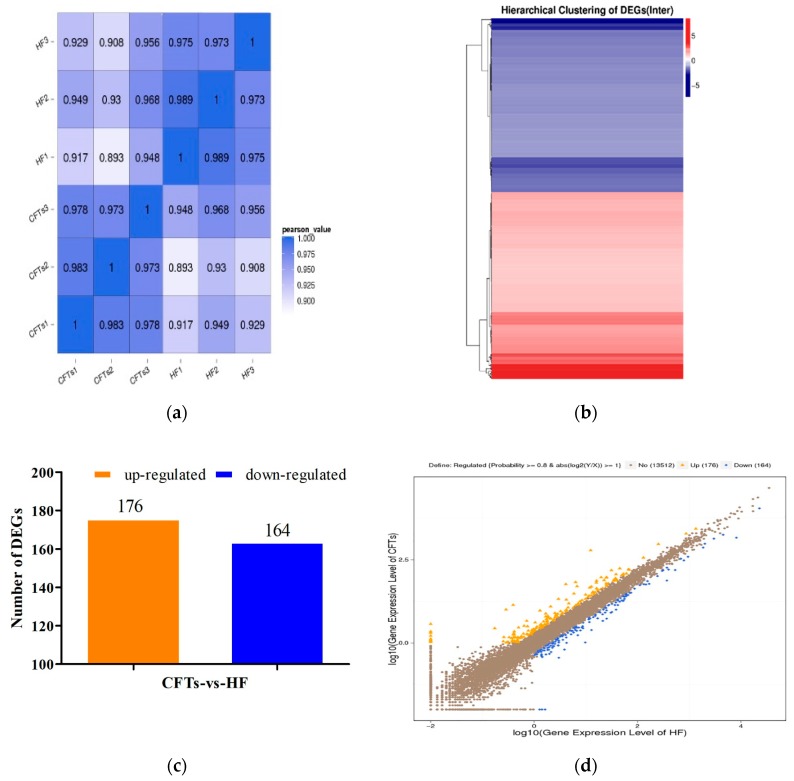
Differential gene expression analysis (HF vs CFTs). (a) Heatmap of correlation coefficient values; (b) Intersection heatmap of DEGs; (c) Statistic of differentially expressed genes; (d) Scatter plots of all expressed genes.
Figure 9
Figure 9
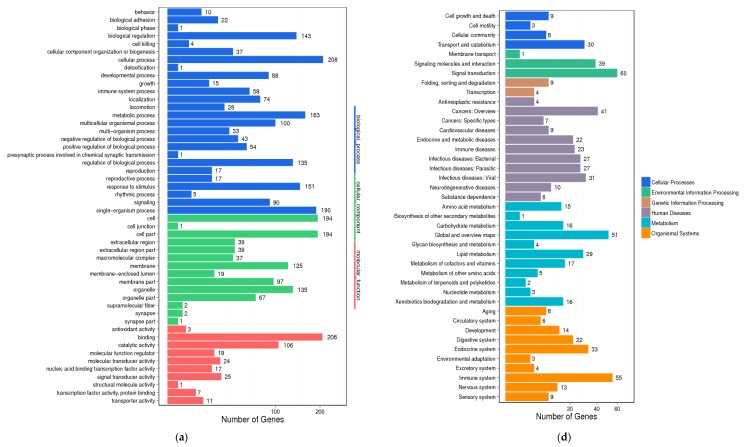
Differential gene expression analysis (HF vs CFTs). (a) GO functional classification on DEGs; (b) KEGG classification on DEGs.
Figure 10
Figure 10
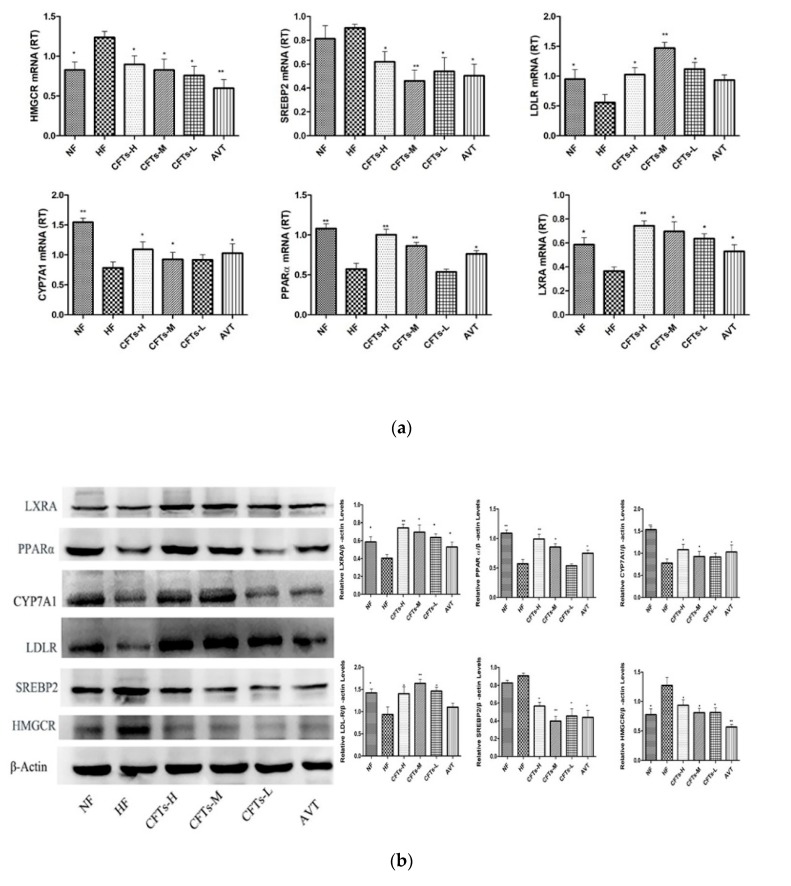
Effects of CFTs on hepatic genes expression. (a) Hepatic genes expression fold change in rats treated with CFTs for 6 weeks; (b) CFTs regulated expression levels of lipogenic genes. Compared to HF, * p < 0.05, ** p < 0.01.

References

    1. Akiyama T., Tachibana I., Shirohara H., Watanabe N., Otsuki M. High-Fat Hypercaloric Diet Induces Obesity, Glucose Intolerance and Hyperlipidemia in Normal Adult Male Wistar Rat. Diabetes Res. Clin. Pract. 1996;31:27–35. doi: 10.1016/0168-8227(96)01205-3. - DOI - PubMed
    1. Parhofer K.G. The Treatment of Disorders of Lipid Metabolism. Deutsch. Ärzteblatt Int. 2016;113:261–268. doi: 10.3238/arztebl.2016.0261. - DOI - PMC - PubMed
    1. Kaur J. A comprehensive review on metabolic syndrome. Cardiol. Res. Pract. 2014;2014:943162. doi: 10.1155/2014/943162. - DOI - PMC - PubMed
    1. Rutishauser J. The role of statins in clinical medicine–LDL–cholesterol lowering and beyond. Swiss Med. Wkly. 2006;136:41–49. - PubMed
    1. Muanprasat C., Chatsudthipong V. Chitosan oligosaccharide: Biological activities and potential therapeutic applications. Pharmacol. Ther. 2017;170:80–97. doi: 10.1016/j.pharmthera.2016.10.013. - DOI - PubMed

MeSH terms

LinkOut - more resources