


Prediction of high nodal burden with ultrasound and magnetic resonance imaging in clinically node-negative breast cancer patients
- PMID: 30709369
- PMCID: PMC6359788
- DOI: 10.1186/s40644-019-0191-y
Prediction of high nodal burden with ultrasound and magnetic resonance imaging in clinically node-negative breast cancer patients
Abstract
Background: Although the role of axillary imaging has been redirected for predicting high nodal burden rather than predicting nodal metastases since ACOSOG Z1011 trial, it remains unclear whether and how axillary lymph node (ALN) characteristics predicts high nodal burden. Our study was aimed to evaluate the predictive value of imaging characteristics of ALNs at ultrasound and magnetic resonance imaging (MRI) for prediction of high nodal burden (≥3 metastatic ALNs) in clinically node-negative breast cancer patients.
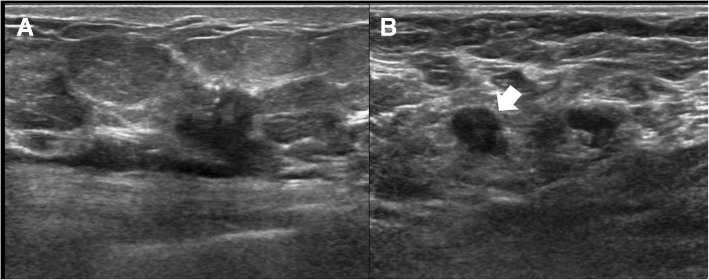
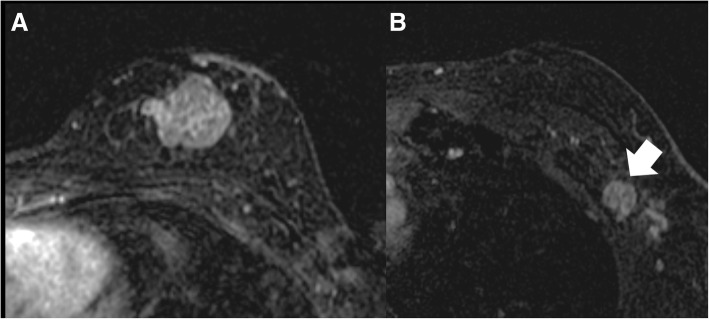
Methods: Clinicopathological and imaging characteristics were evaluated in patients with ultrasound (n = 312) and MRI (n = 256). Imaging characteristics include number of suspicious ALNs and cortical morphologic changes (grade 1, cortical thickness < 2 mm; grade 2, 2-5 mm; grade 3, ≥5 mm or fatty hilum loss). Odds ratios (ORs) were calculated using multivariate analysis.
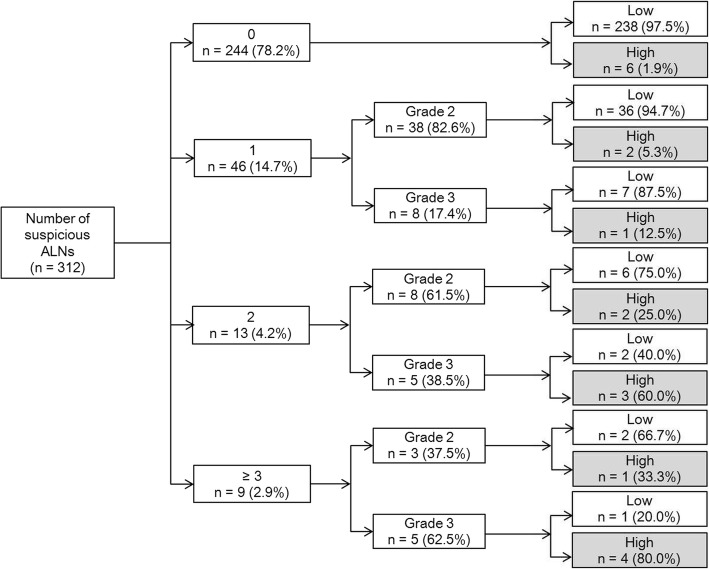
Results: For ultrasound, higher (≥2) T stage (OR = 5.65, P = .005), higher number of suspicious ALNs (2 suspicious ALNs, OR = 6.52, P = .019; ≥ 3 suspicious ALNs, OR = 21.08, P = .005), and grade 3 of cortical morphologic changes (OR = 9.85, P = .023) independently associated with high nodal burden. For MRI, higher (≥2) T stage (OR = 5.17, P = .011) and higher number of suspicious ALNs (2 suspicious ALNs, OR = 69.00, P = .001; ≥ 3 suspicious ALNs, OR = 93.55, P < .001) were independently associated with high nodal burden. Among patients with 2 suspicious ALNs, those with grade 3 cortical morphologic change at ultrasound had a higher rate of high nodal burden than those with grade 2 (60.0% [3/5] vs. 25.0% [2/8]).
Conclusions: A higher number of suspicious ALNs is an independent predictor for high nodal burden. Further stratification can be achieved by incorporating assessment of ultrasound-based cortical morphologic changes.
Keywords: Axilla; Axillary nodes; Breast cancer; Lymph nodes; Magnetic resonance imaging; Ultrasound.
Conflict of interest statement
Ethics approval and consent to participate
All procedures performed in studies involving human participants were in accordance with the ethical standards of the institutional and/or national research committee and with the 1964 Helsinki declaration and its later amendments or comparable ethical standards.
Consent for publication
Due to our retrospective review of prospectively collected data, and the requirement of an informed consent was waived after approval of institutional review board.
Competing interests
The authors declare that they have no competing interests.
Publisher’s Note
Springer Nature remains neutral with regard to jurisdictional claims in published maps and institutional affiliations.
Figures
References
-
- Galimberti V, Cole BF, Zurrida S, Viale G, Luini A, Veronesi P, et al. Axillary dissection versus no axillary dissection in patients with sentinel-node micrometastases (IBCSG 23-01): a phase 3 randomised controlled trial. Lancet Oncol. 2013;14:297–305. doi: 10.1016/S1470-2045(13)70035-4. - DOI - PMC - PubMed
MeSH terms
Grants and funding
LinkOut - more resources
Full Text Sources
Medical
