


Changing Practice Pattern of Acute Coronary Syndromes in Taiwan from 2008 to 2015
- PMID: 30713394
- PMCID: PMC6342842
- DOI: 10.6515/ACS.201901_35(1).20180716B
Changing Practice Pattern of Acute Coronary Syndromes in Taiwan from 2008 to 2015
Abstract
Background: Patients with acute coronary syndrome (ACS), including ST segment elevation myocardial infarction (STEMI) and non-ST segment elevation (NSTE)-ACS have a significant risk of morbidity and mortality. This study evaluated the practice patterns of ACS care in Taiwan from 2005 to 2018.
Methods: Data from two nationwide ACS registries (2008-2010 and 2012-2015) were used. ACS patients who received percutaneous coronary interventions (PCIs) during admission were compared between the two registries.
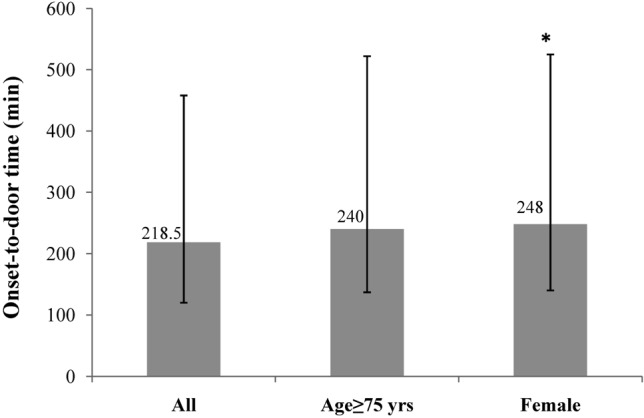
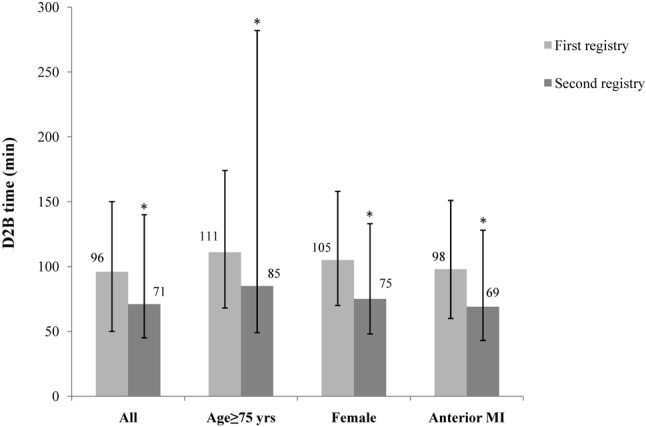
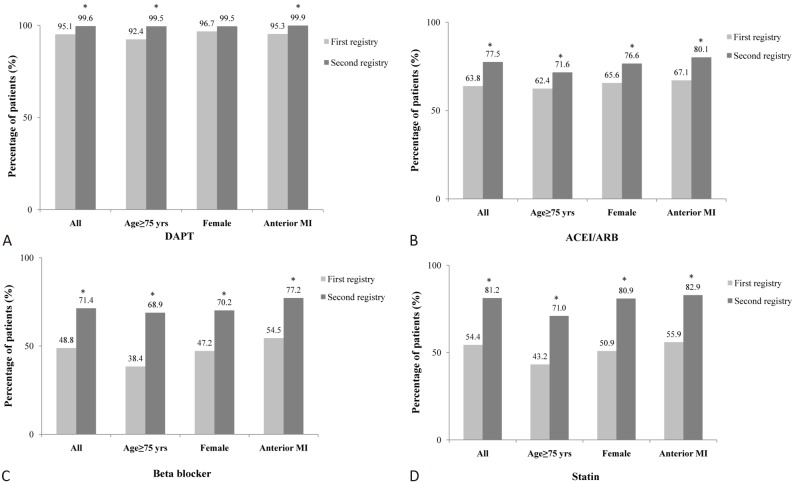
Results: In STEMI, the door-to-balloon time for primary PCI decreased by 25 min from a median of 96 to 71 min (p < 0.0001) from the first to second registry. More complex PCI procedures and drug-eluting stents were used for ACS. However, the onset-to-door time was still long for both STEMI and NSTE-ACS. The D2B time for NSTE-ACS was long, especially in the elderly and female patients. Although the prescription rate of secondary preventive medications for ACS increased, it was still relatively low compared with Western data, especially in NSTE-ACS.
Conclusions: The registry data showed that ACS care quality has improved in Taiwan. However, areas including onset-to-door time and use of secondary preventive medications still need further improvements.
Keywords: Acute coronary syndromes; Quality; Taiwan.
Figures
References
-
- Yin WH, Lu TH, Chen KC, et al. The temporal trends of incidence, treatment, and in-hospital mortality of acute myocardial infarction over 15 years in a Taiwanese population. Int J Cardiol. 2016;209:103–113. - PubMed
-
- O'Gara PT, Kushner FG, Ascheim DD, et al. 2013 ACCF/AHA guideline for the management of ST-elevation myocardial infarction: a report of the American College of Cardiology Foundation/American Heart Association Task Force on Practice Guidelines. J Am Coll Cardiol. 2013;61:e78–e140. - PubMed
-
- Amsterdam EA, Wenger NK, Brindis RG, et al. 2014 AHA/ACC Guideline for the management of patients with non-ST-elevation acute coronary syndromes: a report of the American College of Cardiology/American Heart Association Task Force on Practice Guidelines. J Am Coll Cardiol. 2014;64:e139–e228. - PubMed
LinkOut - more resources
Full Text Sources
Miscellaneous