The most influential publications in cervical myelopathy
- PMID: 30714009
- PMCID: PMC6330587
- DOI: 10.21037/jss.2018.09.08
The most influential publications in cervical myelopathy
Abstract
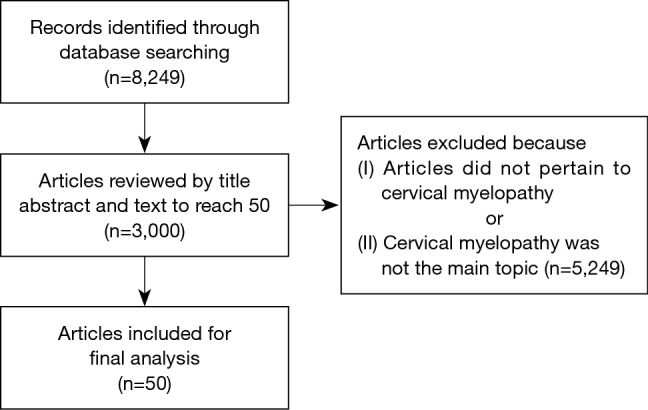
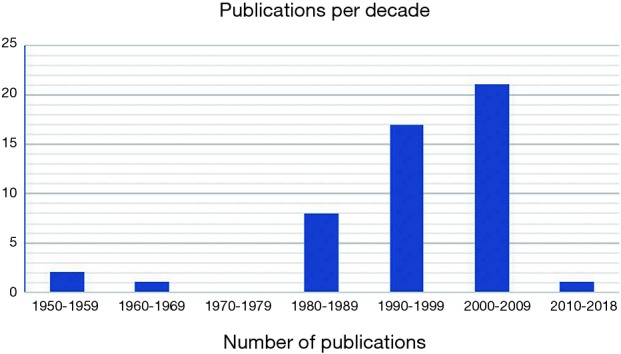
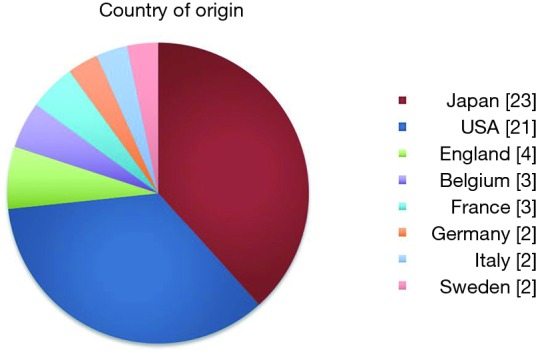
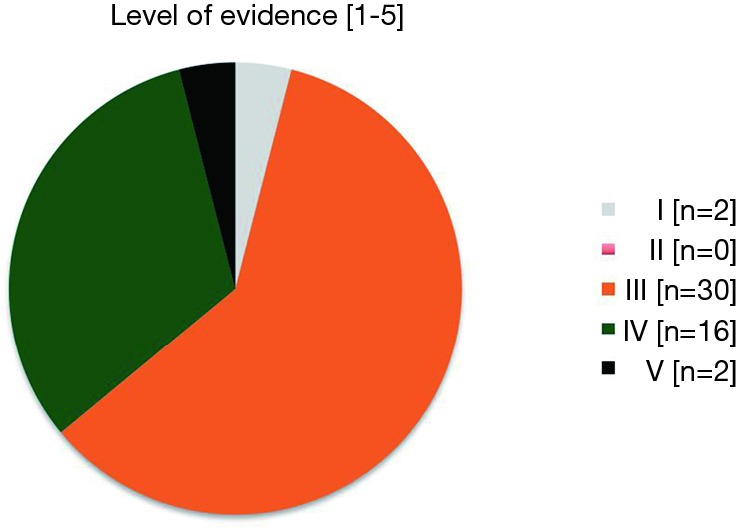
Management of cervical myelopathy (CM) has continued to evolve through a better understanding of the long-term outcomes of this diagnosis as well as improved diagnostic guidelines. More recent literature continues to expand the field, but certain publications can be distinguished from others due to their lasting impact. Using the Clarivate Analytics Web of Science, search phrases were used to identify publications pertaining to CM. The fifty most cited articles were isolated. The frequency of citations, year of publication, country of origin, journal of publication, level of evidence (LOE), article type, as well as contributing authors and institutions were recorded. We also highlighted the five most cited articles (per year) from the past 10 years. Publications included ranged from 1952-2011, with the plurality of articles published during 2000-2009 (n=21; 42%). The most cited paper was Hillibrand's 1999 reporting of adjacent segment disease rates following cervical fusions, followed by Hirabayashi's 1983 review of his cervical laminoplasty outcomes. The third most cited was Brain's 1952 review of the manifestations of cervical spondylosis. Spine contributed the most publications (n=26; 52%). A LOE of III was the most common (n=30; 60%). Clinical outcome articles were the most frequent type (n=28; 56%). Osaka University (Japan) and Kazou Yonenobu had the most contributions. Ames or Fehlings were the first or last author in each of the five most influential articles from the past 10 years. This bibliometric citation analysis identifies the most influential articles regarding CM. There are few publications with a high LOE, and more high powered studies are needed. Knowledge of these "classic" publications allows for a better overall understanding of the diagnosis, treatment, and future direction of research of CM.
Keywords: Cervical myelopathy (CM); adjacent segment disease; bibliometric review; cervical spondylotic myelopathy; most influential; neurosurgery; spine.
Conflict of interest statement
Conflicts of Interest: The authors have no conflicts of interest to declare.
Figures
References
Publication types
LinkOut - more resources
Full Text Sources
Miscellaneous