


The impact of recreational marijuana commercialization on traumatic injury
- PMID: 30714081
- PMCID: PMC6360194
- DOI: 10.1186/s40621-019-0180-4
The impact of recreational marijuana commercialization on traumatic injury
Abstract
Background: The medical legalization of marijuana has been shown to result in an increased risk of motor vehicle injuries. In Colorado, commercialization of recreational marijuana (initiation of retail sales) occurred on January 1, 2014, resulting in the rapid proliferation of its availability. The objective of this study was to determine whether the proportion of injured patients testing positive for marijuana and other drugs changed two years before and two years after commercialization of recreational marijuana in Colorado.
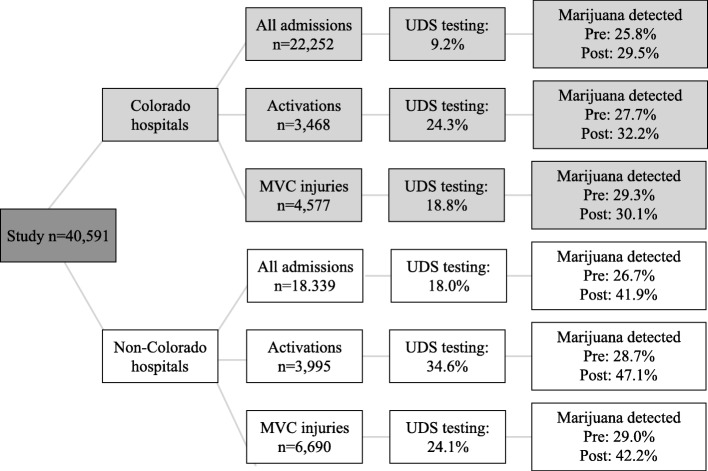
Methods: This retrospective multi-institutional cohort study included all patients admitted with a traumatic injury to six trauma centers (three centers in Colorado and three centers in states without permissive marijuana laws) from 2012 to 2015. The primary outcome was the rate (%) of a positive urine drug screen (UDS) for marijuana. Generalized linear regression models were used to examine the rate of change over time in the pre-commercialization period relative to the post- commercialization period (via an interaction effect), separately for states with and without recreational marijuana legalization.
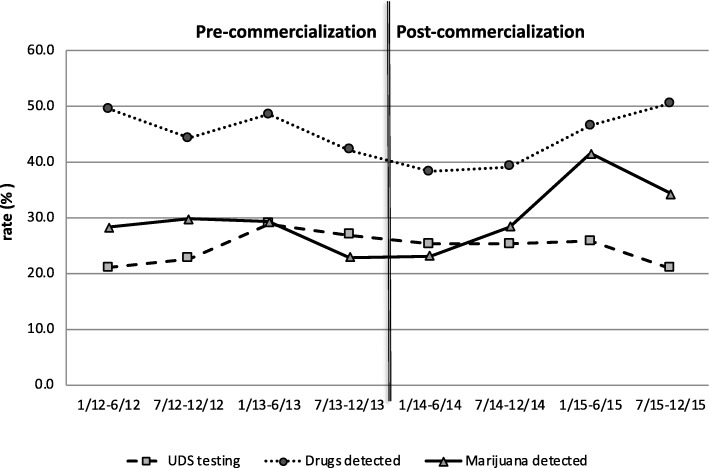
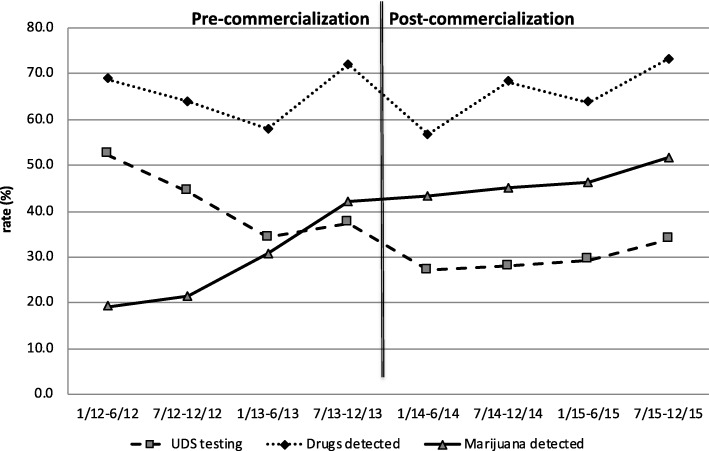
Results: There were 40,591 trauma admissions. In Colorado, the rate of marijuana detected with UDS decreased over time pre-commercialization; this trend reversed post-commercialization, when marijuana detection rates increased significantly over time (interaction p = 0.004). At non-Colorado hospitals, the rate over time of marijuana detection was significantly reduced post-commercialization relative to the pre-commercialization period (p < 0.001).
Conclusion: There was an overall increased rate over time of marijuana detected among trauma patients at Colorado hospitals but not at non-Colorado hospitals, suggesting an increased use of marijuana or an increased risk of injury while using marijuana following the commercialization of recreational marijuana in Colorado.
Keywords: Activation; Legalization; Marijuana; Urine drug screen.
Conflict of interest statement
Ethics approval and consent to participate
This study was IRB approved at all six participating institutions and was granted a waiver of consent and HIPAA authorization at each institution.
Consent for publication
Not applicable.
Competing interests
The authors certify that they have no affiliations with or involvement in any organization or entity with any financial or non-financial interest in the subject matter or materials discussed.
Publisher’s Note
Springer Nature remains neutral with regard to jurisdictional claims in published maps and institutional affiliations.
Figures
References
-
- Asbridge M, Mann R, Cusimano MD, Trayling C, Roerecke M, Tallon JM, et al. Cannabis and traffic collision risk: findings from a case-crossover study of injured drivers presenting to emergency departments. International journal of public health. 2014;59(2):395–404. doi: 10.1007/s00038-013-0512-z. - DOI - PubMed
LinkOut - more resources
Full Text Sources
