Review
. 2019 Mar 1;129(3):926-940.
doi: 10.1172/JCI125178. Epub 2019 Feb 4.

Autoimmune seizures and epilepsy

Affiliations
Review

Autoimmune seizures and epilepsy

Christian Geis et al. J Clin Invest. .

Abstract

The rapid expansion in the number of encephalitis disorders associated with autoantibodies against neuronal proteins has led to an incremental increase in use of the term "autoimmune epilepsy," yet has occurred with limited attention to the physiopathology of each disease and genuine propensity to develop epilepsy. Indeed, most autoimmune encephalitides present with seizures, but the probability of evolving to epilepsy is relatively small. The risk of epilepsy is higher for disorders in which the antigens are intracellular (often T cell-mediated) compared with disorders in which the antigens are on the cell surface (antibody-mediated). Most autoantibodies against neuronal surface antigens show robust effects on the target proteins, resulting in hyperexcitability and impairment of synaptic function and plasticity. Here, we trace the evolution of the concept of autoimmune epilepsy and examine common inflammatory pathways that might lead to epilepsy. Then, we focus on several antibody-mediated encephalitis disorders that associate with seizures and review the synaptic alterations caused by patients' antibodies, with emphasis on those that have been modeled in animals (e.g., antibodies against NMDA, AMPA receptors, LGI1 protein) or in cultured neurons (e.g., antibodies against the GABAb receptor).


Conflict of interest statement

Conflict of interest: FG receives royalties from Euroimmun AG for the use of IgLON5 as an autoantibody test. JD receives royalties from Athena Diagnostics for the use of Ma2 as an autoantibody test, and from Euroimmun AG for the use of NMDA receptor, GABAb receptor, GABAa receptor, DPPX, and IgLON5 as autoantibody tests.

Figures

Figure 1
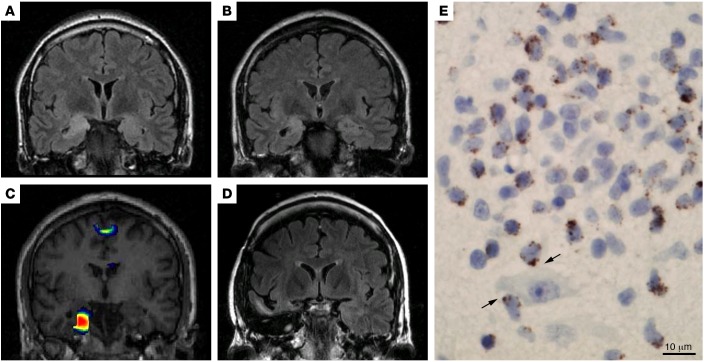
Figure 1. Paraneoplastic limbic encephalitis and epilepsy mediated by cytotoxic T cell mechanisms.
(A) Coronal fluid-attenuated inversion recovery (FLAIR) MRI image showing increased signal and volume of the right amygdala and hippocampus, suggestive of limbic encephalitis, in a patient with a history of seminoma and acute-onset seizures associated with Ma2 paraneoplastic antibodies. (B) Coronal FLAIR image 1 year later, showing atrophy of the right hippocampus and medial temporal lobe sclerosis. (C) Subtraction ictal SPECT coregistered to MRI (SISCOM) showing increased ictal perfusion over the right hippocampus and parahippocampal gyrus during a right temporal lobe seizure with epigastric aura, piloerection, and loss of awareness. (D) Coronal FLAIR image showing resection of the temporal pole and right mesial temporal lobe structures. After surgery, the frequency of the seizures decreased, but they did not resolve (Engel’s class III). (E) Inflammatory infiltrates in the surgical specimen; the section of the tissue was immunostained with TIA-1 antibody, a marker of cytotoxic T cells (shown as brown granular staining). Some TIA-1–positive cells are in close apposition with neurons (arrows). Scale bars: 10 μm. Images reprinted with permission from Carreño et al. (63).
Figure 2
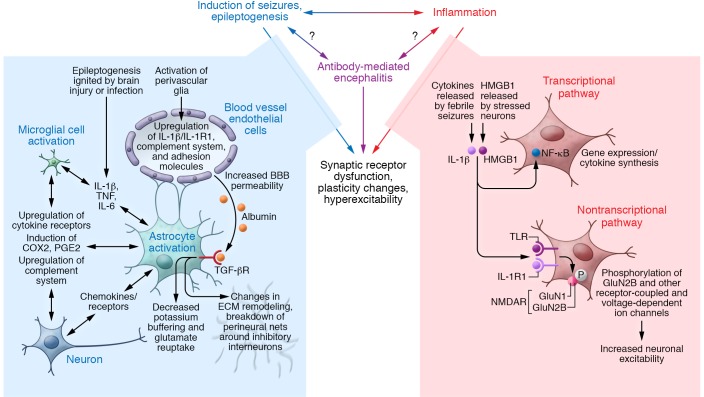
Figure 2. Synaptic dysfunction and hyperexcitability as a result of seizures, inflammation, and antibody-mediated encephalitis.
Diagram showing multiple inflammatory/innate immunity mechanisms triggered by seizures and epileptogenesis, along with inflammation-related transcriptional and nontranscriptional pathways that lead to synaptic dysfunction, changes in plasticity, and hyperexcitability (corresponding with blue and red arrows). In contrast to these mechanisms, the antibody-mediated encephalitides such as those associated with NMDAR, AMPAR, LGI1, or GABAbR autoantibodies (see others in Tables 3 and 4), represent a direct antibody-mediated alteration of the corresponding targets also leading to synaptic dysfunction, impairment of synaptic plasticity, and hyperexcitability (purple arrow). The degree of involvement of inflammatory/innate immunity molecules and pathways of inflammation in antibody-mediated encephalitis is currently unknown.
Figure 3
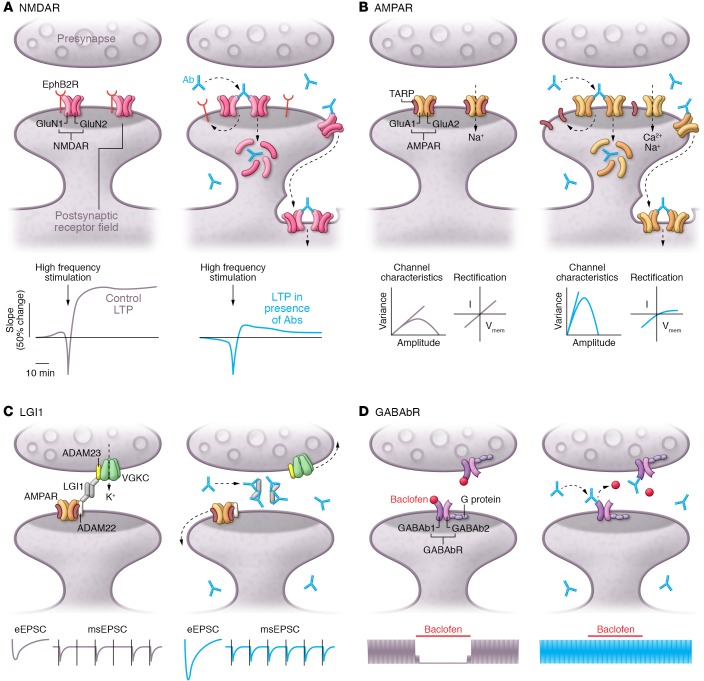
Figure 3. Synaptic alterations and changes in neuronal excitability induced by autoantibodies against neuronal surface antigens.
(A) Top: Patients’ antibodies (blue) against NMDARs bind to GluN1 subunits, inducing NMDAR clustering and dissociation from Ephrin-B2 receptor (EphB2R), followed by NMDAR internalization. Below: Reduction of synaptic NMDARs affects synaptic plasticity, revealed by decreased long-term potentiation (LTP). In each panel, blue traces depict effects of patients’ antibodies, and gray traces show effects of normal human IgG. (B) Top: Antibodies against AMPAR GluA2 subunit induce internalization of GluA2-containing heterodimers after dissociation from TARPs. AMPAR loss is followed by homeostatic compensation with insertion of Ca2+-permeable inward-rectifying AMPARs (e.g., GluA1 monomeric AMPAR), which have higher channel permeability. Below: Nonstationary fluctuation analysis shows an increase in AMPAR channel conductance (steeper hyperbola slope) along with reduced channel number (reduced hyperbola width). Current-voltage relationship of excitatory postsynaptic currents (EPSCs) in neurons preincubated with patients’ GluA2 antibodies reveals incorporation of inward-rectifying AMPARs in the synapse. (C) Top: Anti-LGI1 antibodies react with epitopes in leucine-rich repeat (LRR) and EPTP domains of LGI1, disrupting LGI1’s interaction with presynaptic ADAM23 and postsynaptic ADAM22, and reducing presynaptic voltage-gated Kv1.1 channels and postsynaptic AMPARs. Below: Downregulation of presynaptic Kv1.1 channels increases presynaptic release probability and enhances glutamatergic transmission, resulting in increased evoked EPSCs (eEPSCs) and reduced failure rate of synaptic transmission after minimal stimulation (msEPSCs). (D) Top: Anti-GABAbR antibodies bind to the GABAb1 subunit, which localizes at pre- and postsynaptic membranes and contains the GABA-binding site. Antibody binding does not cause GABAbR internalization but interferes with baclofen-induced GABAbR activation. Below: Baclofen blocks spontaneous network activity of cultured neurons (gray). Anti-GABAbR antibodies interrupt its inhibitory effect (blue).

References

    1. Marchi N, Granata T, Janigro D. Inflammatory pathways of seizure disorders. Trends Neurosci. 2014;37(2):55–65. doi: 10.1016/j.tins.2013.11.002. - DOI - PMC - PubMed
    1. Scheffer IE, et al. ILAE classification of the epilepsies: position paper of the ILAE Commission for Classification and Terminology. Epilepsia. 2017;58(4):512–521. doi: 10.1111/epi.13709. - DOI - PMC - PubMed
    1. Vezzani A, French J, Bartfai T, Baram TZ. The role of inflammation in epilepsy. Nat Rev Neurol. 2011;7(1):31–40. doi: 10.1038/nrneurol.2010.178. - DOI - PMC - PubMed
    1. Fisher RS, et al. ILAE official report: a practical clinical definition of epilepsy. Epilepsia. 2014;55(4):475–482. doi: 10.1111/epi.12550. - DOI - PubMed
    1. Duncan JS, Sander JW, Sisodiya SM, Walker MC. Adult epilepsy. Lancet. 2006;367(9516):1087–1100. doi: 10.1016/S0140-6736(06)68477-8. - DOI - PubMed

Publication types

MeSH terms