


Heterogeneity of cost estimates in health economic evaluation research. A systematic review of stress urinary incontinence studies
- PMID: 30715575
- PMCID: PMC6586692
- DOI: 10.1007/s00192-018-3814-0
Heterogeneity of cost estimates in health economic evaluation research. A systematic review of stress urinary incontinence studies
Abstract
Introduction and hypothesis: There is increased demand for an international overview of cost estimates and insight into the variation affecting these estimates. Understanding of these costs is useful for cost-effectiveness analysis (CEA) research into new treatment modalities and for clinical guideline development.
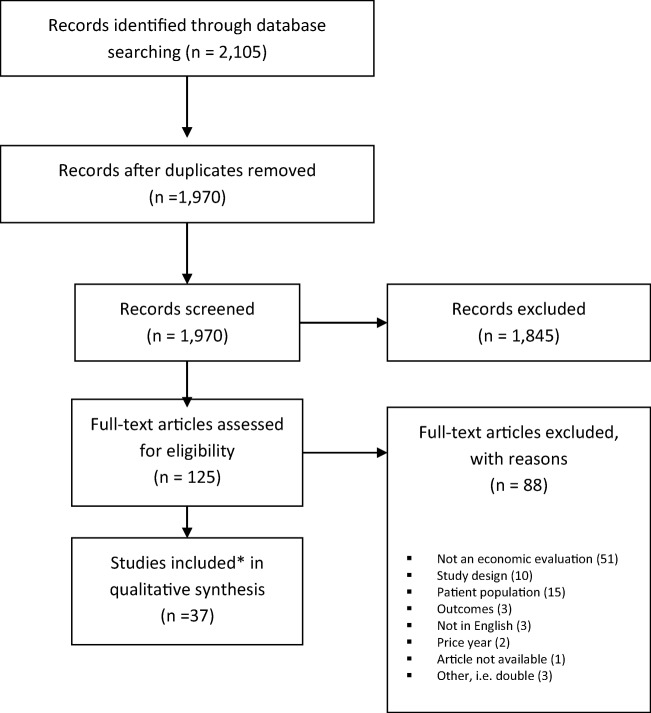
Methods: A systematic search was conducted in Ovid MEDLINE & other non-indexed materials and Ovid Embase for articles published between 1995 and 2017. The National Health Service Economic Evaluation Database (NHS-EED) filter and the McMaster sensitive therapy filter were combined with a bespoke search strategy for stress urinary incontinence (SUI). We extracted unit cost estimates, assessed variability and methodology, and determined transferability.
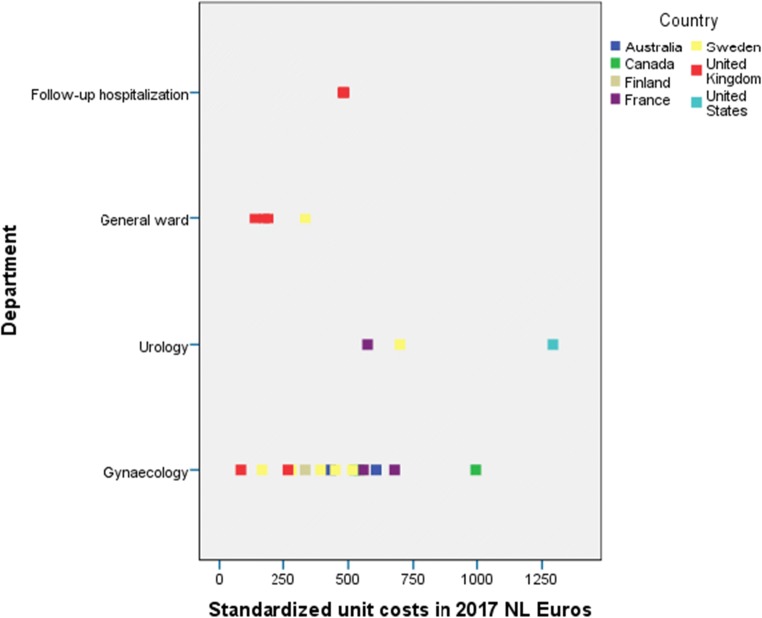
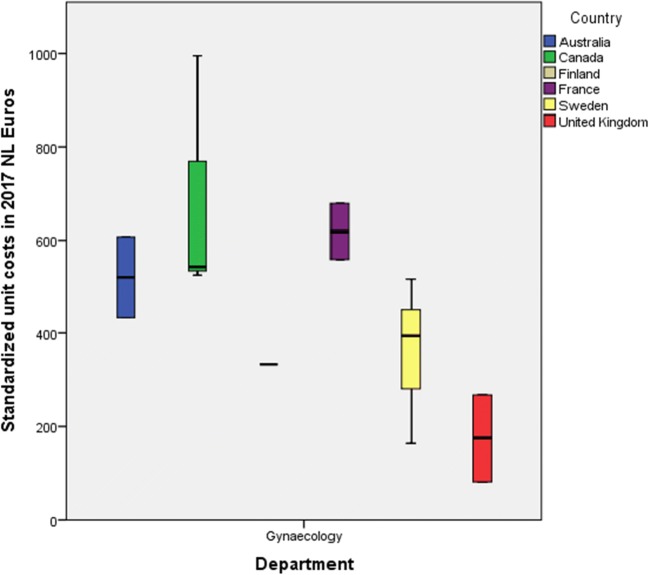
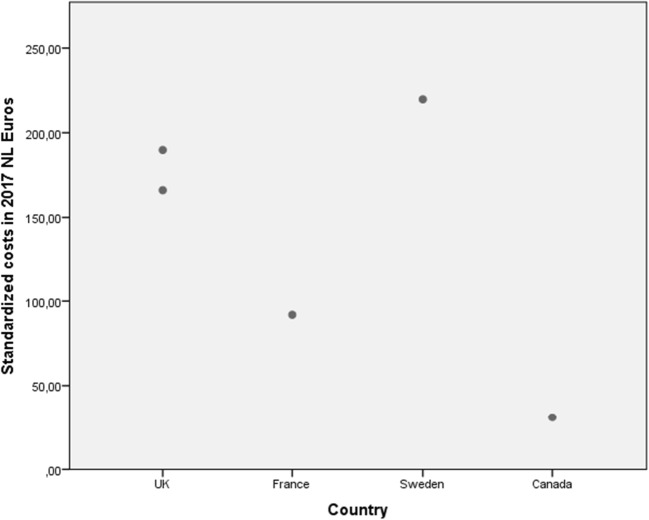
Results: We included 37 studies in this review. Four hundred and eighty-two cost estimates from 13 countries worldwide were extracted. Descriptive analysis shows that hospital stay in gynecology ranged between €82 and €1,292 per day. Costs of gynecological consultation range from €30 in France to €158 in Sweden. In the UK, costs are estimated at €228 per hour. Costs of a tension-free vaginal tape (TVT) device range from €431 in Finland to €994 in Canada. TVT surgery per minute costs €25 in France and €82 in Sweden. Total costs of TVT range from €1,224 in Ireland to €5,809 for inpatient care in France. Variation was explored.
Conclusions: Heterogeneity was observed in cost estimates for all units at all levels of health care. CEAs of SUI interventions cannot be interpreted without bias when the base of these analyses-namely costs-cannot be compared and generalized.
Keywords: Health care costs; Health economic evaluation research; Health technology; Multinational; Standardized unit costs; Transferability.
Conflict of interest statement
None.
Figures

References
-
- Milsom I, Coyne KS, Nicholson S, Kvasz M, Chen CI, Wein AJ. Global prevalence and economic burden of urgency urinary incontinence: a systematic review. Eur Urol. 2014;65(1):96–98. - PubMed
-
- Hannestad YS, Rortveit G, Sandvik H, Hunskaar S. A community-based epidemiological survey of female urinary incontinence: the Norwegian EPINCONT study. J Clin Epidemiol. 2000;53(11):1150–1157. - PubMed
-
- Hunskaar S, Lose G, Sykes D, Voss S. The prevalence of urinary incontinence in women in four European countries. BJU Int. 2004;93:324–330. - PubMed
-
- Drummond MF, Schwartz JS, Jönsson B, Luce BR, Neumann PJ, Siebert U, Sullivan SD. Key principles for the improved conduct of health technology assessments for resource allocation decisions. Int J Technol Assess Health Care. 2008;24:244–258. - PubMed
-
- Rawlings T, Zimmern PE. Economic analyses of stress urinary incontinence surgical procedures in women. Neurourol Urodyn. 2016;35:1040–1045. - PubMed
Publication types
MeSH terms
Grants and funding
LinkOut - more resources
Full Text Sources
Medical
