


Characterizing the Health-Related Quality of Life Burden of Overactive Bladder Using Disease-Specific Patient-Reported Outcome Measures: A Systematic Literature Review
- PMID: 30715686
- PMCID: PMC6824512
- DOI: 10.1007/s12325-019-0880-8
Characterizing the Health-Related Quality of Life Burden of Overactive Bladder Using Disease-Specific Patient-Reported Outcome Measures: A Systematic Literature Review
Abstract
Introduction: The objective was to identify the most commonly used patient-reported outcome (PRO) instruments for overactive bladder (OAB), determine which are the most useful for measuring burden in OAB and characterize the findings of recent studies that have employed PRO instruments to assess OAB symptoms and the effects of treatment.
Methods: A systematic search of OAB literature published between January 2006 and November 2017 using Medline/PubMed and EMBASE databases.
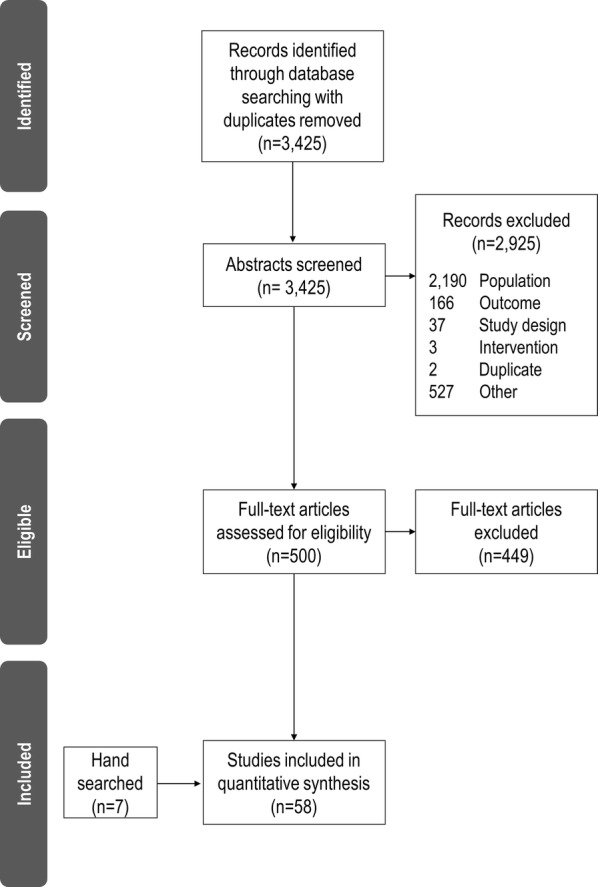
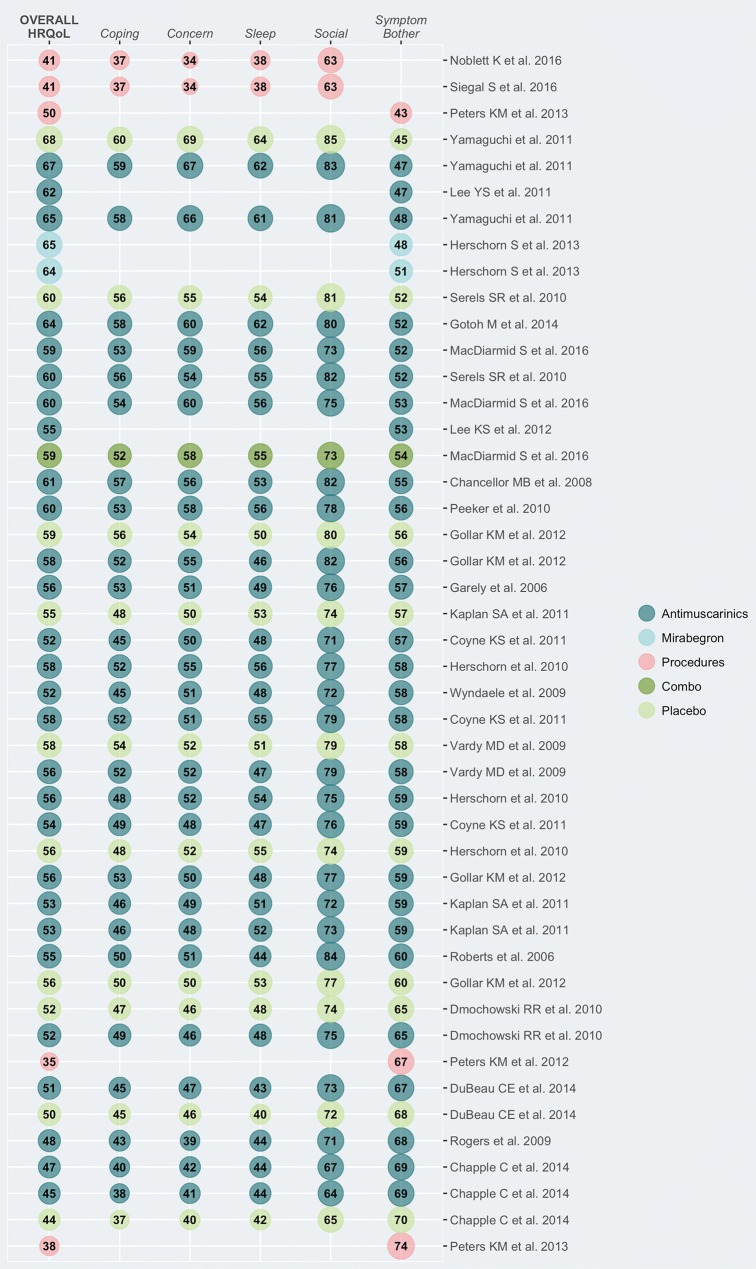
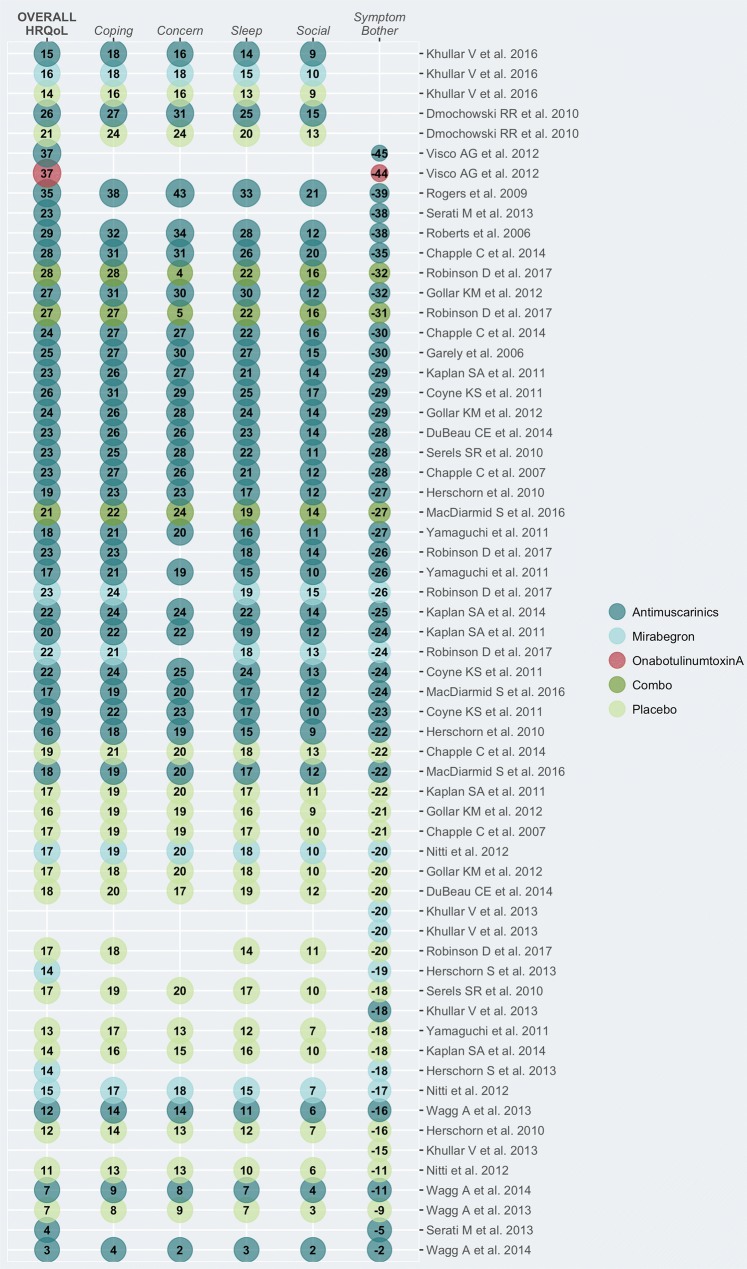
Results: Of 3425 abstracts and 500 full-text articles reviewed, 58 studies (both clinical trials and observational studies) were included in the review. The most commonly used PRO instruments were the OAB Questionnaire (OAB-q; 64%), followed by the King's Health Questionnaire (KHQ; 31%) and the Patient Perception of Bladder Condition (PCBC; 21%). Synthesis of data from studies using the OAB-q showed that OAB treatment with antimuscarinics, mirabegron and onabotulinumtoxinA all improve health-related quality of life (HRQoL) and symptoms beyond the benefits observed with placebo. The OAB-q could detect dose-response relationships in some studies and demonstrated there were no significant differences across therapies from different drug classes.
Conclusion: The HRQoL burden of OAB and response to treatment can be reliably measured by PRO instruments, and the OAB-q is the most commonly used instrument in OAB, particularly in clinical trials of OAB interventions. These data will be useful to provide benchmarks of burden levels for PRO scores obtained among those on contemporary therapies for comparison with outcomes from patients managed with emerging treatments.
Funding: Astellas Pharma Global Development, Inc.
Keywords: Overactive bladder; Patient reported outcome; Quality of life; Urinary incontinence; Urology.
Figures
References
-
- Hashim H, Abrams P. Overactive bladder: an update. Curr Opin Urol. 2007;17(4):231–236. - PubMed
-
- Coyne KS, Sexton CC, Vats V, Thompson C, Kopp ZS, Milsom I. National community prevalence of overactive bladder in the United States stratified by sex and age. Urology. 2011;77(5):1081–1087. - PubMed
-
- Milsom I, Coyne KS, Nicholson S, Kvasz M, Chen CI, Wein AJ. Global prevalence and economic burden of urgency urinary incontinence: a systematic review. Eur Urol. 2014;65(1):79–95. - PubMed
-
- Irwin DE, Milsom I, Hunskaar S, et al. Population-based survey of urinary incontinence, overactive bladder, and other lower urinary tract symptoms in five countries: results of the EPIC study. Eur Urol. 2006;50(6):1306–1314. - PubMed
-
- Irwin DE, Milsom I, Kopp Z, Abrams P. Symptom bother and health care-seeking behavior among individuals with overactive bladder. Eur Urol. 2008;53(5):1029–1039. - PubMed
Publication types
MeSH terms
Substances
Associated data
LinkOut - more resources
Full Text Sources
Medical
