Review
. 2018 Aug;50(3):256-342.
doi: 10.1080/03602532.2018.1483401.

Human cytochrome P450 enzymes 5-51 as targets of drugs and natural and environmental compounds: mechanisms, induction, and inhibition - toxic effects and benefits

Affiliations
Review

Human cytochrome P450 enzymes 5-51 as targets of drugs and natural and environmental compounds: mechanisms, induction, and inhibition - toxic effects and benefits

Slobodan P Rendic et al. Drug Metab Rev. 2018 Aug.

Abstract

Cytochrome P450 (P450, CYP) enzymes have long been of interest due to their roles in the metabolism of drugs, pesticides, pro-carcinogens, and other xenobiotic chemicals. They have also been of interest due to their very critical roles in the biosynthesis and metabolism of steroids, vitamins, and certain eicosanoids. This review covers the 22 (of the total of 57) human P450s in Families 5-51 and their substrate selectivity. Furthermore, included is information and references regarding inducibility, inhibition, and (in some cases) stimulation by chemicals. We update and discuss important aspects of each of these 22 P450s and questions that remain open.

Keywords: Cytochrome P450; eicosanoids; endogenous compounds; enzyme induction; enzyme inhibition; retinoids; steroids; vitamin A; vitamin D; xenobiotics.


Conflict of interest statement

Disclosure of Interest: The authors report no conflicts of interest with the contents of this article.

Figures

Fig. 1.
Fig. 1.
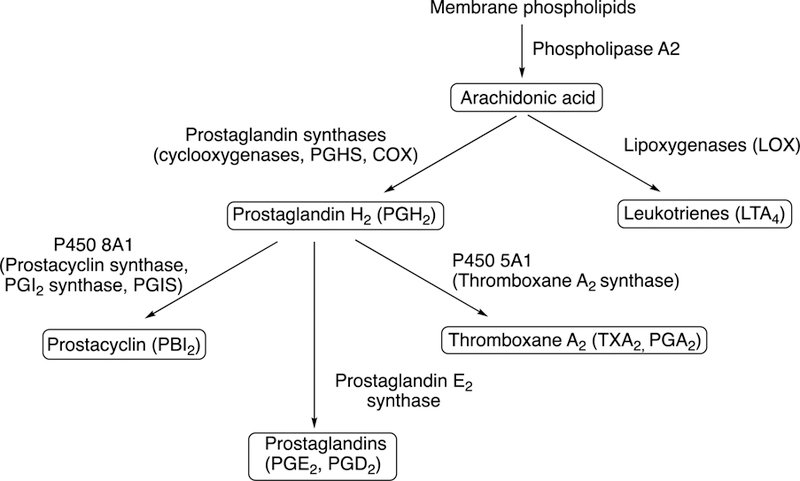
Metabolic pathways for arachidonic acid, with participation of P450s 5A1 and 8A1.
Fig. 2.
Fig. 2.
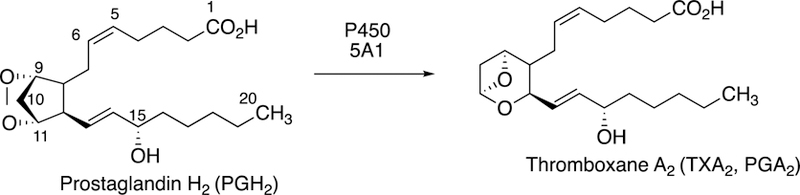
Conversion of prostaglandin H2 to thromboxane A2 by P450 5A1 (thromboxane synthase).
Fig. 3.
Fig. 3.
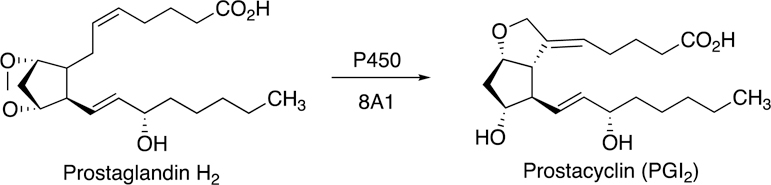
Conversion of prostaglandin H2 to prostacyclin (PGI2) by P450 8A1.
Fig. 4A.
Fig. 4A.
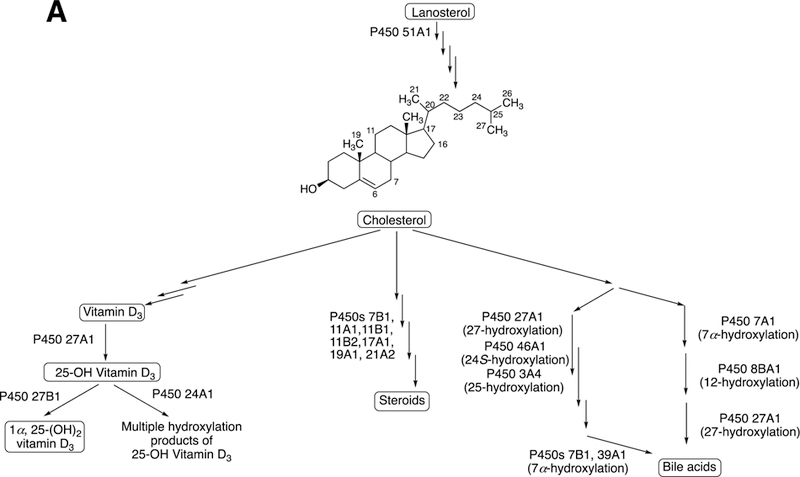
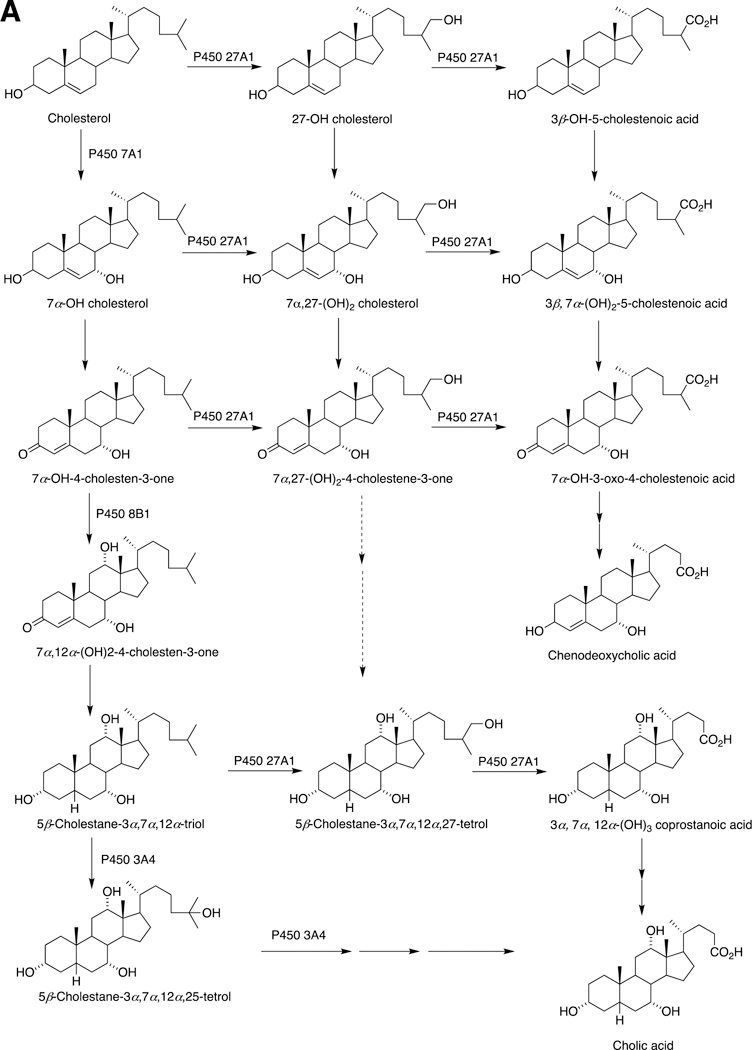
Formation of bile acids, steroids, and active form of vitamin D from cholesterol. All mammalian steroids, bile acids, and active form of vitamin D are formed from cholesterol.
Fig. 4B.
Fig. 4B.
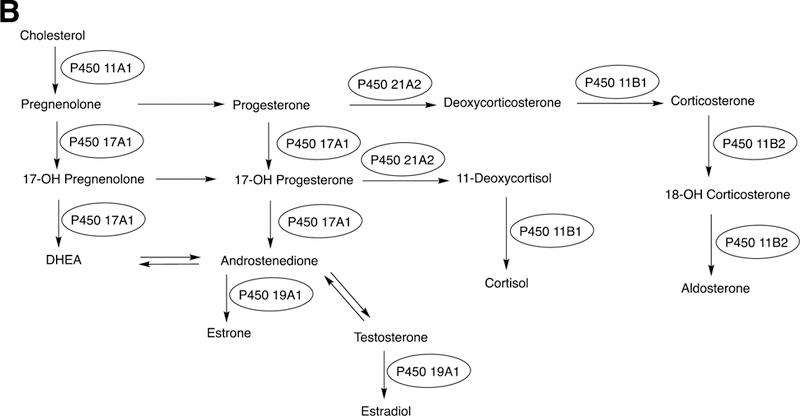
P450 enzymes involved in steroid biosythesis. P450 51A1, the lanosterol 14α-demethylase, is involved in the biosynthesis of cholesterol but is not shown. See Figs. 4A and 17.
Fig. 5.
Fig. 5.
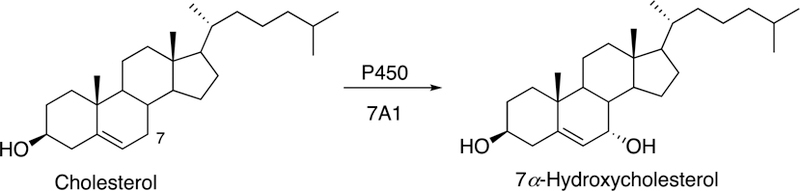
7α-Hydroxylation of cholesterol by P450 7A1.
Fig. 6.
Fig. 6.
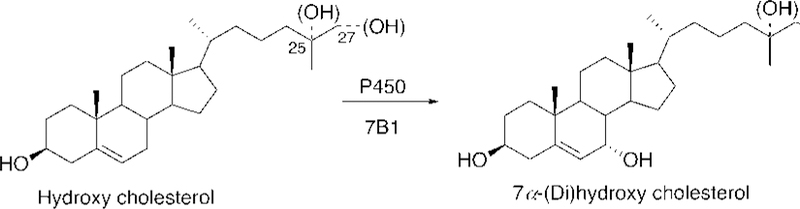
7α-Hydroxylation of 25- or 27-hydroxycholesterol by P450 7B1.
Fig. 7.
Fig. 7.
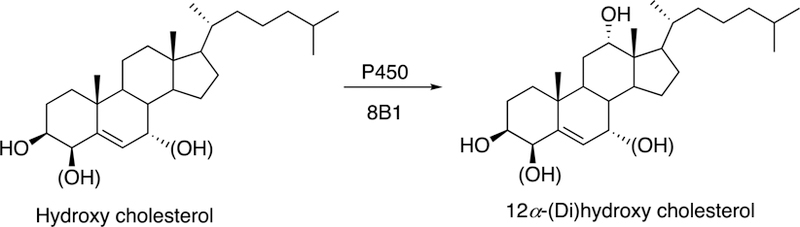
12α-Hydroxylation of 4β- or 7α-hydroxycholesterol by P450 8B1.
Fig. 8.
Fig. 8.
Three-step oxidation of cholesterol to pregnenolone by P450 11A1.
Fig. 9.
Fig. 9.
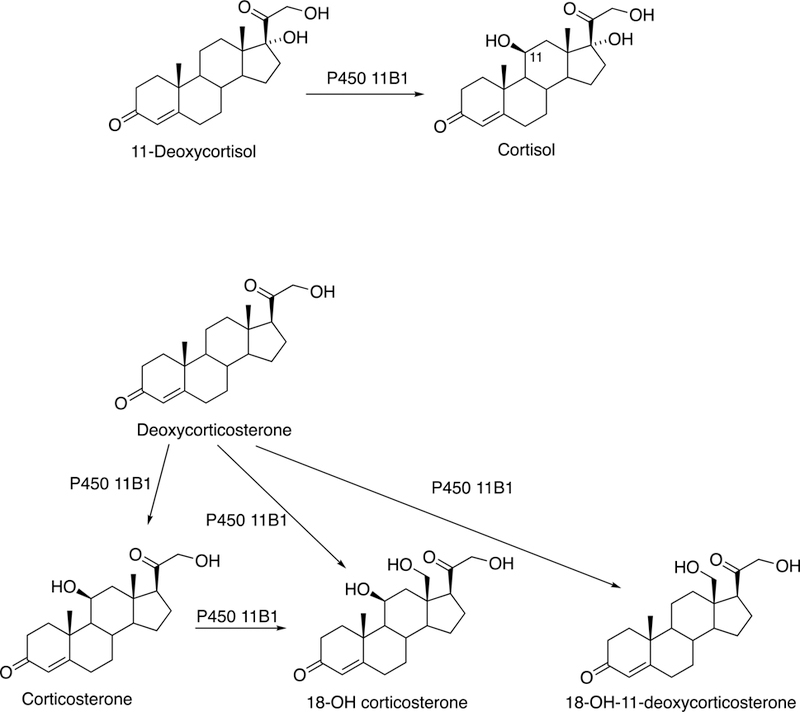
Steroid oxidations catalyzed by (human) P450 11B1.
Fig. 10.
Fig. 10.
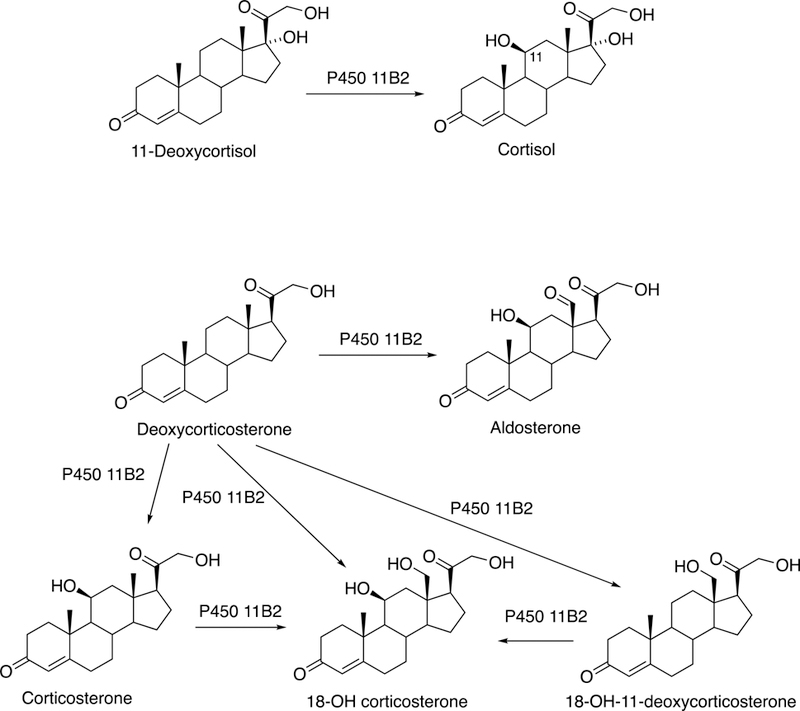
Steroid oxidations catalyzed by (human) P450 11B2.
Fig. 11.
Fig. 11.
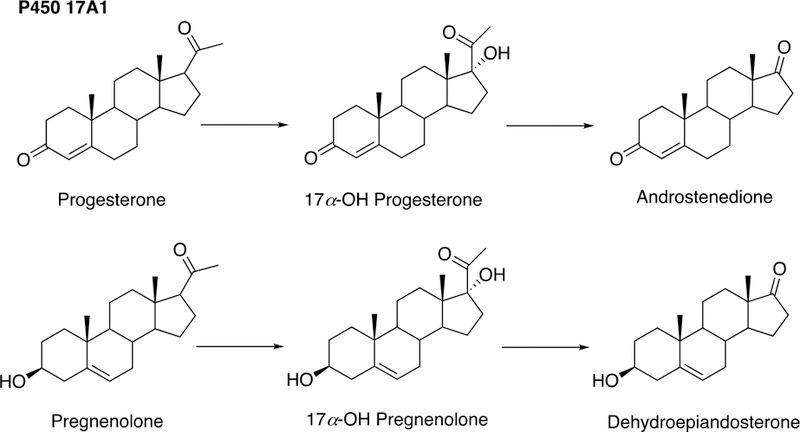
Two-step oxidations catalyzed by P450 17A1.
Fig. 12.
Fig. 12.
Three-step oxidation of testosterone to 17β-estradiol by P450 19A1.
Fig. 13.
Fig. 13.
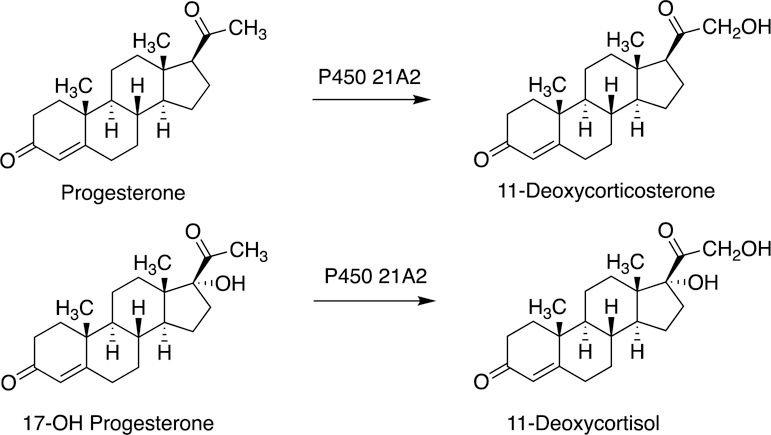
Hydroxylations catalyzed by P450 21A2.
Fig. 14.
Fig. 14.
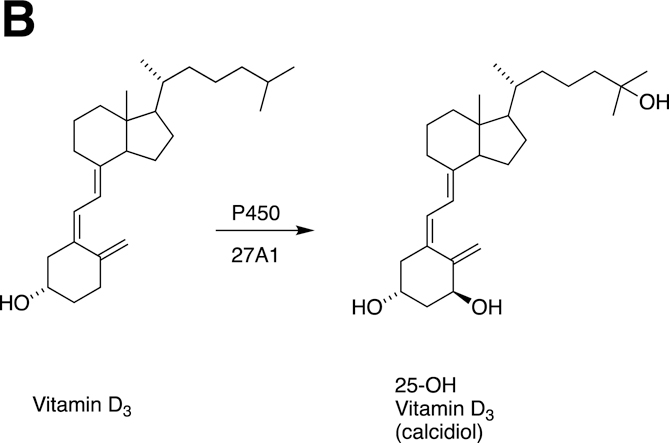
A, Sterol oxidations catalyzed by P450 27A1 in the synthesis of bile acids. B, 25-Hydroxylation of vitamin D3 by P450 27A1.
Fig. 14.
Fig. 14.
A, Sterol oxidations catalyzed by P450 27A1 in the synthesis of bile acids. B, 25-Hydroxylation of vitamin D3 by P450 27A1.
Fig. 15.
Fig. 15.
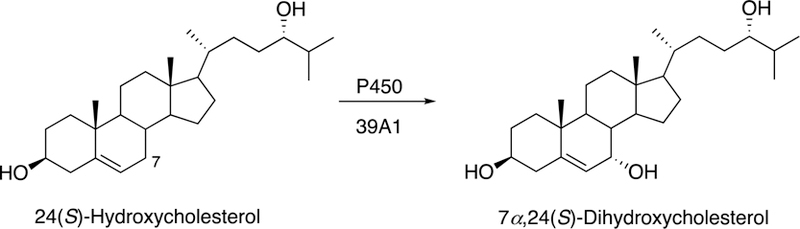
7α-Hydroxylation of 24(S)-hydroxycholesterol by P450 39A1.
Fig. 16.
Fig. 16.
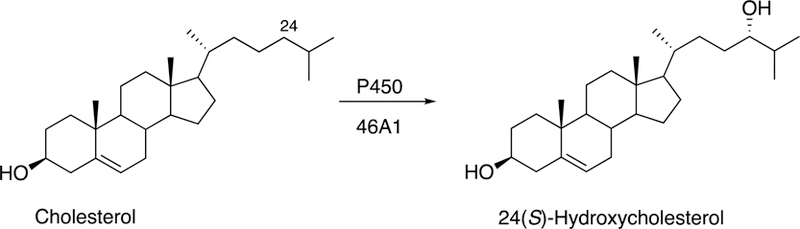
24(S)-Hydroxylation of cholesterol by P450 46A1.
Fig. 17.
Fig. 17.
Three-step 14α-demethylation of lanosterol by P450 51A1.
Fig. 18.
Fig. 18.
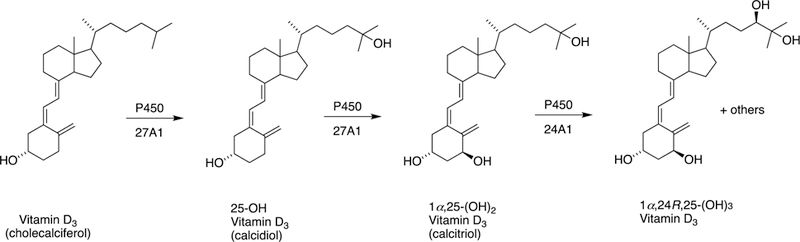
P450s involved in the metabolism of vitamin D3.
Fig. 19.
Fig. 19.
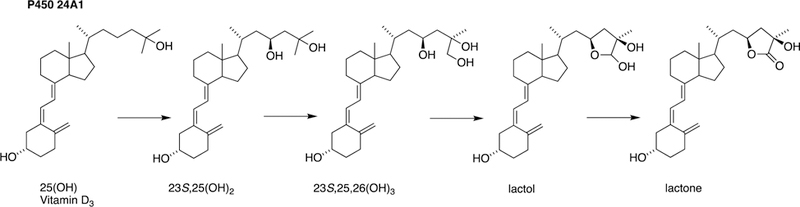
Oxidation of vitamin D3 catalyzed by P450 24A1.
Fig. 20.
Fig. 20.
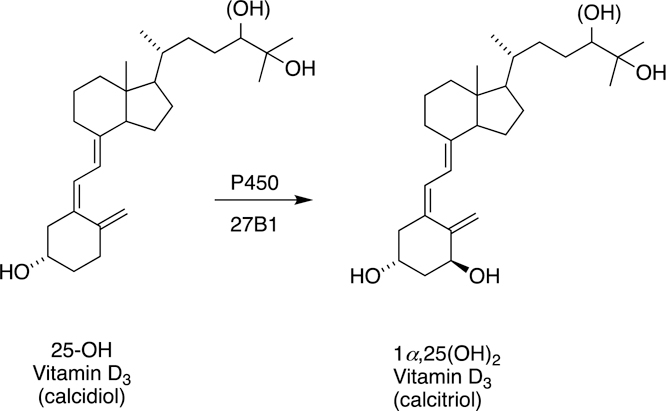
1α-Hydroxylation of 25-hydroxy vitamin D3 by P450 27B1.
Fig. 21.
Fig. 21.
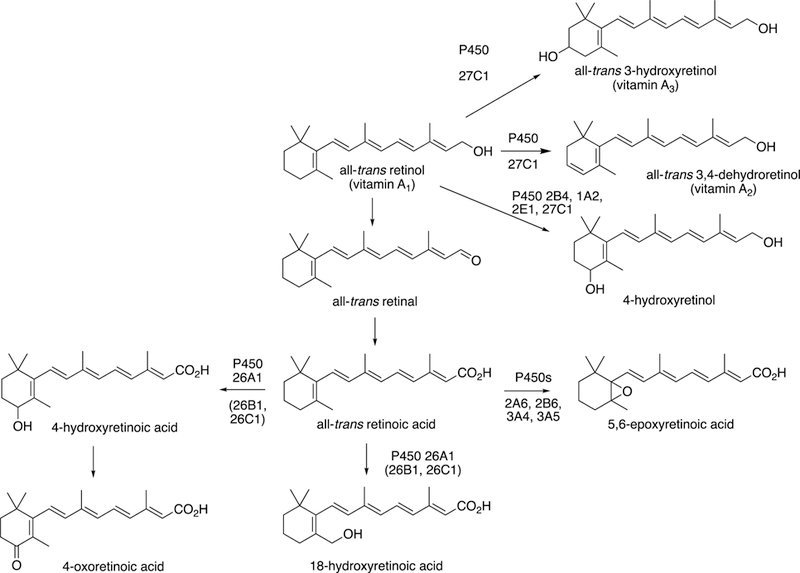
Some P450s involved in the metabolism of retinoids.
Fig. 22.
Fig. 22.
C4-Oxidation of all-trans-retinoic acid catalyzed by P450 26A1.
Fig. 23.
Fig. 23.
C4- and C18-oxidations of all-trans-retinol catalyzed by P450s 26B1 and 26C1.
Fig. 24.
Fig. 24.
3,4-Desaturation of all-trans-retinol by P450 27C1.

References

    1. Guengerich FP. 2015. Chapter 9, Human cytochrome P450 enzymes. In: Ortiz de Montellano PR, editor. Cytochrome P450: Structure, Mechanism, and Biochemistry 4th ed. New York: Springer; p. 523–785.
    1. Guengerich FP. 2017. Intersection of the roles of cytochrome P450 enzymes with xenobiotic and endogenous substrates: Relevance to toxicity and drug interactions. Chem Res Toxicol 30:2–12. - PMC - PubMed
    1. Guengerich FP, Cheng Q. 2011. Orphans in the human cytochrome P450 superfamily: approaches to discovering functions and relevance in pharmacology. Pharmacol. Rev 63:684–699. - PMC - PubMed
    1. Guengerich FP, Rendic S. 2010. Update information on drug metabolism systems–2009, part I. Curr Drug Metab 11:1–3. - PMC - PubMed
    1. Klammert U, Nickel J, Wurzler K, Klingelhoffer C, Sebald W, Kubler AC, Reuther T. 2009. Biological activity of a genetically modified BMP-2 variant with inhibitory activity. Head Face Med 5:6. - PMC - PubMed

Publication types

MeSH terms