


Balance control during stance - A comparison between horseback riding athletes and non-athletes
- PMID: 30721260
- PMCID: PMC6363218
- DOI: 10.1371/journal.pone.0211834
Balance control during stance - A comparison between horseback riding athletes and non-athletes
Abstract
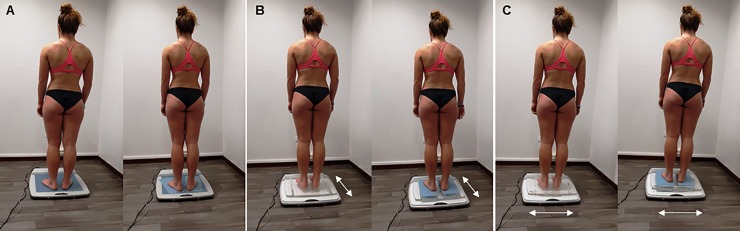
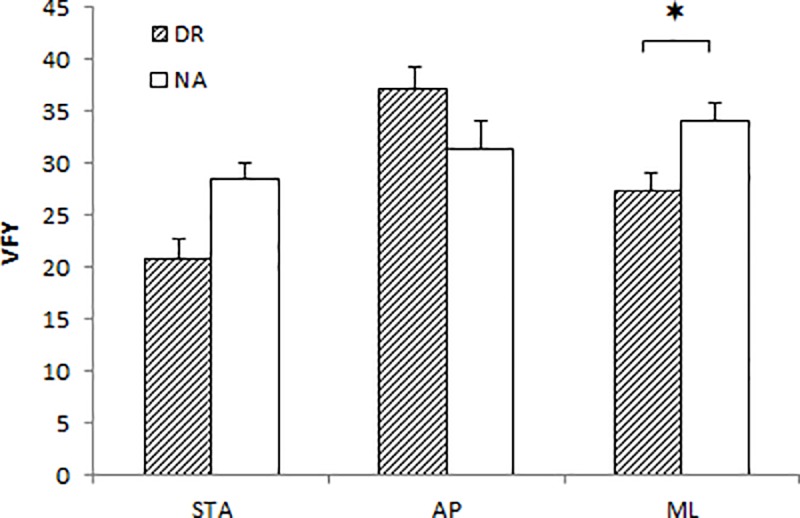
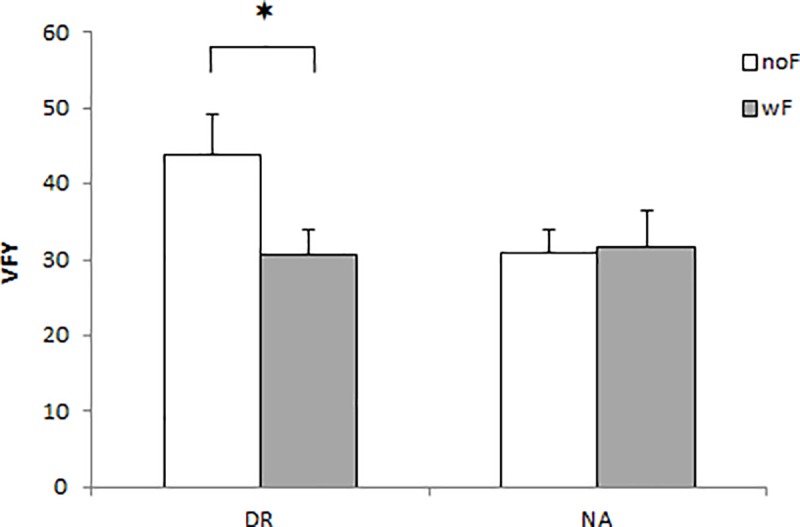
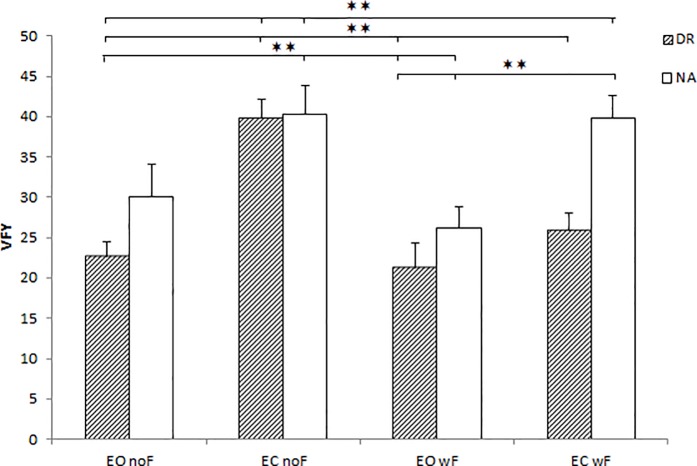
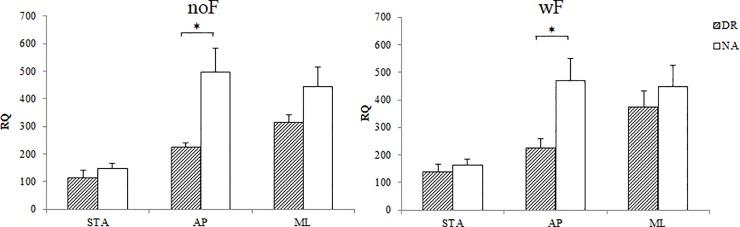
Horseback riding requires the ability to adapt to changes in balance conditions, to maintain equilibrium on the horse and to prevent falls. Postural adaptation involves specific sensorimotor processes integrating visual information and somesthesic information. The objective of this study was to examine this multisensorial integration on postural control, especially the use of visual and plantar information in static (stable) and dynamic (unstable) postures, among a group of expert horse rider women (n = 10) and a group of non-athlete women (n = 12). Postural control was evaluated through the center of pressure measured with a force platform on stable and unstable supports, with the eyes open and the eyes closed, and with the presence of foam on the support or not. Results showed that expert horse rider women had a better postural stability with unstable support in the mediolateral axis compared to non-athletes. Moreover, on the anteroposterior axis, expert horse riders were less visual dependent and more stable in the presence of foam. Results suggested that horseback riding could help developing particular proprioceptive abilities on standing posture as well as better postural muscle tone during particular bipodal dynamic perturbations. These outcomes provide new insights into horseback riding assets and methodological clues to assess the impact of sport practice.
Conflict of interest statement
The ‘Groupe Voltaire - Forestier sellier’ employed AO in October, 2017. However this company did not play any role in this study as it was conducted during AO’s post-doctorate at CIAMS laboratory from Université Paris-Sud (October, 2012, to October, 2017). This affiliation does not alter the authors' adherence to PLOS ONE policies on sharing data and materials.
Figures
References
-
- Hossein Hosseinimehr S, Asghar Norasteh A, Abbasi A, Khaleghi Tazji M. The comparision of dependency on vision and proprioception in gymnastic, wrestling and soccer. Braz J Biomotricity. 2009;3.
Publication types
MeSH terms
LinkOut - more resources
Full Text Sources
Medical
