


Topical Review: Basic Psychological Needs in Adolescents with Chronic Pain-A Self-Determination Perspective
- PMID: 30723533
- PMCID: PMC6339741
- DOI: 10.1155/2019/8629581
Topical Review: Basic Psychological Needs in Adolescents with Chronic Pain-A Self-Determination Perspective
Abstract
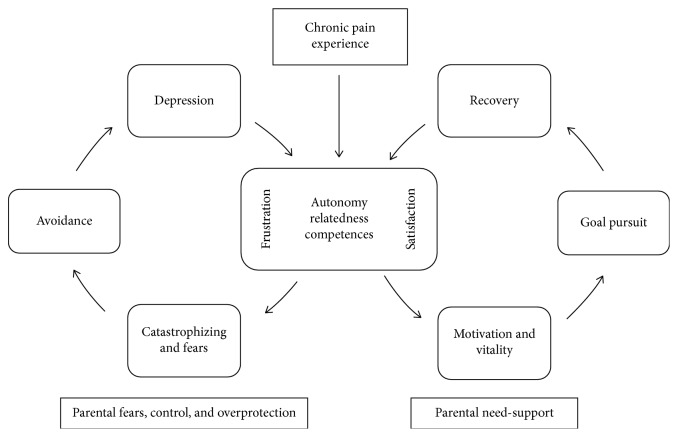
This topical review outlines the resilience pathway to adaptive functioning in pediatric pain within a developmental perspective. Self-Determination Theory proposes that the satisfaction of one's basic psychological needs (for autonomy, relatedness, and competence) is crucial for understanding human flourishing and healthy development. However, the role of the basic psychological needs received little attention in a pediatric-pain population. Yet, we propose that need satisfaction may be a resilience factor and need frustration a risk factor, for living with chronic pain. In this topical review, we first discuss two major models that have been developed to understand pain-related disability: the fear-avoidance model of pain and the ecological resilience-risk model in pediatric chronic pain. Both models have been used with children and adolescents but do not include a developmental perspective. Therefore, we introduce Self-Determination Theory and highlight the potentially moderating and mediating role of the basic needs on pain-related disability in children and adolescents. Taken together, we believe that Self-Determination Theory is compatible with the fear-avoidance model of pain and the ecological resilience-risk model in pediatric chronic pain and may deepen our understanding of why some adolescents are able to live adaptively in spite of chronic pain.
Figures
References
Publication types
MeSH terms
LinkOut - more resources
Full Text Sources
Medical
