


Nutritional and Health Benefits of Jackfruit (Artocarpus heterophyllus Lam.): A Review
- PMID: 30723733
- PMCID: PMC6339770
- DOI: 10.1155/2019/4327183
Nutritional and Health Benefits of Jackfruit (Artocarpus heterophyllus Lam.): A Review
Abstract
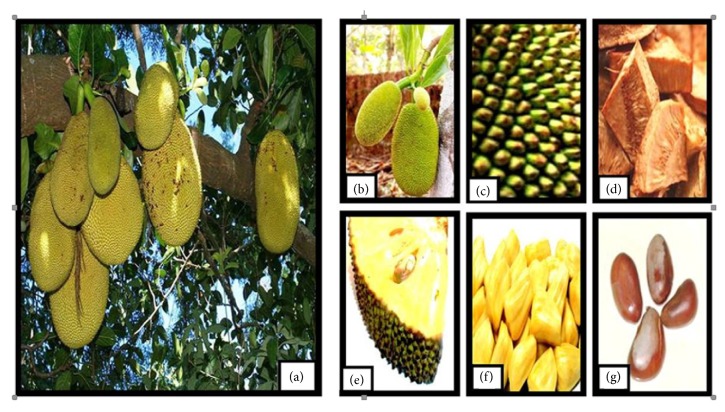
Artocarpus heterophyllus Lam., which is commonly known as jackfruit is a tropical climacteric fruit, belonging to Moraceae family, is native to Western Ghats of India and common in Asia, Africa, and some regions in South America. It is known to be the largest edible fruit in the world. Jackfruit is rich in nutrients including carbohydrates, proteins, vitamins, minerals, and phytochemicals. Both the seeds and the flesh of jackfruit are consumed as curries and boiled forms, while the flesh in fully ripen stage can be eaten directly as a fruit. Several countries have developed different food products such as jam, jellies, marmalades, and ice creams using pureed jackfruit. The several parts of jack tree including fruits, leaves, and barks have been extensively used in traditional medicine due to its anticarcinogenic, antimicrobial, antifungal, anti-inflammatory, wound healing, and hypoglycemic effects. Despite all these benefits, unfortunately, the fruit is underutilized in commercial scale processing in regions where it is grown. The aim of this review is to disseminate the knowledge on nutritional and health benefits of jackfruit, in order to promote utilization of jackfruit for commercial scale food production.
Figures
References
-
- Sim M. Y. M., Ahmad M. N., Aziz Z. A., Ju C. P., Cheen C. C. Classification of Artocarpus heterophyflus L. (Jackfruit) Maturity Using Disposable Screen-Printed Strips Based on Chemomeuic Analysis. Asian Conference on Sensors. 2003:135–142. doi: 10.1109/ASENSE.2003.1225007. - DOI
-
- Rahman M. A., Nahar N., Jabbar Mian A., Mosihuzzaman M. Variation of carbohydrate composition of two forms of fruit from jack tree (Artocarpus heterophyllus L.) with maturity and climatic conditions. Food Chemistry. 1999;65(1):91–97. doi: 10.1016/S0308-8146(98)00175-7. - DOI
-
- Singh S., Krishnamurthi S., Katyal S. Fruit Culture in India. New Delhi, India: ICAR; 1963.
-
- Bose T. K. Jackfruit. In: Mitra B. K., editor. Fruits of India: Tropical and Subtropical. Calcutta, India: Naya Prokash; 1985. pp. 488–498.
-
- Morton J. In: Jackfruit: Fruits of Warm Climates. Julia M. F., Miami F. L., editors. 1987.
Publication types
LinkOut - more resources
Full Text Sources
Other Literature Sources
