


A year of terror and a century of reflection: perspectives on the great influenza pandemic of 1918-1919
- PMID: 30727970
- PMCID: PMC6364422
- DOI: 10.1186/s12879-019-3750-8
A year of terror and a century of reflection: perspectives on the great influenza pandemic of 1918-1919
Abstract
Background: In the spring of 1918, the "War to End All Wars", which would ultimately claim more than 37 million lives, had entered into its final year and would change the global political and economic landscape forever. At the same time, a new global threat was emerging and would become one of the most devastating global health crises in recorded history.
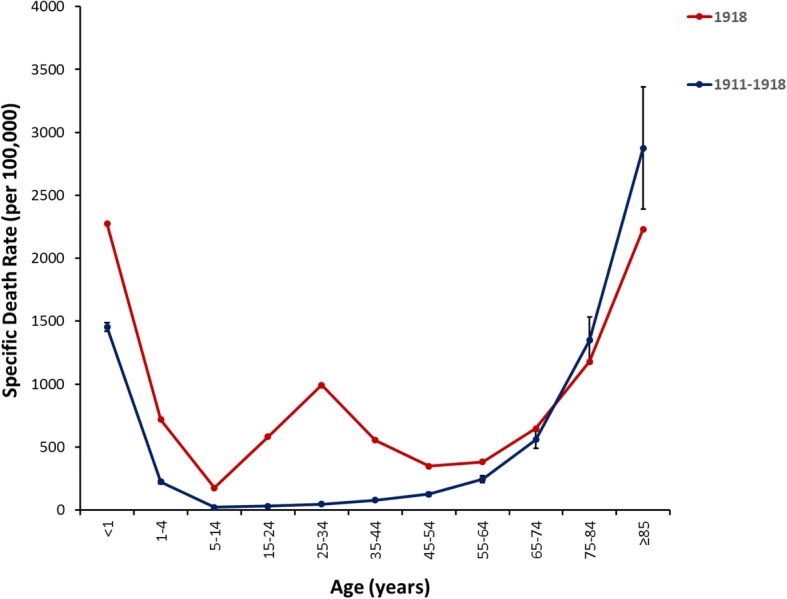
Main text: The 1918 H1N1 pandemic virus spread across Europe, North America, and Asia over a 12-month period resulting in an estimated 500 million infections and 50-100 million deaths worldwide, of which ~ 50% of these occurred within the fall of 1918 (Emerg Infect Dis 12:15-22, 2006, Bull Hist Med 76:105-115, 2002). However, the molecular factors that contributed to the emergence of, and subsequent public health catastrophe associated with, the 1918 pandemic virus remained largely unknown until 2005, when the characterization of the reconstructed pandemic virus was announced heralding a new era of advanced molecular investigations (Science 310:77-80, 2005). In the century following the emergence of the 1918 pandemic virus we have landed on the Moon, developed the electronic computer (and a global internet), and have eradicated smallpox. In contrast, we have a largely remedial knowledge and understanding of one of the greatest scourges in recorded history.
Conclusion: Here, we reflect on the 1918 influenza pandemic, including its emergence and subsequent rapid global spread. In addition, we discuss the pathophysiology associated with the 1918 virus and its predilection for the young and healthy, the rise of influenza therapeutic research following the pandemic, and, finally, our level of preparedness for future pandemics.
Keywords: 1918 Spanish flu; Influenza; Pandemic; Pneumonia; Preparedness; Therapeutics.
Conflict of interest statement
Ethics approval and consent to participate
Not applicable.
Consent for publication
Not applicable.
Competing interests
The authors have declared that they have no competing interests.
Publisher’s Note
Springer Nature remains neutral with regard to jurisdictional claims in published maps and institutional affiliations.
Figures


References
-
- Prevention of Flu [www.canada.ca/en/public-health/services/diseases/flu-influenza/preventio....]
-
- Johnson NP, Mueller J. Updating the accounts: global mortality of the 1918-1920 "Spanish" influenza pandemic. Bull Hist Med. 2002;76(1):105–115. - PubMed
Publication types
MeSH terms
Substances
Grants and funding
LinkOut - more resources
Full Text Sources
Other Literature Sources
Medical
