


Integrated mental health care in a multidisciplinary maternal and child health service in the community: the findings from the Suzaka trial
- PMID: 30727996
- PMCID: PMC6364479
- DOI: 10.1186/s12884-019-2179-9
Integrated mental health care in a multidisciplinary maternal and child health service in the community: the findings from the Suzaka trial
Abstract
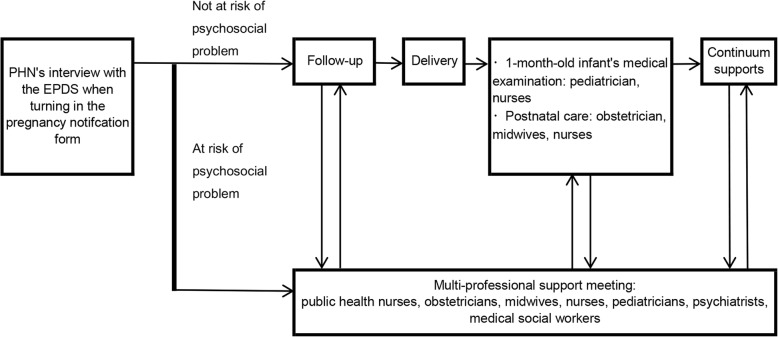
Background: Perinatal mental health problems such as mood disorders are common. We propose a new multidisciplinary health service intervention program providing continuous support to women and their children from the start of pregnancy till after childbirth. The aim of this study was to examine the effects of the program with respect to making women's mental health better in the postpartum period and improving the state of care for women and their children in the perinatal period.
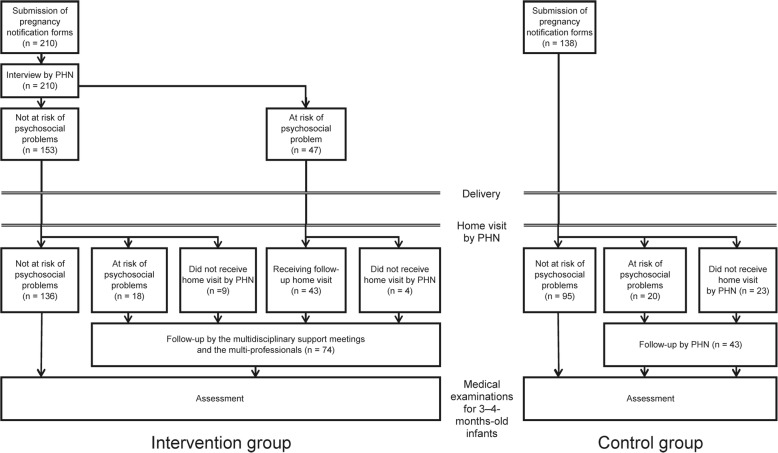
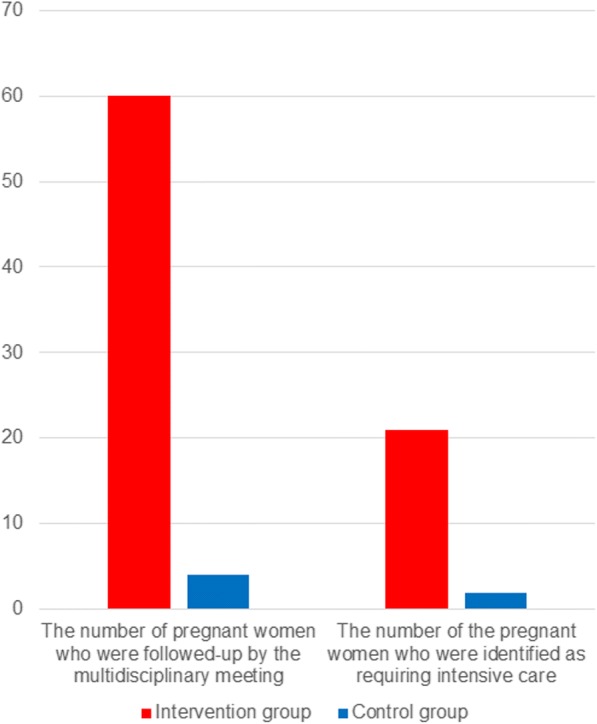
Methods: We performed a controlled study to investigate the effectiveness of the program in Suzaka City, Japan. The women's mental health status was assessed using the Edinburgh Postnatal Depression Scale (EPDS) 3 months postpartum. Of 349 women, 210 were allocated to the intervention group and 139 to the control group. From April 2014 to March 2015, the number of the pregnant women who were followed-up by the multidisciplinary meeting in the intervention and control groups were 60 and 4, respectively. In the same period, the number of the pregnant women who were identified as requiring intensive care were 21 and 2, respectively.
Results: The total EPDS score, which was the primary outcome of the present study, differed significantly between the intervention and control groups (Mean [SD] = 2.74 (2.89) and 4.58 [2.62], respectively; p < 0.001). The number of the women receiving counseling from a public health nurse (5.3% in intervention group, 0.7% in control group, p = 0.02), attending maternal seminars (attendant ratio: 46% whereas 16%, p = 0.01), and receiving home visits by public health nurses (home visit ratio: 93.8% whereas 82.6%, p < 0.001) was significantly higher in the intervention group compared to the control group.
Conclusions: The present study indicates that continuum support provided by integrated mental health care through a multidisciplinary maternal and child health service in the community can make women's mental health better in the postpartum period and help women and their children receive more health services from public health nurses.
Trial registration: Name of registry: Research for the effectiveness of a multi-professional health service intervention program of continuum supports for mother and child which starts for pregnancy periods to enhance maternal mental health. UMIN Clinical Trials Registry number: UMIN000032424 . Registration date: April 29th, 2018. Registration timing: retrospective.
Keywords: Continuum supports; Mental health; Mother; Multidisciplinary; Postnatal depression; Pregnancy periods; Pregnant.
Conflict of interest statement
Ethics approval and consent to participate
The study protocol was reviewed and approved by the Institutional Review Board of the National Center for Child Health and Development, Japan. All participants provided written informed consent.
Consent for publishlication
Not applicable.
Competing interest
The authors declare that they have no competing interests.
Publisher’s Note
Springer Nature remains neutral with regard to jurisdictional claims in published maps and institutional affiliations.
Figures
References
-
- Black RE, Victora CG, Walker SP, Bhutta ZA, Christian P, De Onis M, Ezzati M, Grantham-McGregor S, Katz J, Martorell R. Maternal and child undernutrition and overweight in low-income and middle-income countries. Lancet. 2013;382(9890):427–451. - PubMed
-
- Goodman SH, Rouse MH, Connell AM, Broth MR, Hall CM, Heyward D. Maternal depression and child psychopathology: a meta-analytic review. Clin Child Fam Psychol Rev. 2011;14(1):1–27. - PubMed
-
- Brand SR, Brennan PA. Impact of antenatal and postpartum maternal mental illness: how are the children? Clin Obstet Gynecol. 2009;52(3):441–455. - PubMed
-
- Gress-Smith JL, Luecken LJ, Lemery-Chalfant K, Howe R. Postpartum depression prevalence and impact on infant health, weight, and sleep in low-income and ethnic minority women and infants. Matern Child Health J. 2012;16(4):887–893. - PubMed
-
- Austin M, Highet N, Committee GEA: The beyondblue clinical practice guidelines for depression and related disorders—anxiety, bipolar disorder and puerperal psychosis—in the perinatal period. A guideline for primary care health professionals providing care in the perinatal period Melbourne: beyondblue: the national depression initiative 2011.
Publication types
MeSH terms
Grants and funding
LinkOut - more resources
Full Text Sources
Medical
Miscellaneous
