


Diversity of spotted fever group rickettsiae and their association with host ticks in Japan
- PMID: 30728409
- PMCID: PMC6365641
- DOI: 10.1038/s41598-018-37836-5
Diversity of spotted fever group rickettsiae and their association with host ticks in Japan
Abstract
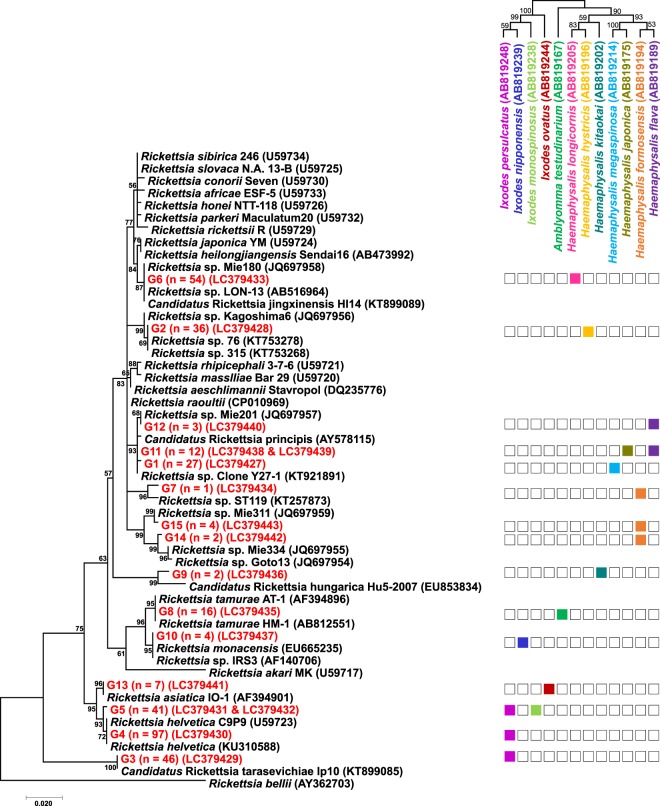
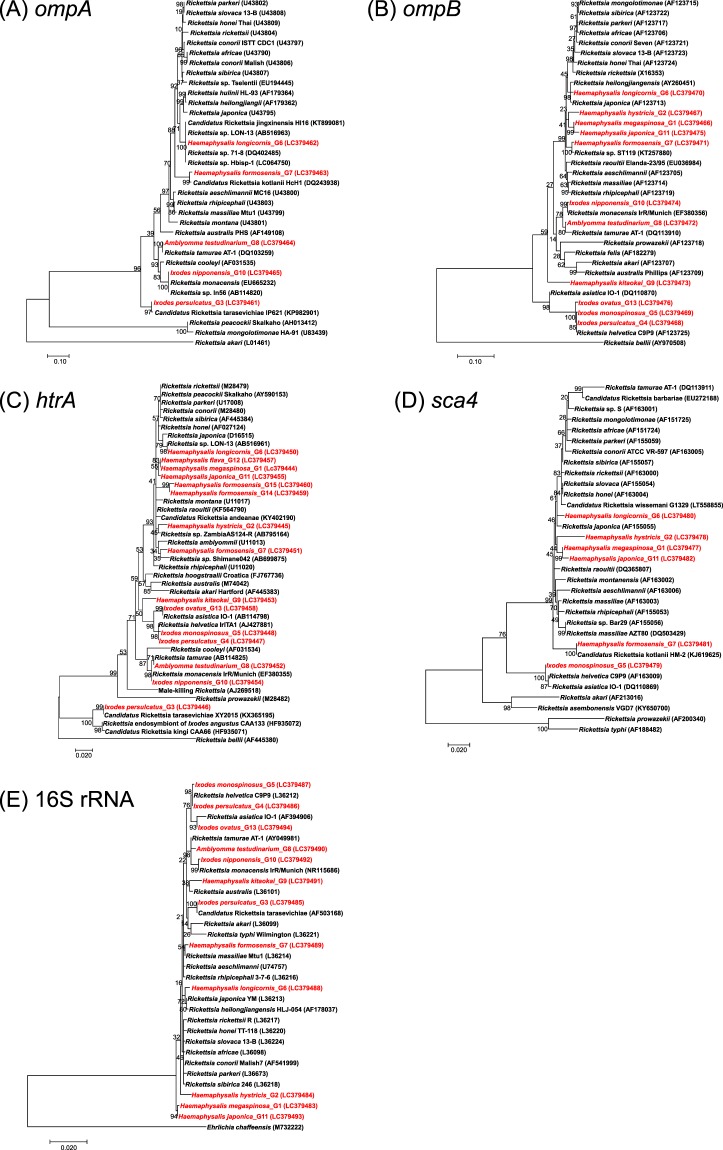
Spotted fever group (SFG) rickettsiae are obligate intracellular Gram-negative bacteria mainly associated with ticks. In Japan, several hundred cases of Japanese spotted fever, caused by Rickettsia japonica, are reported annually. Other Rickettsia species are also known to exist in ixodid ticks; however, their phylogenetic position and pathogenic potential are poorly understood. We conducted a nationwide cross-sectional survey on questing ticks to understand the overall diversity of SFG rickettsiae in Japan. Out of 2,189 individuals (19 tick species in 4 genera), 373 (17.0%) samples were positive for Rickettsia spp. as ascertained by real-time PCR amplification of the citrate synthase gene (gltA). Conventional PCR and sequencing analyses of gltA indicated the presence of 15 different genotypes of SFG rickettsiae. Based on the analysis of five additional genes, we characterised five Rickettsia species; R. asiatica, R. helvetica, R. monacensis (formerly reported as Rickettsia sp. In56 in Japan), R. tamurae, and Candidatus R. tarasevichiae and several unclassified SFG rickettsiae. We also found a strong association between rickettsial genotypes and their host tick species, while there was little association between rickettsial genotypes and their geographical origins. These observations suggested that most of the SFG rickettsiae have a limited host range and are maintained in certain tick species in the natural environment.
Conflict of interest statement
The authors declare no competing interests.
Figures
References
-
- Karpathy SE, Slater KS, Goldsmith CS, Nicholson WL, Paddock CD. Rickettsia amblyommatis sp. nov., a spotted fever group Rickettsia associated with multiple species of Amblyomma ticks in North, Central and South America. Int. J. Syst. Evol. Microbiol. 2016;66:5236–5243. doi: 10.1099/ijsem.0.001502. - DOI - PMC - PubMed
Publication types
MeSH terms
Substances
LinkOut - more resources
Full Text Sources
Miscellaneous
