. 2019 Feb 1:6:19.
doi: 10.1038/s41438-018-0094-2. eCollection 2019.

PpERF3 positively regulates ABA biosynthesis by activating PpNCED2/3 transcription during fruit ripening in peach

Affiliations

PpERF3 positively regulates ABA biosynthesis by activating PpNCED2/3 transcription during fruit ripening in peach

Xiaobei Wang et al. Hortic Res. .

Abstract

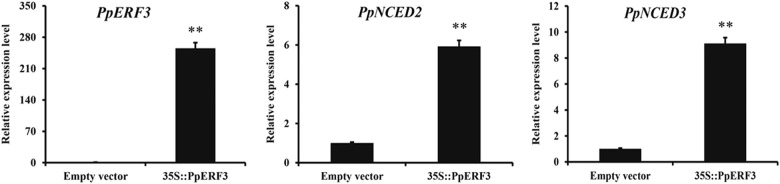
The plant hormone ethylene regulates ripening in climacteric fruits. The phytohormone abscisic acid (ABA) affects ethylene biosynthesis, but whether ethylene influences ABA biosynthesis is unknown. To explore this possibility, we investigated the interactions between the ABA biosynthesis genes PpNCED2/3 and the ethylene response transcription factor PpERF3 in peach fruit. The ABA content increased during fruit maturation and reached a peak at stage S4 III. The increase was greatly inhibited by the ethylene inhibitor 1-MCP, which also suppressed PpERF3 expression. PpERF3 shared a similar expression profile with PpNCED2/3, encoding a rate-limiting enzyme involved in ABA biosynthesis, during fruit ripening. A yeast one-hybrid assay suggested that the nuclear-localized PpERF3 might bind to the promoters of PpNCED2/3. PpERF3 increased the expression of PpNCED2/3 as shown by dual-luciferase reporters, promoter-GUS assays and transient expression analyses in peach fruit. Collectively, these results suggest that ethylene promotes ABA biosynthesis through PpERF3's regulation of the expression of ABA biosynthesis genes PpNCED2/3.


Conflict of interest statement

The authors declare that they have no conflict of interest.

Figures
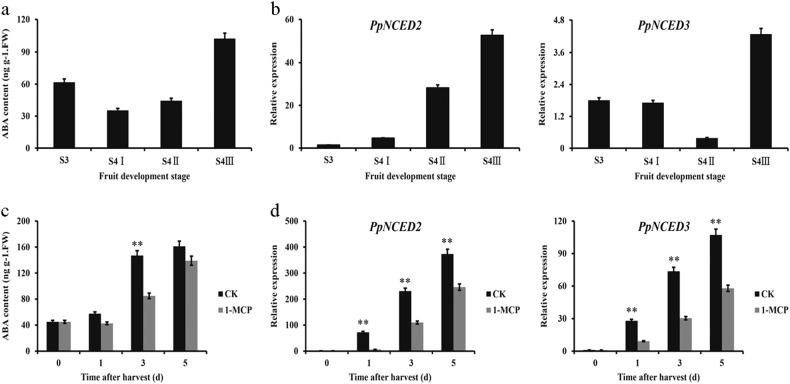
Fig. 1
Fig. 1. The effects of 1-MCP on ABA levels and PpNCED2/3 expression in peach fruit.
a ABA levels in peach fruit. b Expression levels of PpNCED2/3 during peach fruit ripening. c ABA contents in fruit harvested at stage S4 II and treated with 0 or 10 µL L−1 of 1-MCP. d The expression levels of PpNCED2/3 in peach fruit treated as in c. As a control (CK) treatment, 0 µL L−1 of 1-MCP was used. Values are means ± SD of three biological replicates
Fig. 2
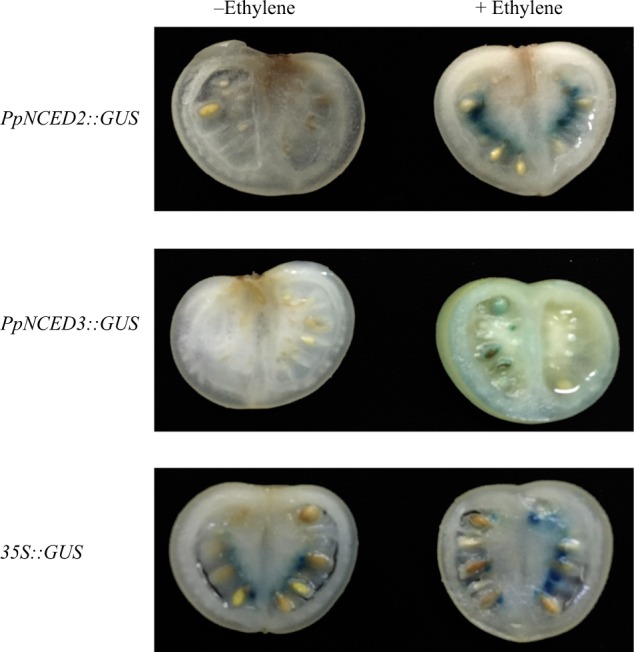
Fig. 2. Analysis of the activity of PpNCED2/3 promoters in tomato fruit.
Tomato fruit at the breaker stage was infiltrated with Agrobacterium cells containing either PpNCED2/3::GUS or 35S::GUS construct. At 3 days after infiltration, the fruit was sliced and tested for GUS activity using a GUS-staining solution with or without 10 mM ethylene
Fig. 3
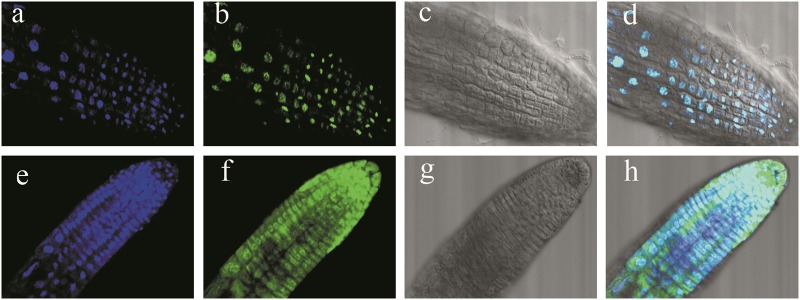
Fig. 3. Subcellular localization of PpERF3::GFP protein in transformed Arabidopsis cells.
Fluorescent signals from green fluorescent protein (GFP) were mainly detected in the nuclei of Arabidopsis cells harboring the PpERF3::GFP reporter construct. a, e DAPI; b, f GFP fluorescence; c, g bright field; d, h merged image
Fig. 4
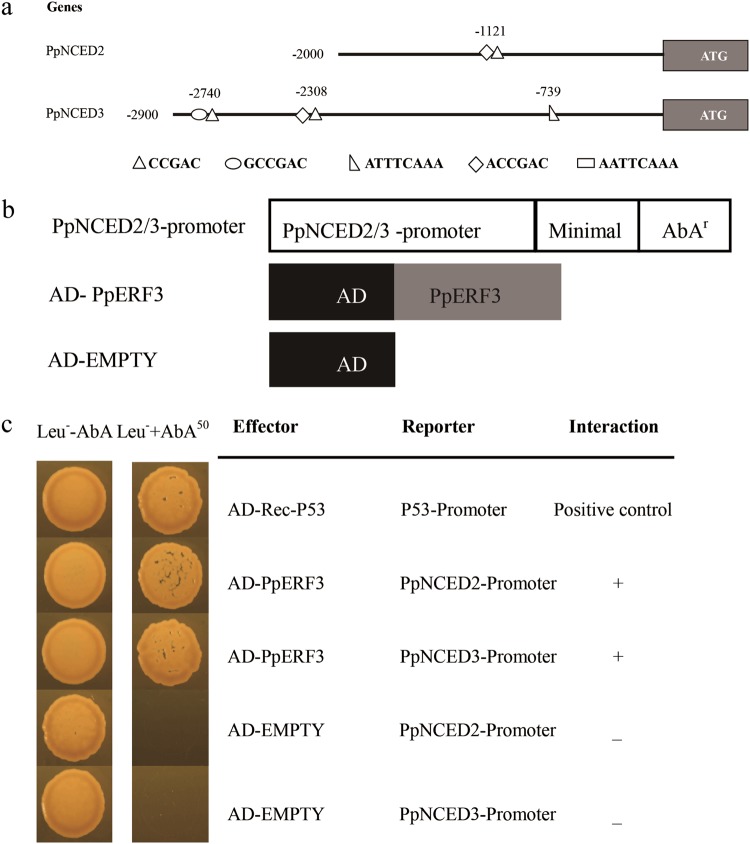
Fig. 4. PpNCED2/3 promoters contain ERF-binding motifs.
PpERF3 might bind to the PpNCED2/3 promoters. a The promoters of PpNCED2/3 genes are represented by lines (showing promoter length); various motifs in the promoters are indicated. The exact locations of cis-acting elements are marked by numbers that indicate the nucleotide distance from the translation start site. b The CDS of PpERF3 was cloned into the pGADT7 vector, whereas the promoters of PpNCED2/3 were cloned into the pAbAi vector. c The growth status of yeasts on two different types of media after they were transformed with a combination of effector and reporter vectors is shown. Normal yeast growth on the defective medium containing the antibiotic aureobasidin A (−Leu + AbA50) indicates the binding of protein PpERF3 to the promoter sequences of PpNCED2 and PpNCED3
Fig. 5
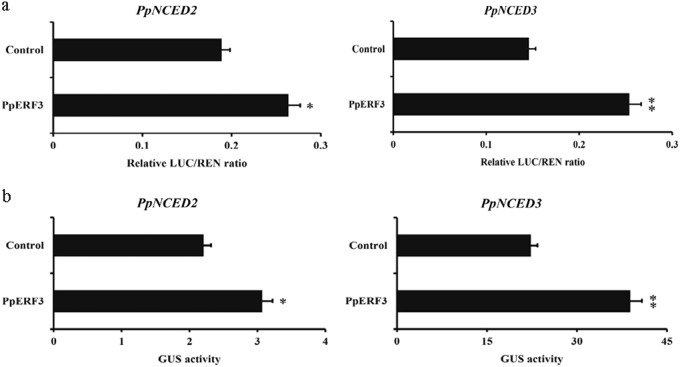
Fig. 5. PpERF3 enhanced the activity of PpNCED2/3 promoters in transient expression assays in tobacco leaves.
a Agrobacterium tumefaciens having PpNCED2/3 or PpERF3 plasmids was infiltrated into tobacco leaves to analyze the activity enhancement of PpNCED2/3 promoters by PpERF3. Significantly higher LUC/REN ratios were obtained with the PpERF3 effect vector than with the non-PpERF3 control vector, indicating that PpERF3 enhanced PpNCED2/3 promoter activity. b The PpERF3 effector with plasmid having the PpNCED2/3 promoters was infiltrated into tobacco leaves. The effector and empty pK2GW7 plasmids that were co-transformed into tobacco were used as controls. Values are means ±SD (n=3), * and ** represent significance at p<0.05 and p<0.01, compared to control based on t-test, respectively
Fig. 6
Fig. 6. Transient over-expression of PpERF3 in peach fruit enhanced the transcript levels of PpNCED2/3.
Transcript levels of PpERF3, PpNCED2, PpNCED3 in peach fruit infiltrated with the empty (control) and 35S::PpERF3 vectors. Values are means ± SD (n=3), ** represent significance at p<0.01, compared to control based on t-test

References

    1. Klee HJ, Giovannoni JJ. Genetics and control of tomato fruit ripening and quality attributes. Annu. Rev. Genet. 2011;45:41–59. doi: 10.1146/annurev-genet-110410-132507. - DOI - PubMed
    1. Martel C, Vrebalov J, Tafelmeyer P, Giovannoni JJ. The tomato MADS-box transcription factor RIPENING INHIBITOR interacts with promoters involved in numerous ripening processes in a COLORLESS NONRIPENING-dependent manner. Plant Physiol. 2011;157:1568–1579. doi: 10.1104/pp.111.181107. - DOI - PMC - PubMed
    1. Li T, et al. Apple (Malus domestica) MdERF2 negatively affects ethylene biosynthesis during fruit ripening by suppressing MdACS1 transcription. Plant J. 2016;88:735–748. doi: 10.1111/tpj.13289. - DOI - PubMed
    1. Han, Y. et al. Banana transcription factor MaERF11 recruits histone deacetylase MaHDA1 and represses the expression of MaACO1 and expansins during fruit ripening. Plant Physiol. (2016). 10.1104/pp.16.00301. - PMC - PubMed
    1. McMurchie EJ, McGlasson WB, Eaks IL. Treatment of fruit with propylene gives information about the biogenesis of ethylene. Nature. 1972;237:235. doi: 10.1038/237235a0. - DOI - PubMed