Review
. 2019 Jun;185(6):1021-1042.
doi: 10.1111/bjh.15764. Epub 2019 Feb 6.

Childhood, adolescent and young adult non-Hodgkin lymphoma: current perspectives

Affiliations
Review

Childhood, adolescent and young adult non-Hodgkin lymphoma: current perspectives

Mitchell S Cairo et al. Br J Haematol. 2019 Jun.

Abstract

The 6th International Symposium on Childhood, Adolescent and Young Adult (CAYA) Non-Hodgkin Lymphoma (NHL) was held in Rotterdam, Netherlands, 26-29 September, 2018. This summary manuscript is a perspective on the presentations from the plenary scientific sessions, including wellness and survivorship, B-cell NHL, AYA lymphoma, translational NHL biology, lymphoma immunology, bone marrow transplantation and cell therapy, T/Natural Killer cell lymphoma, anaplastic large cell lymphoma, lymphoblastic lymphoma, novel lymphoma therapeutics and Hodgkin lymphoma. The symposium was attended by over 260 registrants from 42 different countries and included young, middle and senior investigators. Finally, the Angelo Rosolen, MD, Memorial Lecture was delivered by Alfred Reiter, MD.

Keywords: Childhood; adolescent; current perspectives; non-Hodgkin lymphoma; young adult.


Figures

Fig 1.
Fig 1.
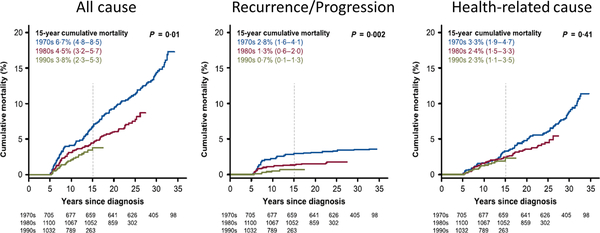
All-cause and cause-specific cumulative mortality among 5-year survivors of childhood cancer, according to decade. Shown is the cumulative incidence of death from any cause (A), from disease recurrence or progression (B), and from any health-related cause (C) among 34 033 patients who survived at least 5 years after childhood cancer for which treatment was initiated during the period from 1970 to 1999. The values in parentheses are 95% confidence intervals. The vertical dashed lines indicate 15-year mortality. P values are for the comparisons among the three decades. From New England Journal of Medicine, Armstrong, G.T., Chen, Y., Yasui, Y., Leisenring, W., Gibson, T.M., Mertens, A.C., Stovall, M., Oeffinger, K.C., Bhatia, S., Krull, K.R., Nathan, P.C., Neglia, J.P., Green, D.M., Hudson, M.M. & Robison, L.L., Reduction in Late Mortality among 5-Year Survivors of Childhood Cancer. 374, 833–842. Copyright ©2016 Massachusetts Medical Society. Modified with permission from Massachusetts Medical Society.
Fig 2.
Fig 2.
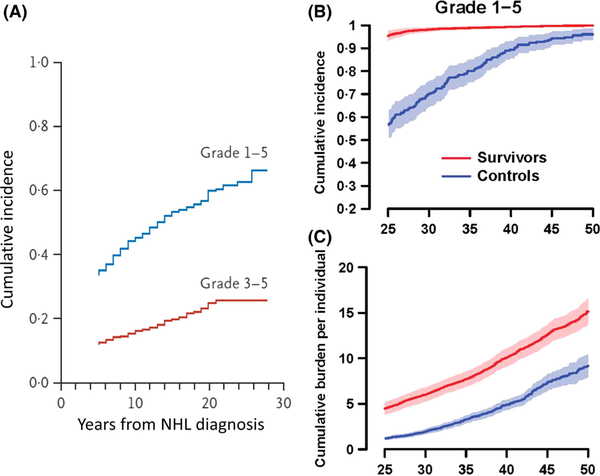
(A) Cumulative incidence of chronic health conditions among 10 397 adult survivors of paediatric cancer, according to the original diagnosis and the severity of the later condition. Among the survivors of various types of childhood cancer, the severity of subsequent health conditions was scored according to the Common Terminology Criteria for Adverse Events (version 3) as either mild (grade 1), moderate (grade 2), severe (grade 3), life-threatening or disabling (grade 4), or fatal (grade 5). For the total survivor cohort, the curves showing the cumulative incidence of the two outcomes by grade are truncated at 28 years, even though the text provides data up to 30 years after the original cancer diagnosis. This was done for consistency with the panels showing data for groups of patients with certain types of cancer, in which smaller samples yielded data that were not as robust at 30 years as they were at 28 years. NHL, non-Hodgkin lymphoma. From New England Journal of Medicine, Oeffinger, K.C., Mertens, A.C., Sklar, C.A., Kawashima, T., Hudson, M.M., Meadows, A.T., Friedman, D.L., Marina, N., Hobbie, W., Kadan-Lottick, N.S., Schwartz, C.L., Leisenring, W., Robison, L.L. & Childhood Cancer Survivor, S. Chronic health conditions in adult survivors of childhood cancer. 355, 1572–1582. Copyright ©2006 Massachusetts Medical Society. Modified with permission from Massachusetts Medical Society. (B) and (C) Cumulative incidence (B) and burden (C) of all (grade 1–5) chronic health conditions in St Jude lifetime cohort study survivors of childhood cancer and in community controls. Reprinted from The Lancet, 390, Bhakta, N., Liu, Q., Ness, K.K., Baassiri, M., Eissa, H., Yeo, F., Chemaitilly, W., Ehrhardt, M.J., Bass, J., Bishop, M.W., Shelton, K., Lu, L., Huang, S., Li, Z., Caron, E., Lanctot, J., Howell, C., Folse, T., Joshi, V., Green, D.M., Mulrooney, D.A., Armstrong, G.T., Krull, K.R., Brinkman, T.M., Khan, R.B., Srivastava, D.K., Hudson, M.M., Yasui, Y. & Robison, L.L., The cumulative burden of surviving childhood cancer: an initial report from the St Jude Lifetime Cohort Study (SJLIFE), 2569–2582. Copyright 2017, with permission from Elsevier.
Fig 3.
Fig 3.
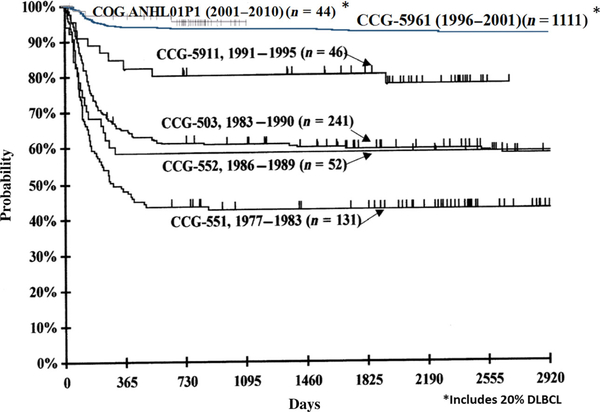
Comparison of event-free survival by study among disseminated mature B-NHL patients from CCG/COG studies (551, 503, 552, 5911, CCG-5961, ANHL01P1). CCG, Children’s Cancer Group; COG, Children’s Oncology Group; DLBCL, diffuse large B-cell lymphoma; NHL, non-Hodgkin lymphoma.
Fig 4.
Fig 4.
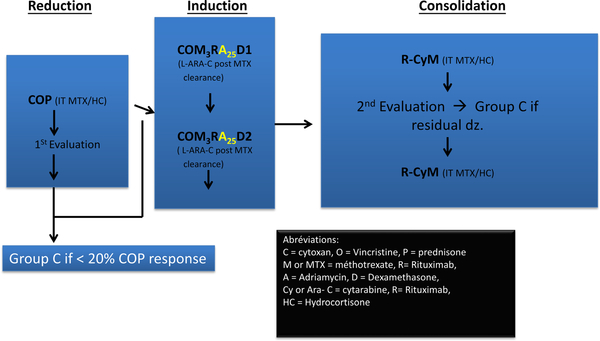
Reduce the burden of oncological therapy (REBOOT) Group B treatment schema. COM, cyclophosphamide (cytoxan), vincristine, methotrexate; COM3RA25D1, cyclophosphamide, vincristine, methotrexate, rituximab, doxorubicin (adriamycin), dexamethasone; COP, cyclophosphamide, vincristine, prednisone; dz, disease; HC, hydrocortisone; IT, intrathecal; MTX, methotrexate; R-CyM, rituximab, cytarabine, methotrexate.
Fig 5.
Fig 5.
PCNSL and PTL harbour frequent 9p24.1 PD-L1/PD-L2 copy number alterations and infrequent translocations. (A) Genomic Identification of Significant Targets in Cancer (GISTIC)-defined copy number alterations (CNAs) in large B-cell lymphoma subtypes. GISTIC-defined recurrent CNAs (amplification in red) in 180 primary DLBCLs14 are compared with those in 11 primary mediastinal B-cell lymphomas (left panel) and 28 PCNSLs/PTLs (right panel) in mirror plots. Chromosome position is on the y-axis, and significance is on the x-axis. The green line denotes q value of 0 25. (B) Genetic alterations of CD274 (PD-L1) and PDCD1LG2 (PD-L2) in PTL and PCNSL. CNs of PD-L1 in 50 PCSNL cases (42 EBV- and 8 EBV1) from the extension cohort. CNs of CD274 (PD-L1) in 43 PTL cases from the extension cohort. Normals include 5 tonsils and 5 reactive lymph nodes. The upper 95% confidence interval of the normals was used as a threshold for CN gain in the PTLs. Indicated cHL cell lines with known CD274 (PD-L1) copy gain were used as controls. Cases with copy gain are highlighted in red. Error bars reflect standard deviation. The scale bar represents 100 mm. CD274/PD-L1: programmed death ligand 1 gene; cHL, classical Hodgkin lymphoma; CN, copy number; DLBCL, diffuse large B-cell lymphoma; EBV, Epstein-Barr virus; PCNSL, primary central nervous system lymphoma; PDCD1LG2/PD-L2, programmed death ligand 2 gene; PTL, primary testicular lymphoma; TL, testicular lymphoma. Republished with permission of the American Society of Hematology, from: Targetable genetic features of primary testicular and primary central nervous system lymphomas., Chapuy, B., Roemer, M.G., Stewart, C., Tan, Y., Abo, R.P., Zhang, L., Dunford, A.J., Meredith, D.M., Thorner, A.R., Jordanova, E.S., Liu, G., Feuerhake, F., Ducar, M.D., Illerhaus, G., Gusenleitner, D., Linden, E.A., Sun, H.H., Homer, H., Aono, M., Pinkus, G.S., Ligon, A.H., Ligon, K.L., Ferry, J.A., Freeman, G.J., van Hummelen, P., Golub, T.R., Getz, G., Rodig, S.J., de Jong, D., Monti, S. & Shipp, M.A., Blood, 127, 869–881, copyright 2016; permission conveyed through Copyright Clearance Center, Inc.
Fig 6.
Fig 6.
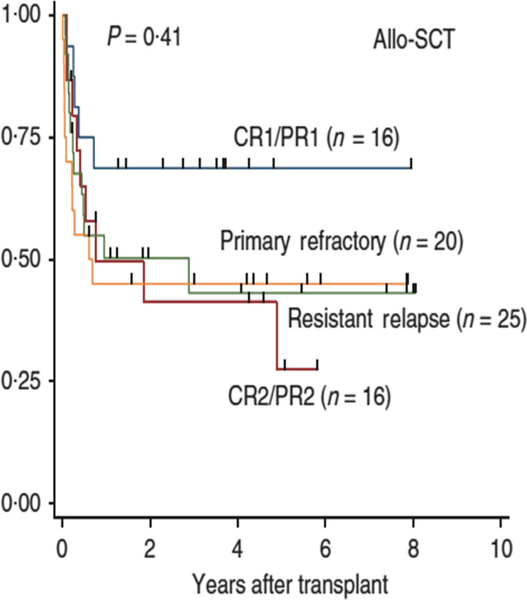
Probability of overall survival in patients with primary central nervous system lymphoma following allogeneic stem cell transplantation stratified by disease status. Overall survival stratified according to the disease status at transplantation in the allo-SCT group. Allo-SCT, allogeneic stem cell transplantation; CR1/2, first/second complete response; PR1/2, first/second partial response. Reprinted by permission from Springer Nature. Leukemia, 27, 1394–1397, Comparison of outcomes between autologous and allogeneic hematopoietic stem cell transplantation for peripheral T-cell lymphomas with central review of pathology. Kim, S.W., Yoon, S.S., Suzuki, R., Mat-suno, Y., Yi, H.G., Yoshida, T., Imamura, M., Wake, A., Miura, K., Hino, M., Ishikawa, T., Kim, J.S., Maeda, Y., Lee, J.J., Kang, H.J., Lee, H.S., Lee, J.H., Izutsu, K., Fukuda, T., Kim, C.W., Yoshino, T., Ohshima, K., Nakamura, S., Nagafuji, K., Suzumiya, J., Harada, M. & Kim, C.S. Copyright 2013.
Fig 7.
Fig 7.
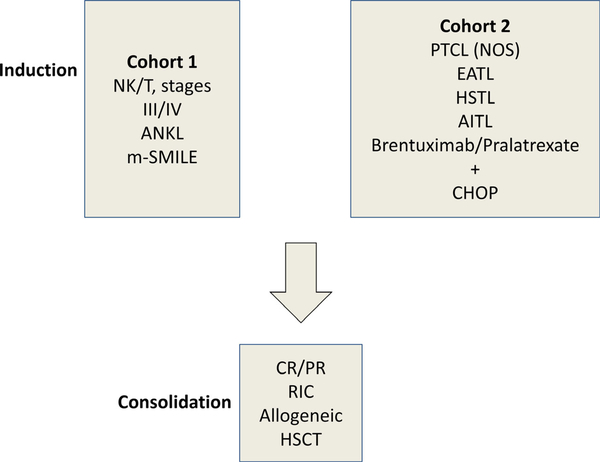
NK/T cell consortium: Experimental design (NYMC-575)NCT03719105). ANKL, aggressive NK cell leukaemia; enteropathy-associated T cell lymphoma; m-SMILE, modified-steroid (dexamethasone), methotrexate, ifosphamide, etoposide, L-asparaginase; NK, natural killer cell; PTCL, peripheral T cell lymphoma; T, T cell.
Fig 8.
Fig 8.
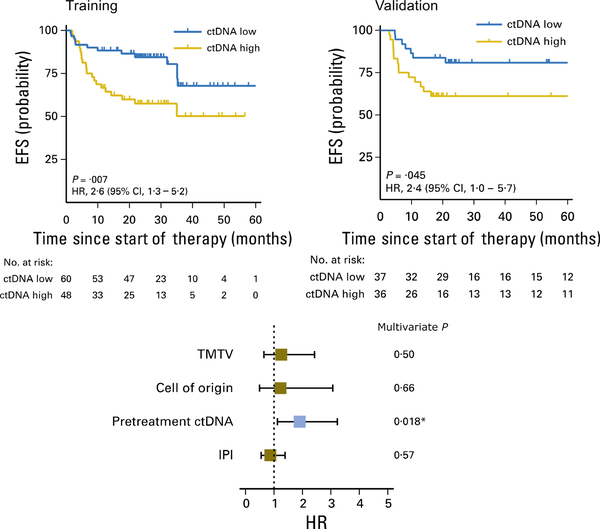
Non-invasive risk assessment at DLBCL diagnosis by ctDNA. CI, confidence interval; ctDNA, circulating tumour DNA; DLBCL, diffuse large B-cell lymphoma; EFS, event-free survival; HR, hazard ratio; IPI, International Prognostic Index; TMTV, total metabolic tumour volume. From Kurtz, D.M. et al Circulating Tumor DNA Measurements As Early Outcome Predictors in Diffuse Large B-Cell Lymphoma. J Clin Oncol, 36, 2845–2853. Reprinted with permission. © 2018 American Society of Clinical Oncology. All rights reserved.
Fig 9.
Fig 9.
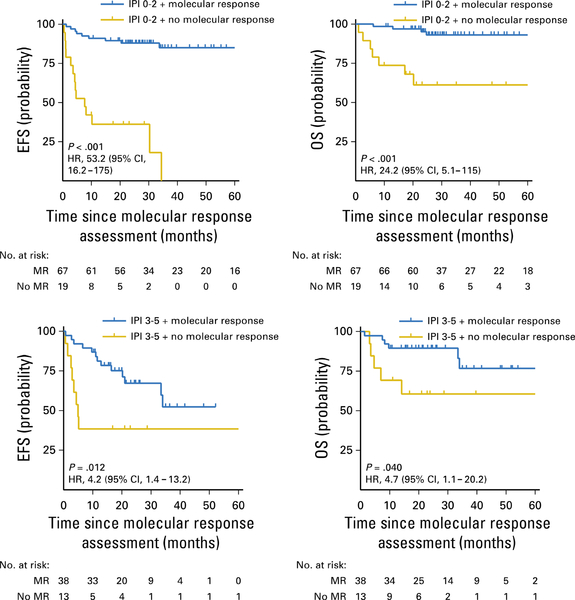
Probability of EFS and OS in adult patients with newly diagnosed DLBCL stratified by early molecular response according to circulating tumour DNA analysis by CAncer Personalized Profiling by deep Sequencing. CI, confidence interval; DLBCL, diffuse large B-cell lymphoma; EFS, event-free survival; HR, hazard ratio; IPI, International Prognostic Index; OS, overall survival. From Kurtz, D.M. et al Circulating Tumor DNA Measurements As Early Outcome Predictors in Diffuse Large B-Cell Lymphoma. J Clin Oncol, 36, 2845–2853. Reprinted with permission. © 2018 American Society of Clinical Oncology. All rights reserved.
Fig 10.
Fig 10.
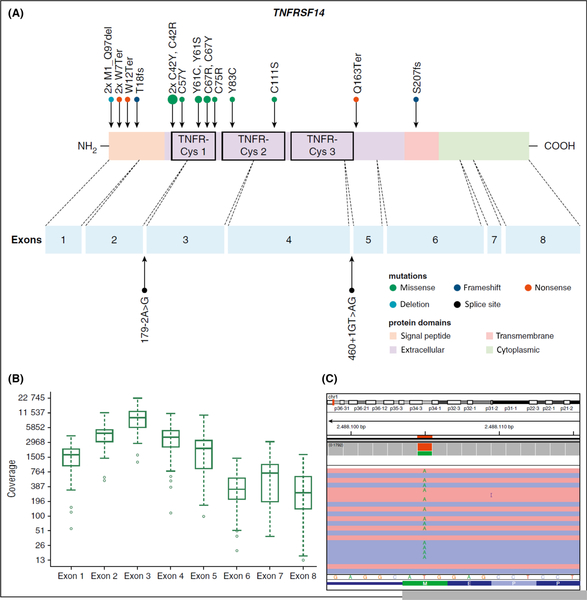
Distrubtion of TNFRSF14 mutations on protein and exon level in paediatric type follicular lymphoma. (A) TNFRSF14 protein with its different domains and the cysteine repeats (TNFR-Cys 1–3) above. Below, localization of exons is indicated by dashed lines with position of splice site mutations. Domains of the protein are represented according to the Uniprot database (www.uniprot.org). Exact positions of each TNFRSF14 mutation found in 21 cases of paediatric type follicular lymphoma (PTFL) are given. (B) Coverage representation for TNFRSF14 exons 1–8 of all PTFL and reactive hyperplasia (RH) samples included in the study. The spacing of the scale on the y-axis is proportional to the logarithm of the number. (C) Exemplary view of the Integrative Genomics Viewer (IGV) showing the mutation p.M1_97del of PTFL11. Republished with permission of the American Society of Hematology, from: Genome-wide analysis of pediatric-type follicular lymphoma reveals low genetic complexity and recurrent alterations of TNFRSF14 gene., Schmidt, J., Gong, S., Marafioti, T., Mankel, B., Gonzalez-Farre, B., Balague, O., Mozos, A., Cabeca-das, J., van der Walt, J., Hoehn, D., Rosenwald, A., Ott, G., Dojcinov, S., Egan, C., Nadeu, F., Ramis-Zaldivar, J.E., Clot, G., Barcena, C., Perez-Alonso, V., Endris, V., Penzel, R., Lome-Maldonado, C., Bonzheim, I., Fend, F., Campo, E., Jaffe, E.S., Salaverria, I. & Quintanilla-Martinez, L., Blood, 128, 1101–1111, copyright 2016; permission conveyed through Copyright Clearance Center, Inc.
Fig 11.
Fig 11.
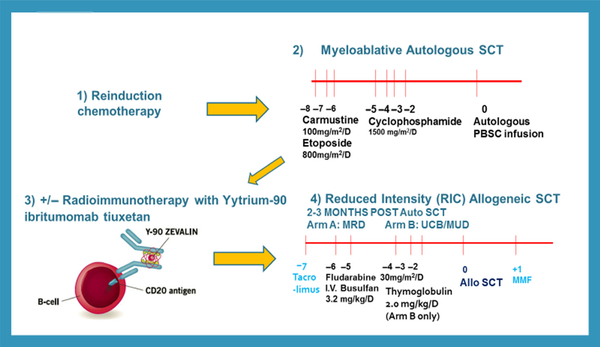
Experimental design of treatment of children, adolescent and young adults with recurrent/refractory mature B-NHL. allo, allogeneic; auto, autologous; MMF, mycophenolate mofetil; MRD, matched related donor; MUD, matched unrelated donor; NHL, non-Hodgkin lymphoma; PBSC, peripheral blood stem cell; SCT, stem cell transplantation; UCB, umbilical cord blood.
Fig 12.
Fig 12.
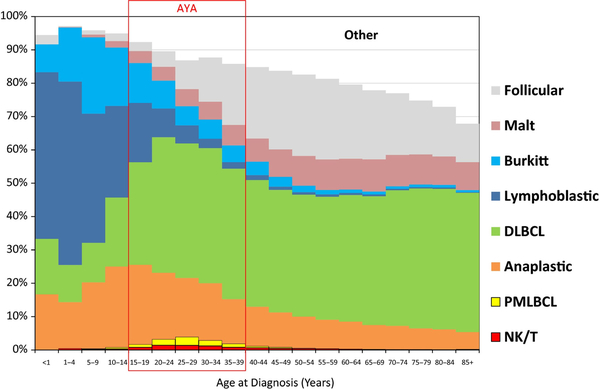
Non-Hodgkin lymphoma distribution of histological types by age, United States SEER 2000–2011. AYA, adolescent and young adults; DLBCL, diffuse large B cell lymphoma; NK, Natural killer cell; PMBL, primary mediastinal large B-cell lymphoma; T, T cell.
Fig 13.
Fig 13.
Non-Hodgkin lymphoma: 5-year lymphoma specific survival by histological type and age, 2000–2011; United States SEER data. DLBCL, diffuse large B cell lymphoma; NK, Natural killer cell; PMLBCL, primary mediastinal large B-cell lymphoma; T, T cell.
Fig 14.
Fig 14.
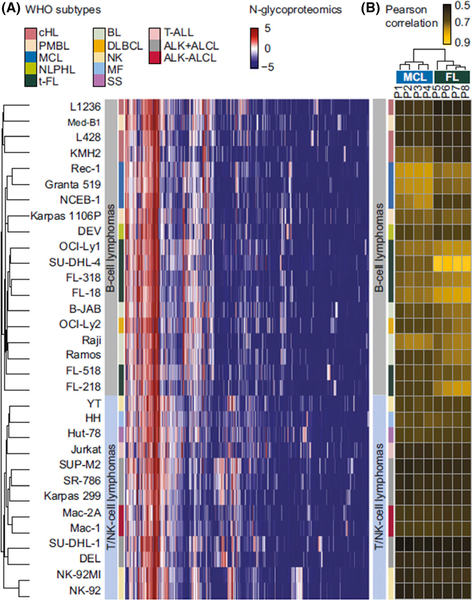
N-glycoproteomic profiles classify lymphomas according to lineage, cell of origin and WHO subtype. (A) Thirty-two cell lines included in this study were accurately classified according to their lineage (B or T/natural killer cells), cell of origin (pre-GC- and GC-derived B cells), and World Health Organization subtypes. (B) Clustering of eight blinded primary B-cell lymphoma samples based on their Pearson’s correlations with the 32 cell lines accurately designated the profiles of clinical samples P1 to P4, which are highly correlated to MCL cell lines, whereas clinical samples P5 to P8 are highly correlated to t-FL cell lines. ALCL, anaplastic large cell lymphoma; ALK+, anaplastic lymphoma kinase positive; BL, Burkitt lymphoma; cHL, classical Hodgkin lymphoma; GC, germinal centre; MCL, mantle cell lymphoma; MF, mycosis fungoides; NK, Natural killer cell lymphoma; NLPHL, nodular lymphocyte predominant Hodgkin lymphoma; PMBL, primary mediastinal large B-cell lymphoma; SS, Sezary syndrome; T, T cell; T-ALL, T-lymphoblastic leukaemia/lymphoma; t-FL, transformed follicular lymphoma. From Rolland, D.C.M., Basrur, V., Jeon, Y.K., McNeil-Schwalm, C., Fermin, D., Conlon, K.P., Zhou, Y., Ng, S.Y., Tsou, C.C., Brown, N.A., Thomas, D.G., Bailey, N.G., Omenn, G.S., Nesvizhskii, A.I., Root, D.E., Weinstock, D.M., Faryabi, R.B., Lim, M.S. & Elenitoba-Johnson, K.S.J. (2017) Functional proteogenomics reveals biomarkers and therapeutic targets in lymphomas.
Fig 15.
Fig 15.
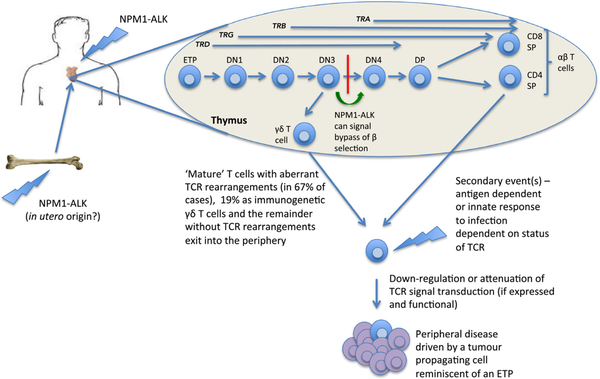
A thymic origin for ALCL. In this model, the t(2;5) or variant translocation occurs in haemopoietic stem cells or thymic progenitors whereby NPM1-ALK is permissive of cellular survival in the thymus despite aberrant TCR rearrangements. These ‘primed’ cells may go undetected until a secondary event(s) occurs that leads to clonal expansion and tumour development. This event may be induced as a consequence of an inflammatory response as evidenced by ALCL in the context of insect bites but might also be initiated in an innate manner. ALCL, anaplastic large cell lymphoma; DN, double negative thymocyte; DP, double positive thymocyte; ETP, early thymic progenitor; SP, single positive; TCR, T-cell receptor. From Turner, S.D., Lamant, L., Kenner, L. & Brugieres, L. (2016) Anaplastic large cell lymphoma in paediatric and young adult patients. Br J Haematol, 173, 560–572. © 2016 John Wiley and Sons Inc.
Fig 16.
Fig 16.
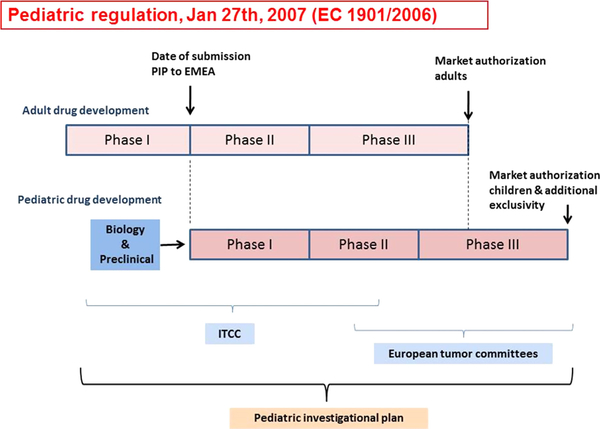
A schematic representation of paediatric drug development. The new European Committee legislation (Regulation EC No. 1901/2006; the ‘Paediatric Regulation’) stimulates pharmaceutical companies to consider paediatric indications when they want to authorise a new medicinal product. Plans for the paediatric development of a drug need to be submitted to the European Medicines Agency (EMEA), in a so-called ‘Paediatric Investigation Plan or PIP’, which comprises the entire development process from pre-clinical studies to clinical development. While the PIP should be submitted following the phase I development in adults, the time to start the paediatric development is defined on a case by case approach, as additional safety and efficacy data may be required before launching the first paediatric studies. A PIP is legally binding but can be amended when the development process requires changes. When pharmaceutical companies have performed paediatric studies they will be rewarded by an additional period of market exclusivity. The Innovative Therapies for Children with Cancer consortium has the facilities for both pre-clinical as well as early clinical development, which is performed in close collaboration with the European tumour committees, who are typically responsible for standard of care and late phase II/phase III studies. Reprinted from Cancer Treatment Reviews, 36, Zwaan, C.M., Kearns, P., Caron, H., Verschuur, A., Riccardi, R., Boos, J., Doz, F., Geoerger, B., Morland, B., Vassal, G., The role of the ‘innovative therapies for children with cancer’ (ITCC) European consortium., 328–334. Copyright 2010, with permission from Elsevier.
Fig 17.
Fig 17.
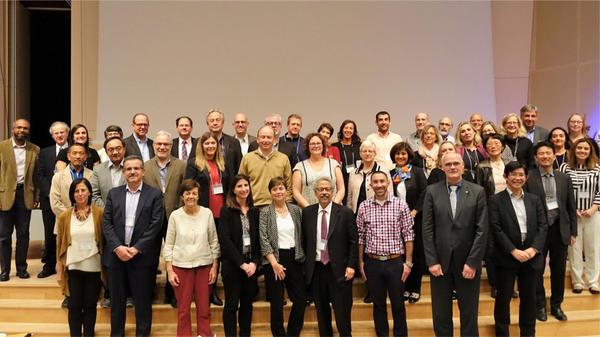
Photograph of the majority of the international faculty participating in the 6th International Childhood, Adolescent and Young Adult NHL symposium in Rotterdam, The Netherlands, September 26–29, 2018.

References

    1. Agsalda M, Kusao I, Troelstrup D. & Shiramizu B. (2009) Screening for residual disease in pediatric burkitt lymphoma using consensus primer pools. Advances in Hematology, 2009, 412163. - PMC - PubMed
    1. Ansell SM (2017) Nivolumab in the treatment of Hodgkin lymphoma. Clinical Cancer Research, 23, 1623–1626. - PubMed
    1. Ansell SM, Lesokhin AM, Borrello I, Halwani A, Scott EC, Gutierrez M, Schuster SJ, Millenson MM, Cattry D, Freeman GJ, Rodig SJ, Chapuy B, Ligon AH, Zhu L, Grosso JF, Kim SY, Timmerman JM, Shipp MA & Armand P. (2015) PD-1 blockade with nivolumab in relapsed or refractory Hodgkin’s lymphoma. New England Journal of Medicine, 372, 311–319. - PMC - PubMed
    1. Armstrong GT, Chen Y, Yasui Y, Leisenring W, Gibson TM, Mertens AC, Stovall M, Oeffinger KC, Bhatia S, Krull KR, Nathan PC, Neglia JP, Green DM, Hudson MM & Robison LL (2016) Reduction in late mortality among 5-year survivors of childhood cancer. New England Journal of Medicine, 374, 833–842. - PMC - PubMed
    1. Attarbaschi A. (2018) Diagnosis and treatment of rare B-NHL variants in children and adolescents. British Journal of Haematology, 182, 10. Abstract 19. - PubMed

Publication types

Substances