If a fish can pass the mark test, what are the implications for consciousness and self-awareness testing in animals?
- PMID: 30730878
- PMCID: PMC6366756
- DOI: 10.1371/journal.pbio.3000021
If a fish can pass the mark test, what are the implications for consciousness and self-awareness testing in animals?
Update in
-
Further evidence for the capacity of mirror self-recognition in cleaner fish and the significance of ecologically relevant marks.PLoS Biol. 2022 Feb 17;20(2):e3001529. doi: 10.1371/journal.pbio.3001529. eCollection 2022 Feb. PLoS Biol. 2022. PMID: 35176032 Free PMC article.
Abstract
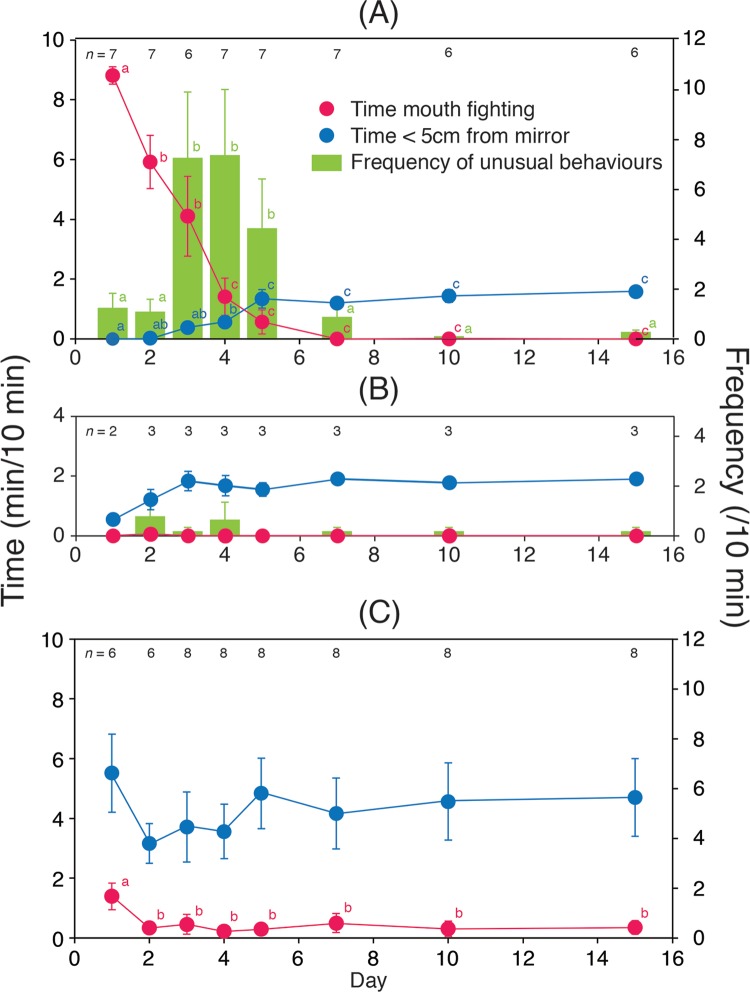
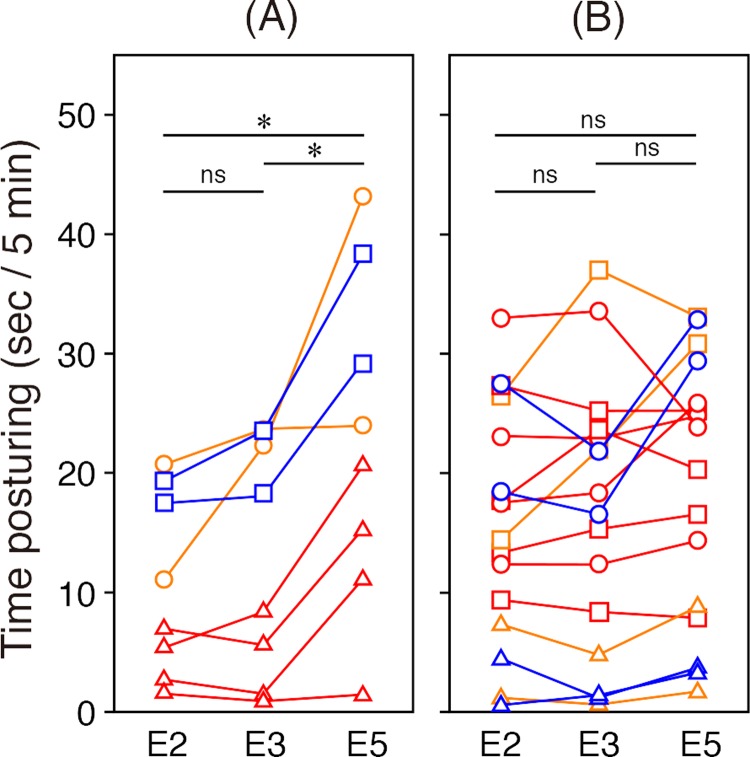
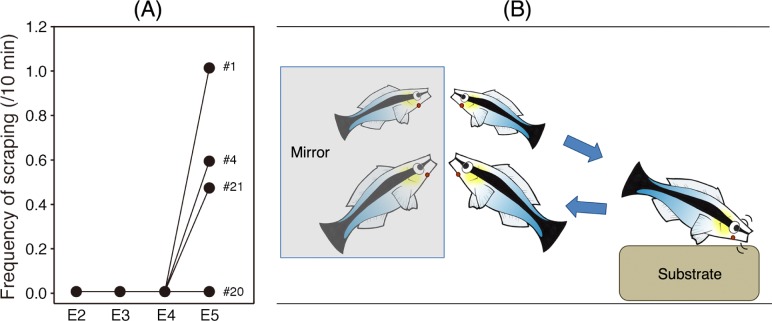
Abstract: The ability to perceive and recognise a reflected mirror image as self (mirror self-recognition, MSR) is considered a hallmark of cognition across species. Although MSR has been reported in mammals and birds, it is not known to occur in any other major taxon. Potentially limiting our ability to test for MSR in other taxa is that the established assay, the mark test, requires that animals display contingency testing and self-directed behaviour. These behaviours may be difficult for humans to interpret in taxonomically divergent animals, especially those that lack the dexterity (or limbs) required to touch a mark. Here, we show that a fish, the cleaner wrasse Labroides dimidiatus, shows behaviour that may reasonably be interpreted as passing through all phases of the mark test: (i) social reactions towards the reflection, (ii) repeated idiosyncratic behaviours towards the mirror, and (iii) frequent observation of their reflection. When subsequently provided with a coloured tag in a modified mark test, fish attempt to remove the mark by scraping their body in the presence of a mirror but show no response towards transparent marks or to coloured marks in the absence of a mirror. This remarkable finding presents a challenge to our interpretation of the mark test—do we accept that these behavioural responses, which are taken as evidence of self-recognition in other species during the mark test, lead to the conclusion that fish are self-aware? Or do we rather decide that these behavioural patterns have a basis in a cognitive process other than self-recognition and that fish do not pass the mark test? If the former, what does this mean for our understanding of animal intelligence? If the latter, what does this mean for our application and interpretation of the mark test as a metric for animal cognitive abilities?
Editor’s note: This Short Report received both positive and negative reviews by experts. The Academic Editor has written an accompanying Primer that we are publishing alongside this article (https://doi.org/10.1371/journal.pbio.3000112). The linked Primer presents a complementary expert perspective; it discusses how the current study should be interpreted in the context of evidence for and against self-awareness in a wide range of animals.
Conflict of interest statement
The authors have declared that no competing interests exist.
Figures
Comment in
-
Fish, mirrors, and a gradualist perspective on self-awareness.PLoS Biol. 2019 Feb 7;17(2):e3000112. doi: 10.1371/journal.pbio.3000112. eCollection 2019 Feb. PLoS Biol. 2019. PMID: 30730875 Free PMC article.
-
A fish eye view of the mirror test.Learn Behav. 2020 Jun;48(2):193-194. doi: 10.3758/s13420-019-00385-6. Learn Behav. 2020. PMID: 31209801
References
-
- Gallup GG Jr. Chimpanzees: self-recognition. Science. 1970; 167: 86–87. - PubMed
-
- Keenan JP, Gallup GG, Falk D. The face in the mirror: The search for the origin of consciousness. New York: HarperCollins Publishers; 2003.
-
- Archer J. Ethology and human development. Herfordshire: Harvester Wheatsheaf; 1992.
Publication types
MeSH terms
LinkOut - more resources
Full Text Sources
Other Literature Sources