


Metabolomic analysis of serum and myocardium in compensated heart failure after myocardial infarction
- PMID: 30731143
- PMCID: PMC6445392
- DOI: 10.1016/j.lfs.2019.01.040
Metabolomic analysis of serum and myocardium in compensated heart failure after myocardial infarction
Abstract
Aims: To determine the metabolic adaptations to compensated heart failure using a reproducible model of myocardial infarction and an unbiased metabolic screen. To address the limitations in sample availability and model variability observed in preclinical and clinical metabolic investigations of heart failure.
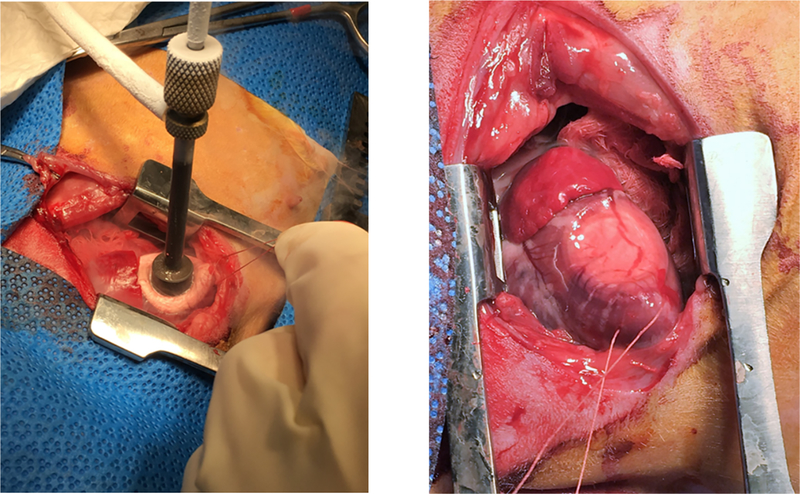
Main methods: Metabolomic analysis was performed on serum and myocardial tissue from rabbits after myocardial infarction (MI) was induced by cryo-injury of the left ventricular free wall. Rabbits followed for 12 weeks after MI exhibited left ventricular dilation and depressed systolic function as determined by echocardiography. Serum and tissue from the viable left ventricular free wall, interventricular septum and right ventricle were analyzed using a gas chromatography time of flight mass spectrometry-based untargeted metabolomics assay for primary metabolites.
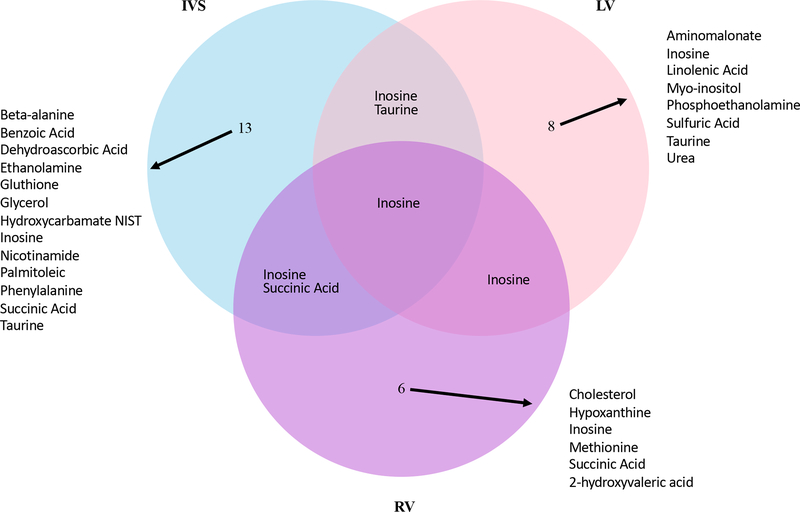
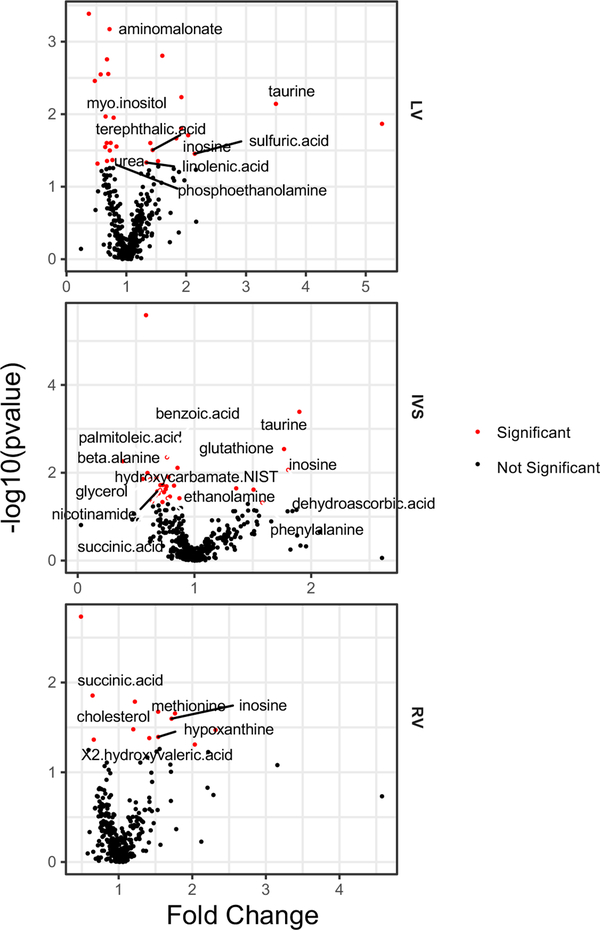
Key findings: Unique results included: a two- three-fold increase in taurine levels in all three ventricular regions of MI rabbits and similarly, the three regions had increased inosine levels compared to sham controls. Reduced myocardial levels of myo-inositol in the myocardium of MI animals point to altered phospholipid metabolism and membrane receptor function in heart failure. Metabolite profiles also provide evidence for responses to oxidative stress and an impairment in TCA cycle energy production in the failing heart.
Significance: Our results revealed metabolic changes during compensated cardiac dysfunction and suggest potential targets for altering the progression of heart failure.
Keywords: BCAA; Heart failure; Inosine; Metabolomics; Myo-inositol; Myocardial infarction; Taurine.
Published by Elsevier Inc.
Conflict of interest statement
Conflict of interest
DMR and HHP are scientific founders of CavoGene LifeSciences LLC and hold equity interest in the company. HKH is a scientific founder and non-paid consultant of Renova Therapeutics.
CavoGene LifeSciences LLC and Renova Therapeutics were not involved with experimental design, analysis, discussions or in the writing of the manuscript. All other authors have reported that they have no relationships relevant to the contents of this paper to disclose. DMR and HHP are scientific founders of Cavogene. HKH is a scientific founder of Renova Therapeutics. All other authors have reported that they have no relationships relevant to the contents of this paper to disclose.
Figures
References
-
- Ahmad T, Kelly JP, McGarrah RW, Hellkamp AS, Fiuzat M, Testani JM, Wang TS, Verma A, Samsky MD, Donahue MP, Ilkayeva OR, Bowles DE, Patel CB, Milano CA, Rogers JG, Felker GM, O’Connor CM, Shah SH, Kraus WE (2016) Prognostic Implications of Long-Chain Acylcarnitines in Heart Failure and Reversibility With Mechanical Circulatory Support. J Am Coll Cardiol 67:291–299 doi: 10.1016/j.jacc.2015.10.079 - DOI - PMC - PubMed
-
- Ardisson LP, Rafacho BP, Santos PP, Assalin H, Goncalves AF, Azevedo PS, Minicucci MF, Polegato BF, Okoshi K, Marchini JS, Barbisan LF, Fernandes AA, Seiva FR, Paiva SA, Zornoff LA (2013) Taurine attenuates cardiac remodeling after myocardial infarction. Int J Cardiol 168:4925–4926 doi: 10.1016/j.ijcard.2013.07.091 - DOI - PubMed
-
- Azuma J, Sawamura A, Awata N, Ohta H, Hamaguchi T, Harada H, Takihara K, Hasegawa H, Yamagami T, Ishiyama T, et al. (1985) Therapeutic effect of taurine in congestive heart failure: a double-blind crossover trial. Clin Cardiol 8:276–282, - PubMed
