


Review: Acute superior mesenteric artery embolism: A vascular emergency cannot be ignored by physicians
- PMID: 30732209
- PMCID: PMC6380707
- DOI: 10.1097/MD.0000000000014446
Review: Acute superior mesenteric artery embolism: A vascular emergency cannot be ignored by physicians
Abstract
Background: Acute mesenteric ischemia (AMI) is a life-threatening medical condition that occurs when a sudden decreased perfusion to the intestines which leads to bowel infarction, and acute superior mesenteric artery embolism (ASMAE) is the main cause of AMI. Unfortunately, with the improvement of diagnosis and treatment technology, the mortality remains high due to less frequent clinical suspicion resulted from the unclear clinical manifestation and non-specific laboratory findings.
Methods: Relevant studies published were identified by searching the PubMed, Embase and Cochrane Library databases. This review presented the literatures to introduce the research progress of ASMAE in recent years.
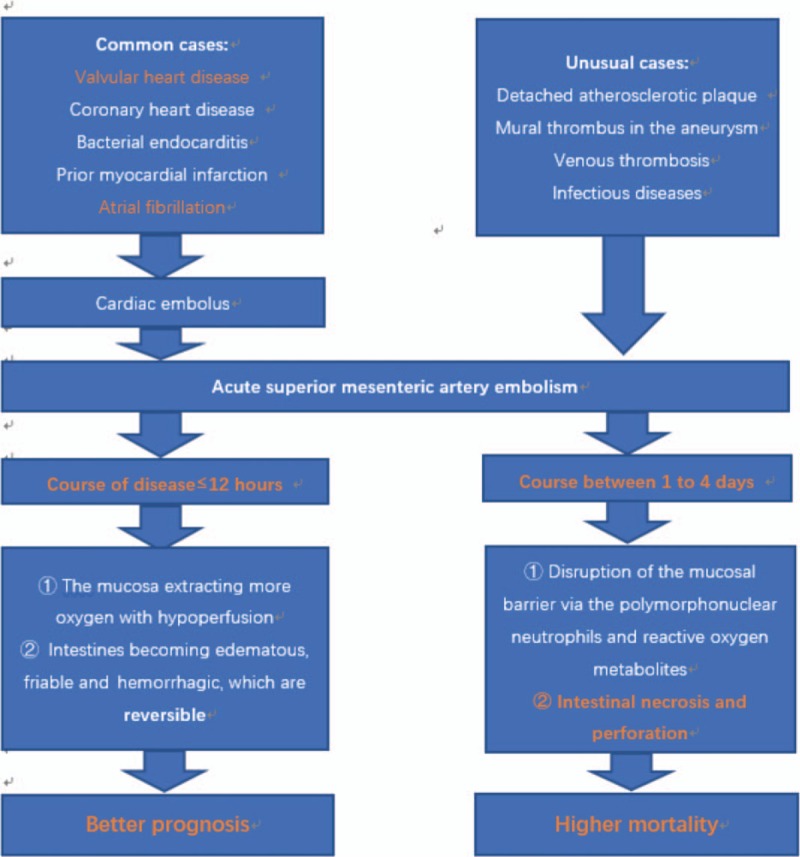
Results: Patients with the history of atrial fibrillation, heart valve disease and atherosclerosis should be considered as ASMAE. Laboratory findings are insensitive and unspecific, however, angiography and Computed tomography angiography (CTA) can provide a clear diagnosis sensitively and specifically. Endovascular approaches have been increasingly reported in multiple case series. The key to successful treatment of AMI involves early clinical recognition and early intervention to move the embolus, which can reduce the rate of misdiagnosis and save the precious time and lives of patients.
Conclusions: Loss of time eventually leads to progression of ischemia to transmural bowel necrosis with peritonitis and septicemia, which may further worsen patients' outcomes. It is important for physicians to make a timely and accurate diagnosis, which can save precious time and reduce the mortality.
Conflict of interest statement
The authors have no conflicts of interest to disclose.
Figures
References
-
- Acosta S. Epidemiology of mesenteric vascular disease: clinical implications. Semin Vasc Surg 2010;23:4–8. - PubMed
-
- Gupta PK, Natarajan B, Gupta H, et al. Morbidity and mortality after bowel resection for acute mesenteric ischemia. Surgery 2011;150:779–87. - PubMed
-
- Brandt LJ, Boley SJ. AGA technical review on intestinal ischemia. American Gastrointestinal Association. Gastroenterology 2000;118:954–68. - PubMed
-
- Mark C, Wyers Acute mesenteric ischemia: diagnostic approach and surgical treatment. Semin Vasc Surg 2010;23:9–20. - PubMed
Publication types
MeSH terms
LinkOut - more resources
Full Text Sources
