. 2019 Feb 8;363(6427):eaat9931.
doi: 10.1126/science.aat9931. Epub 2019 Feb 7.

Separating host and microbiome contributions to drug pharmacokinetics and toxicity

Affiliations

Separating host and microbiome contributions to drug pharmacokinetics and toxicity

Michael Zimmermann et al. Science. .

Abstract

The gut microbiota is implicated in the metabolism of many medical drugs, with consequences for interpersonal variation in drug efficacy and toxicity. However, quantifying microbial contributions to drug metabolism is challenging, particularly in cases where host and microbiome perform the same metabolic transformation. We combined gut commensal genetics with gnotobiotics to measure brivudine drug metabolism across tissues in mice that vary in a single microbiome-encoded enzyme. Informed by these measurements, we built a pharmacokinetic model that quantitatively predicts microbiome contributions to systemic drug and metabolite exposure, as a function of bioavailability, host and microbial drug-metabolizing activity, drug and metabolite absorption, and intestinal transit kinetics. Clonazepam studies illustrate how this approach disentangles microbiome contributions to metabolism of drugs subject to multiple metabolic routes and transformations.


Conflict of interest statement

Competing interests: The authors declare no competing interests. M.Z., M.Z.K. and A.L.G. have filed a patent application based on these studies with the U.S. Patent and Trademark Office (62/693,741).

Figures

Fig. 1.
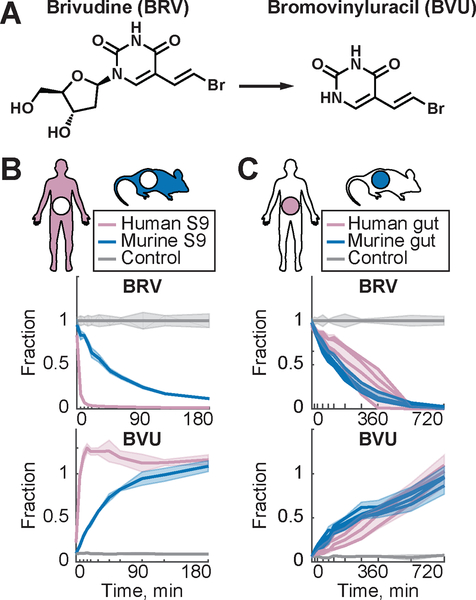
Fig. 1.. BRV to BVU conversion in vitro by host and microbiome.
(A) Chemical structure of BRV and BVU. (B) Enzymatic conversion of BRV to BVU by human and murine S9 liver fractions. Shaded areas represent STD (n=5). (C) In vitro conversion of BRV to BVU by human and murine gut microbial communities. Lines and shading represent mean (n=4) and STD (n=16), respectively.
Fig. 2.
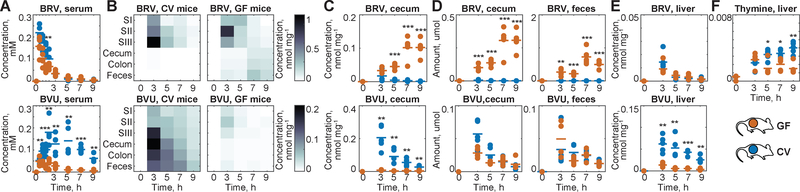
Fig. 2.. BRV metabolism by GF and CV mice.
(A) BRV and BVU serum kinetics in CV and GF mice. (B) Intestinal BRV and BVU concentrations over time; each field represents the mean of five animals. (C) Cecal BRV and BVU concentrations in individual animals. (D) Total amount of BRV and BVU in cecum and feces. (E) Liver concentrations of BRV and BVU. (F) Liver thymine. For all mouse data: horizontal lines show the mean of five animals and times reflect hours after oral BRV administration. SI: duodenum, SII: jejunum, and SIII: ileum; * p ≤ 0.05, ** ≤ 0.01, *** ≤ 0.001 (t-test with FDR correction for multiple hypotheses testing).
Fig. 3.
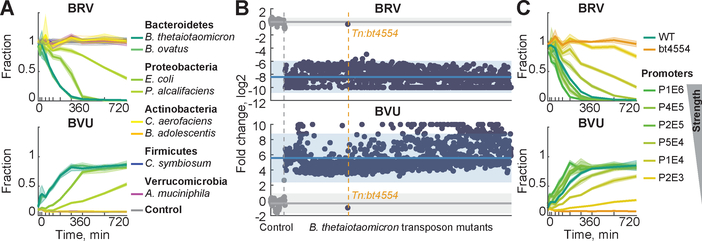
Fig. 3.. Identification of a microbiome-encoded enzyme responsible for BRV metabolism.
(A) BRV conversion to BVU by representative human gut isolates. (B) Log2 fold change of BRV and BVU concentrations of B. thetaiotaomicron transposon insertion mutants (blue, n = 1290) compared to media controls (grey, n = 83) after 24 h of incubation. Each point represents one strain, sorted along the x-axis in the same order in top (BRV) and bottom (BVU) panels. Mean fold changes and 95% prediction intervals for controls and strains are indicated by solid lines and shaded areas, respectively. (C) BRV conversion by B. thetaiotaomicron wildtype (n=4), bt4554 mutant (n=4), and complemented strains expressing bt4554 at different levels (n=8). In (A) and (C), lines and shaded areas depict the mean and STD of independent cultures (n=4–8).
Fig. 4.
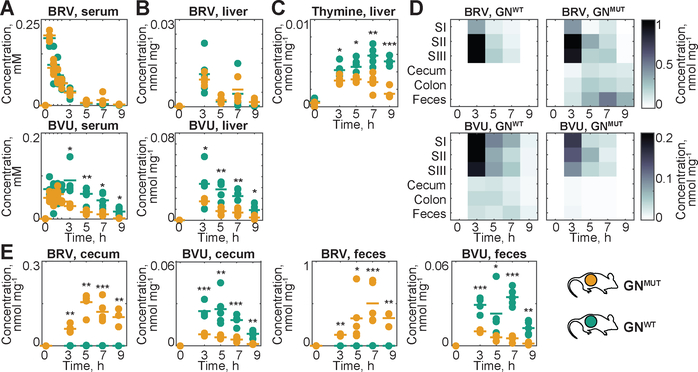
Fig. 4.. Gnotobiotic mouse model to quantify the microbial contribution to BRV pharmacokinetics and toxicity.
(A) Serum and (B) liver BRV and BVU kinetics in GNWT and GNMUT mice. (C) Liver thymine. (D) Intestinal BRV and BVU concentrations over time; each field represents the mean of five animals. (E) Cecal and fecal BRV and BVU concentrations in individual animals. For all mouse data: horizontal lines show mean of five animals and times reflect hours after oral BRV administration. SI: duodenum, SII: jejunum, and SIII: ileum; * p ≤ 0.05, ** ≤ 0.01, *** ≤ 0.001 (t-test with FDR correction for multiple hypotheses testing).
Fig. 5.
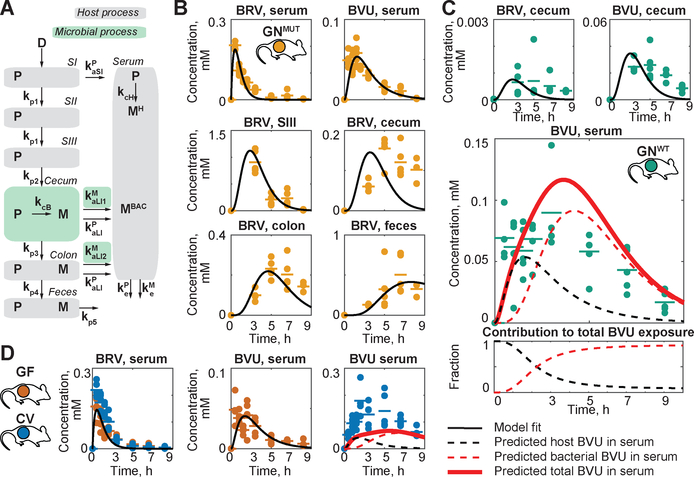
Fig. 5.. Physiology based model of host and microbial contribution to BRV and BVU pharmacokinetics.
(A) Schematic representation of compartments and sub-processes included in the model. (B) Parameterization of microbiota-independent processes using measurements from GNMUT mice. (C) Parameterization of microbiota-dependent intestinal drug metabolism and prediction of microbial and host contributions to serum BVU in GNWT and (D) CV mice.
Fig 6.
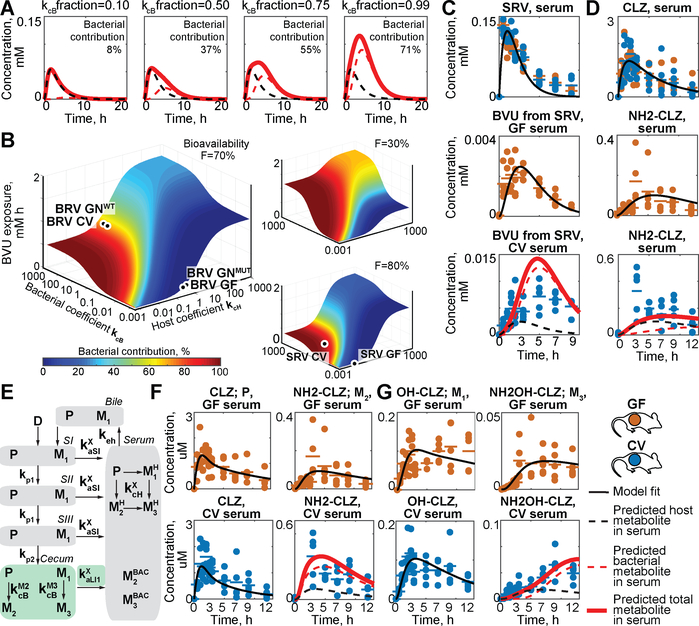
Fig 6.. Simulation of the impact of chemical, microbial, and physiological parameters on pharmacokinetics and expansion of the approach to other drugs.
(A) Predicting the impact of microbial drug metabolism rate on microbial contribution to serum BVU. (B) Absolute metabolite exposure and relative bacterial contribution to serum BVU as a function of host and microbial drug metabolism rate at a given bioavailability (tables S24–25). (C) Prediction of host and microbial contribution to serum BVU after oral sorivudine (SRV) administration to CV mice. (D) Prediction of microbial and host contributions to serum clonazepam (CLZ; P) and aminoclonazepam (NH2-CLZ; M) in CV mice. (E) Schematic representation of an extended model that includes enterohepatic circulation and three drug metabolites (M1-M3). (F) Prediction of microbial contribution to serum exposure of CLZ (P) and NH2-CLZ (M2) and (G) OH-CLZ (M1) and NH2OH-CLZ (M3) in CV mice. Horizontal lines show mean of five animals and times reflect hours after oral drug administration. For detailed description of parameters see tables S13 and S21.

Comment in

References

    1. Dahan A, Miller JM, Amidon GL, Prediction of solubility and permeability class membership: provisional BCS classification of the world’s top oral drugs. AAPS J. 11, 740–746 (2009). - PMC - PubMed
    1. Sender R, Fuchs S, Milo R, Revised Estimates for the Number of Human and Bacteria Cells in the Body. Plos Biol. 14, e1002533 (2016). - PMC - PubMed
    1. Nishiyama T et al., Mechanism-Based Inactivation of Human Dihydropyrimidine Dehydrogenase by (E)-5-(2-Bromovinyl)uracil in the Presence of NADPH. Mol Pharmacol 57, 899–905 (2000). - PubMed
    1. Desgranges C et al., Effect of (E)-5-(2-bromovinyl)uracil on the catabolism and antitumor activity of 5-fluorouracil in rats and leukemic mice. Cancer Res. 46, 1094–1101 (1986). - PubMed
    1. Van Kuilenburg AB et al., Genotype and phenotype in patients with dihydropyrimidine dehydrogenase deficiency. Hum. Genet 104, 1–9 (1999). - PubMed

Publication types

MeSH terms