


Antibiotics in Uncomplicated Acute Diverticulitis: To Give or Not to Give?
- PMID: 30733951
- PMCID: PMC6361500
- DOI: 10.1159/000489631
Antibiotics in Uncomplicated Acute Diverticulitis: To Give or Not to Give?
Abstract
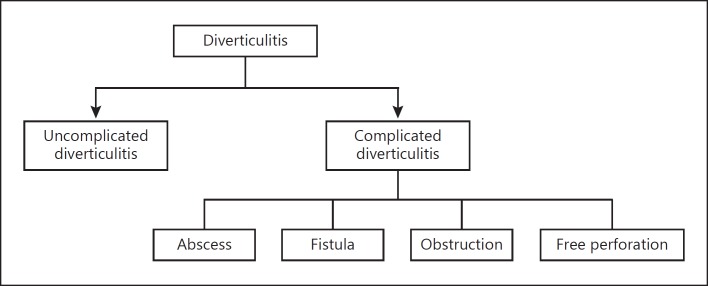
Acute uncomplicated diverticulitis (AUD) is generally felt to be caused by obstruction and inflammation of a colonic diverticulum and occurs in about 4-5% of patients with diverticulosis. The cornerstone of AUD treatment has conventionally been antibiotic therapy, but with a paradigm shift in the underlying pathogenesis of the disease from bacterial infection to more of an inflammatory process, as well as concerns about antibiotic overuse, this dogma has recently been questioned. We will review emerging data that supports more selective antibiotic use in this population, as well as newer guidelines that advocate this position as well. While there are no discrete algorithms to guide us, we will attempt to suggest clinical scenarios where antibiotics may reasonably be withheld.
Keywords: Acute uncomplicated diverticulitis; Antibiotics; Colitis; Diverticular disease.
References
-
- Strate LL, Peery AF, Neumann I. American Gastroenterological Association Institute Technical Review on the Management of Acute Diverticulitis. Gastroenterology. 2015;149:1950–1976. e12. - PubMed
-
- Strate LL, Modi R, Cohen E, et al. Diverticular disease as a chronic illness: evolving epidemiologic and clinical insights. Am J Gastroenterol. 2012;107:1486–1493. - PubMed
-
- Ambrosetti P, Chautems R, Soravia C, et al. Long-term outcome of mesocolic and pelvic diverticular abscesses of the left colon: a prospective study of 73 cases. Dis Colon Rectum. 2005;48:787–791. - PubMed
Publication types
LinkOut - more resources
Full Text Sources
