


IGF-1 and cardiovascular disease
- PMID: 30735831
- PMCID: PMC6504961
- DOI: 10.1016/j.ghir.2019.01.002
IGF-1 and cardiovascular disease
Abstract
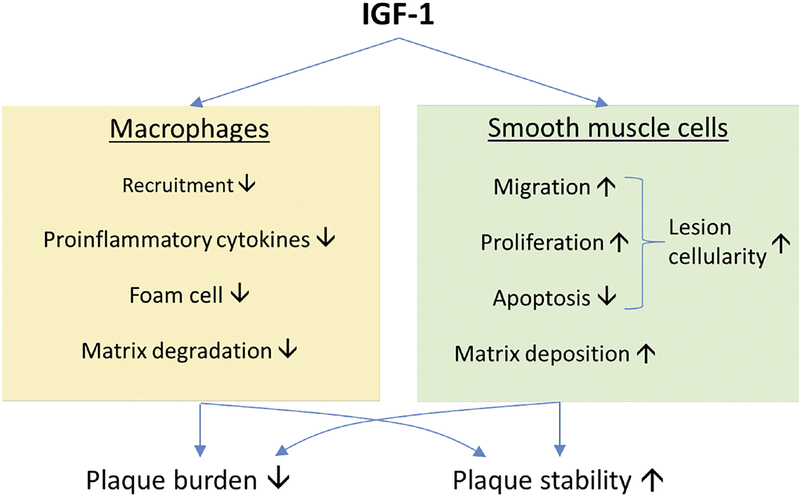
Atherosclerosis is an inflammatory arterial pathogenic condition, which leads to ischemic cardiovascular diseases, such as coronary artery disease and myocardial infarction, stroke, and peripheral arterial disease. Atherosclerosis is a multifactorial disorder and its pathophysiology is highly complex. Changes in expression of multiple genes coupled with environmental and lifestyle factors initiate cascades of adverse events involving multiple types of cells (e.g. vascular endothelial cells, smooth muscle cells, and macrophages). IGF-1 is a pleiotropic factor, which is found in the circulation (endocrine IGF-1) and is also produced locally in arteries (endothelial cells and smooth muscle cells). IGF-1 exerts a variety of effects on these cell types in the context of the pathogenesis of atherosclerosis. In fact, there is an increasing body of evidence suggesting that IGF-1 has beneficial effects on the biology of atherosclerosis. This review will discuss recent findings relating to clinical investigations on the relation between IGF-1 and cardiovascular disease and basic research using animal models of atherosclerosis that have elucidated some of the mechanisms underlying atheroprotective effects of IGF-1.
Copyright © 2019 Elsevier Ltd. All rights reserved.
Conflict of interest statement
Conflict of Interest Statement
We have no conflict of interest to declare.
Figures
References
Publication types
MeSH terms
Substances
Grants and funding
LinkOut - more resources
Full Text Sources
Miscellaneous
