Multicenter Study
. 2019 Feb 8;19(1):132.
doi: 10.1186/s12885-019-5302-4.

Are we mis-estimating chemotherapy-induced peripheral neuropathy? Analysis of assessment methodologies from a prospective, multinational, longitudinal cohort study of patients receiving neurotoxic chemotherapy

Affiliations
Multicenter Study

Are we mis-estimating chemotherapy-induced peripheral neuropathy? Analysis of assessment methodologies from a prospective, multinational, longitudinal cohort study of patients receiving neurotoxic chemotherapy

Alex Molassiotis et al. BMC Cancer. .

Abstract

Background: There are inconsistencies in the literature regarding the prevalence and assessment of chemotherapy-induced peripheral neuropathy (CIPN). This study explored CIPN natural history and its characteristics in patients receiving taxane- and platinum-based chemotherapy.

Patients and methods: Multi-country multisite prospective longitudinal observational study. Patients were assessed before commencing and three weekly during chemotherapy for up to six cycles, and at 6,9, and 12 months using clinician-based scales (NCI-CTCAE; WHO-CIPN criterion), objective assessments (cotton wool test;10 g monofilament); patient-reported outcome measures (FACT/GOG-Ntx; EORTC-CIPN20), and Nerve Conduction Studies.

Results: In total, 343 patients were recruited in the cohort, providing 2399 observations. There was wide variation in CIPN prevalence rates using different assessments (14.2-53.4%). Prevalence of sensory neuropathy (and associated symptom profile) was also different in each type of chemotherapy, with paclitaxel (up to 63%) and oxaliplatin (up to 71.4%) showing the highest CIPN rates in most assessments and a more complex symptom profile. Peak prevalence was around the 6-month assessment (up to 71.4%). Motor neurotoxicity was common, particularly in the docetaxel subgroup (up to 22.1%; detected by NCI-CTCAE). There were relatively moderately-to-low correlations between scales (rs = 0.15,p < 0.05-rs = 0.48 p < 0.001), suggesting that they measure different neurotoxicity aspects from each other. Cumulative chemotherapy dose was not associated with onset and course of CIPN.

Conclusion: The historical variation reported in CIPN incidence and prevalence is possibly confounded by disagreement between assessment modalities. Clinical practice should consider assessment of motor neuropathy for neurotoxic chemotherapy. Current scales may not be all appropriate to measure CIPN in a valid way, and a combination of scales are needed.

Keywords: Assessment; Cancer; Chemotherapy; Neurotoxicity; Peripheral neuropathy; Platins; Taxanes.


Conflict of interest statement

Ethics approval and consent to participate

The study has been approved by the ethics committees of the Hong Kong Polytechnic University, Hong Kong; Central Cluster of the Hospital Authority, Hong Kong; The National University Hospital; Singapore; The University of Manchester, Manchester, UK; and the Central Manchester Research and Ethics Committee. All participants have provided written informed consent.

Consent for publication

Not applicable.

Competing interests

The authors declare that they have no competing interests.

Publisher’s Note

Springer Nature remains neutral with regard to jurisdictional claims in published maps and institutional affiliations.

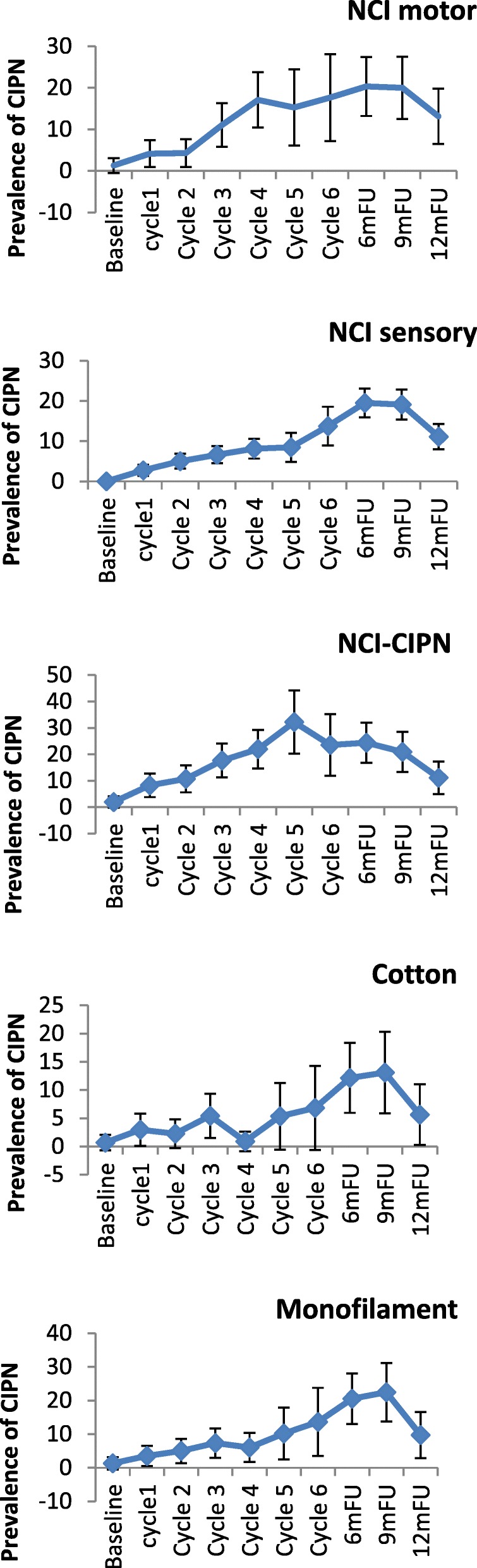
Figures
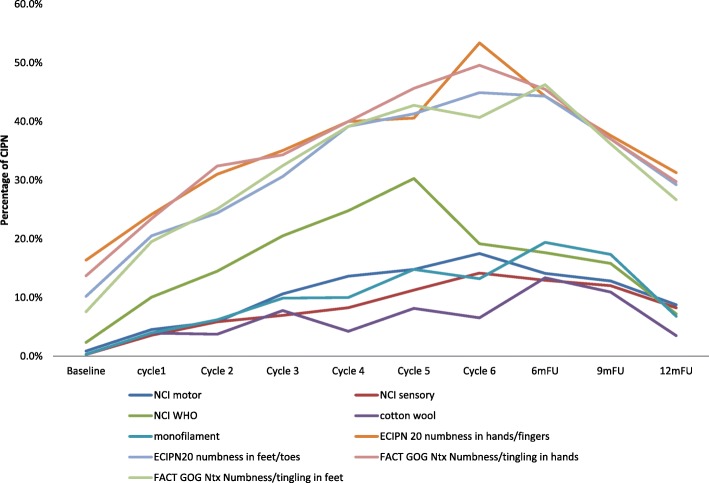
Fig. 1
Fig. 1
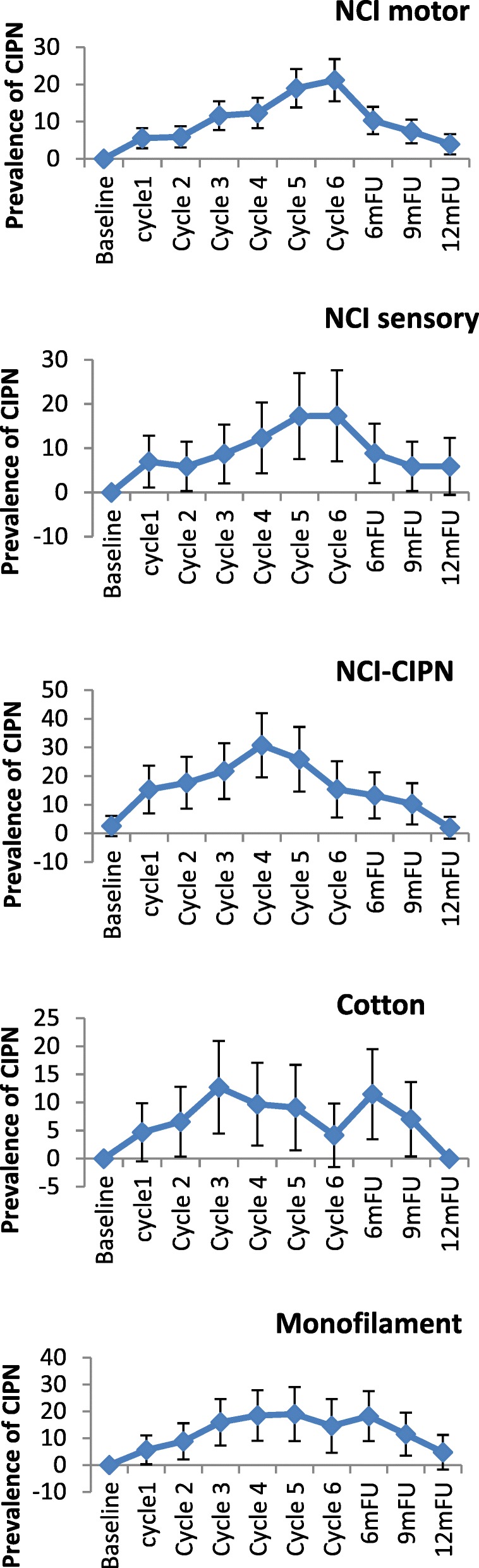
Chemotherapy-induced peripheral neuropathy prevalence by different measures over 1-year period
Fig. 2
Fig. 2
Chemotherapy-induced peripheral neuropathy (with 95% CIs) over time and with different measures used in patients receiving taxanes
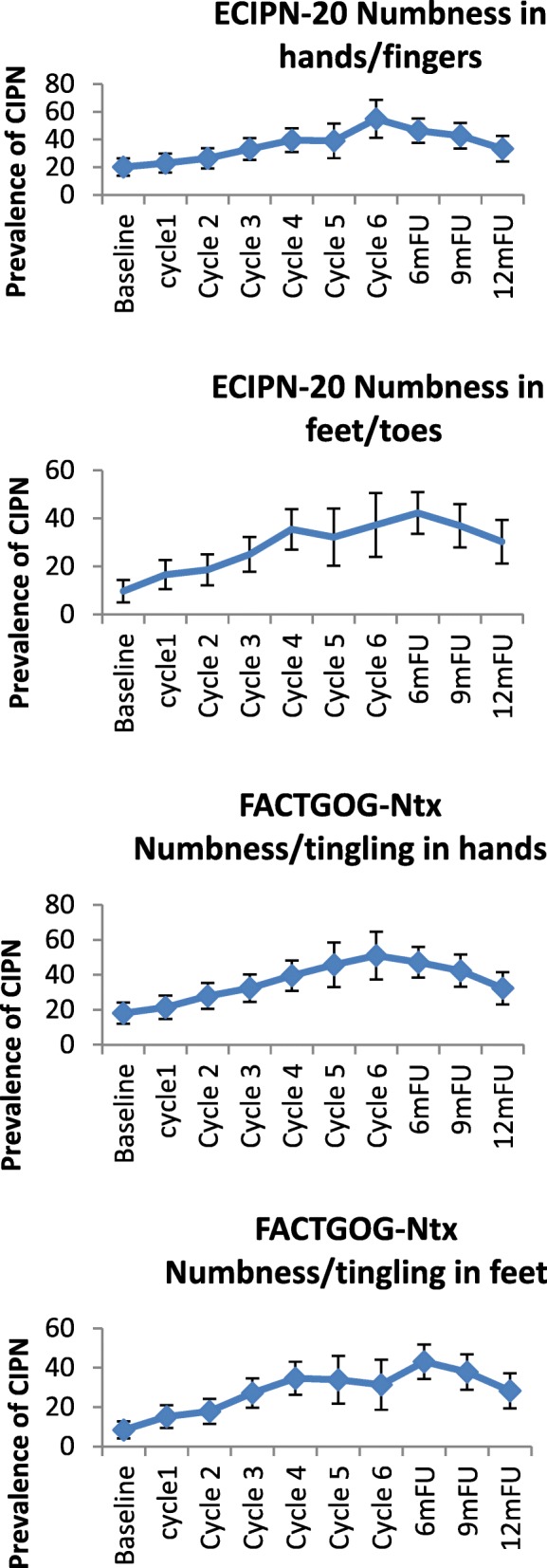
Fig. 2
Fig. 2
Chemotherapy-induced peripheral neuropathy (with 95% CIs) over time and with different measures used in patients receiving taxanes
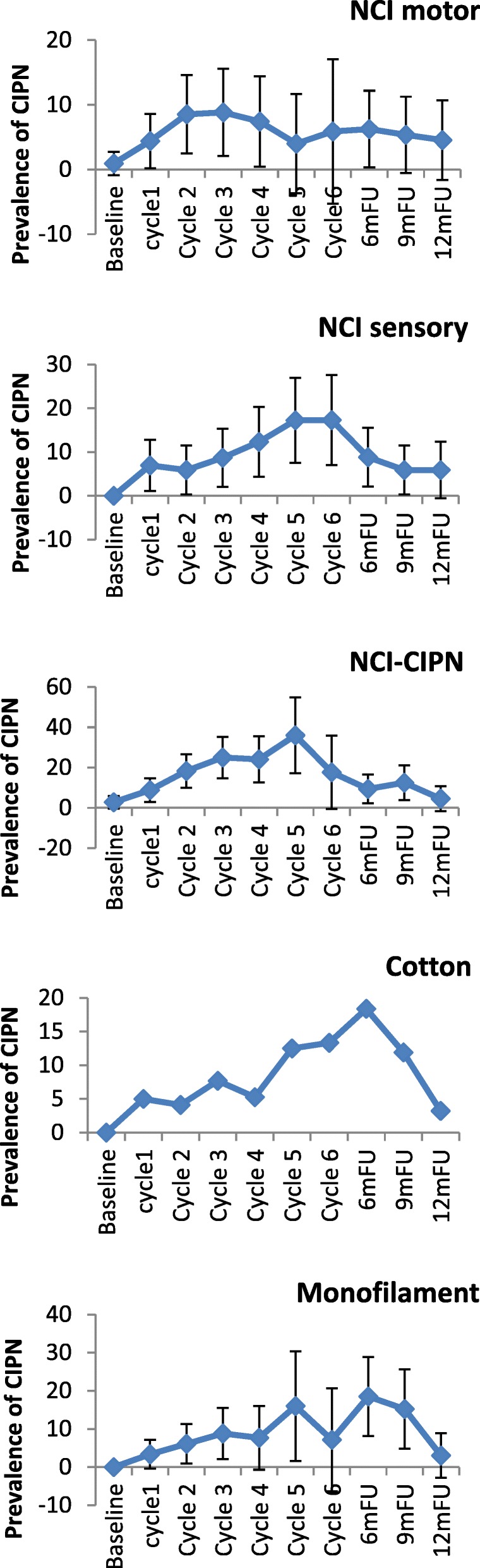
Fig. 3
Fig. 3
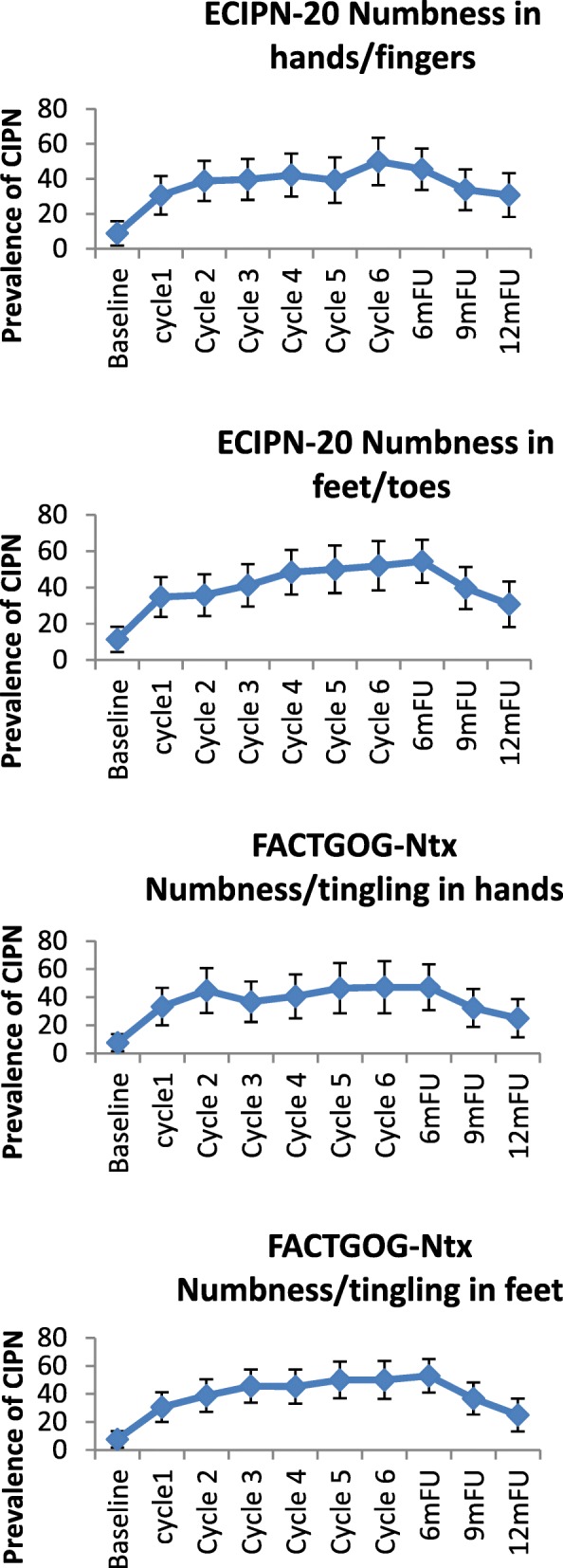
Chemotherapy-induced peripheral neuropathy (with 95% CIs) over time and with different measures used in patients receiving platinum chemotherapy
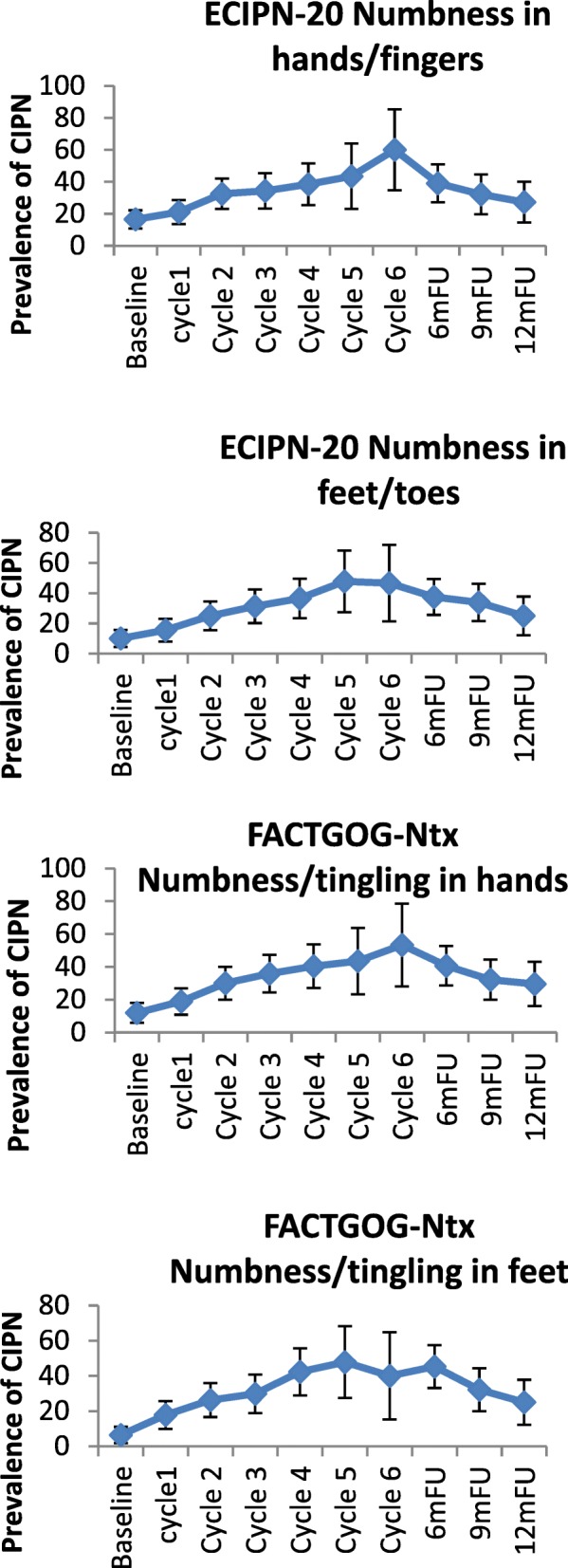
Fig. 3
Fig. 3
Chemotherapy-induced peripheral neuropathy (with 95% CIs) over time and with different measures used in patients receiving platinum chemotherapy
Fig. 4
Fig. 4
Chemotherapy-induced peripheral neuropathy (with 95% CIs) over time and with different measures used in patients receiving combination chemotherapy with taxanes and platinum
Fig. 4
Fig. 4
Chemotherapy-induced peripheral neuropathy (with 95% CIs) over time and with different measures used in patients receiving combination chemotherapy with taxanes and platinum
Fig. 5
Fig. 5
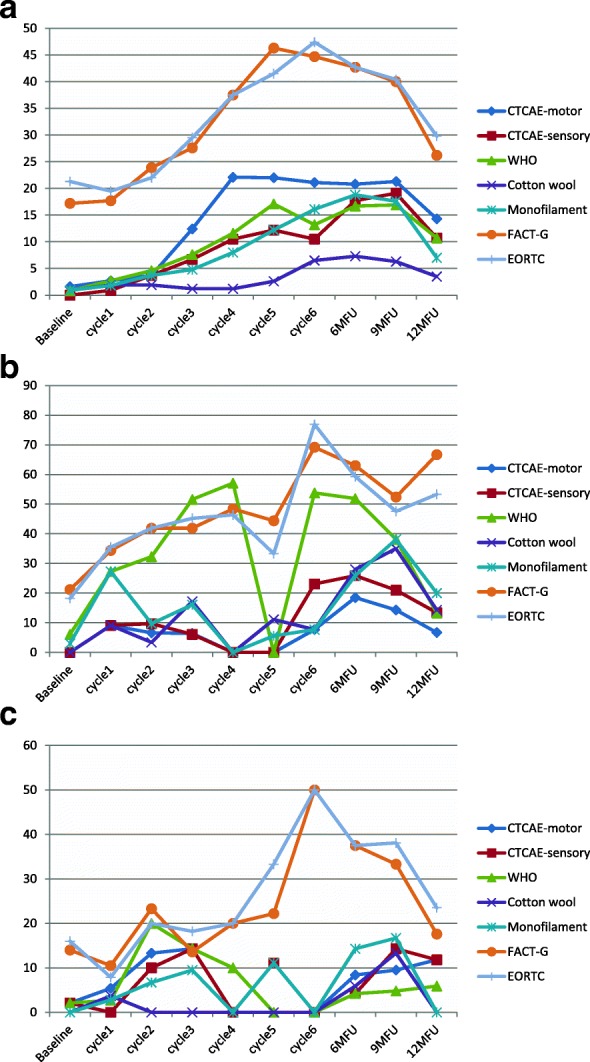
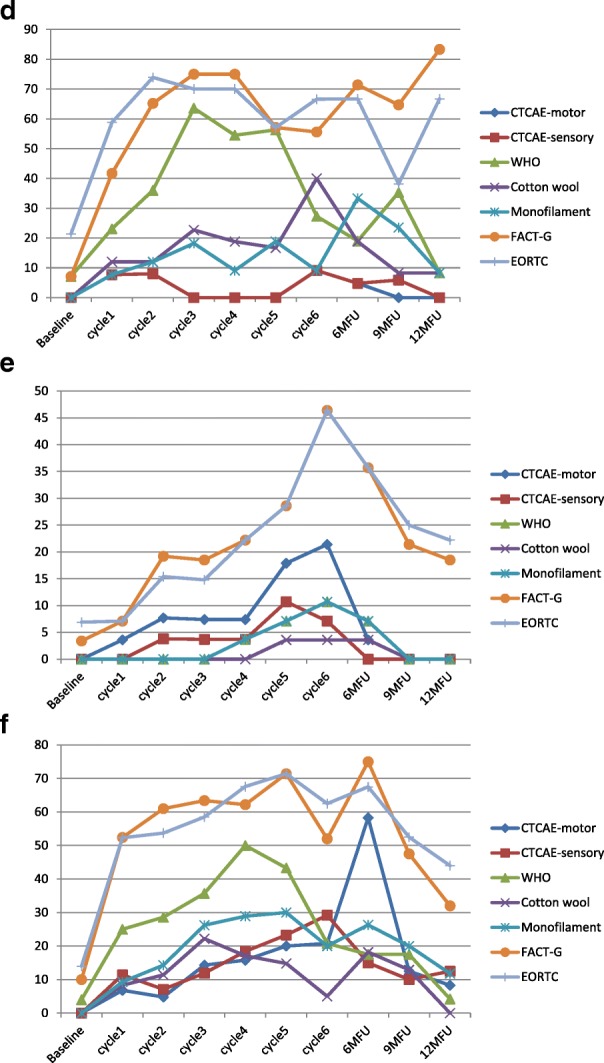
a. Chemotherapy-induced peripheral neuropathy prevalence over time in patients receiving Docetaxel (n = 122, 901 assessments) b. Chemotherapy-induced peripheral neuropathy prevalence over time in patients receiving Paclitaxel (n = 33, 245 assessments) c. Chemotherapy-induced peripheral neuropathy prevalence over time in patients receiving Cisplatin/Carboplatin (n = 80, 409 assessments) d. Chemotherapy-induced peripheral neuropathy prevalence over time in patients receiving Oxaliplatin (n = 28, 200 assessments) e. Chemotherapy-induced peripheral neuropathy prevalence over time in patients receiving Carboplatin+Docetaxel (n = 29, 274 assessments) f. Chemotherapy-induced peripheral neuropathy prevalence over time in patients receiving Carboplatin+Paclitaxel (n = 49, 357 assessments)
Fig. 5
Fig. 5
a. Chemotherapy-induced peripheral neuropathy prevalence over time in patients receiving Docetaxel (n = 122, 901 assessments) b. Chemotherapy-induced peripheral neuropathy prevalence over time in patients receiving Paclitaxel (n = 33, 245 assessments) c. Chemotherapy-induced peripheral neuropathy prevalence over time in patients receiving Cisplatin/Carboplatin (n = 80, 409 assessments) d. Chemotherapy-induced peripheral neuropathy prevalence over time in patients receiving Oxaliplatin (n = 28, 200 assessments) e. Chemotherapy-induced peripheral neuropathy prevalence over time in patients receiving Carboplatin+Docetaxel (n = 29, 274 assessments) f. Chemotherapy-induced peripheral neuropathy prevalence over time in patients receiving Carboplatin+Paclitaxel (n = 49, 357 assessments)
Fig. 6
Fig. 6
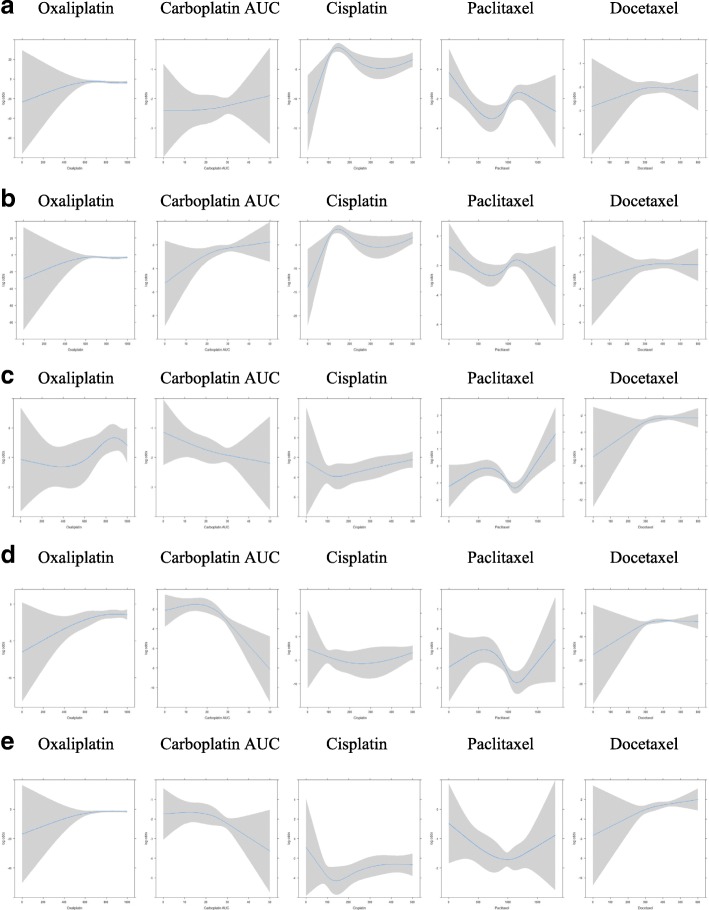
a. Dose-response relationship related to NCI CTCAE-motor dysfunction scale with oxaliplatin, carboplatin (AUC), cisplatin, paclitaxel and docetaxel respectively b. Dose-response relationship related to NCI CTCAE-sensory dysfunction scale with oxaliplatin, carboplatin (AUC), cisplatin, paclitaxel and docetaxel respectively c. Dose-response relationship related to the WHO neuropathy scale with oxaliplatin, carboplatin (AUC), cisplatin, paclitaxel and docetaxel respectively 6 d. Dose-response relationship related to cotton wool assessment with oxaliplatin, carboplatin (AUC), cisplatin, paclitaxel and docetaxel respectively e. Dose-response relationship related to monofilament assessment with oxaliplatin, carboplatin (AUC), cisplatin, paclitaxel and docetaxel respectively
Fig. 7
Fig. 7
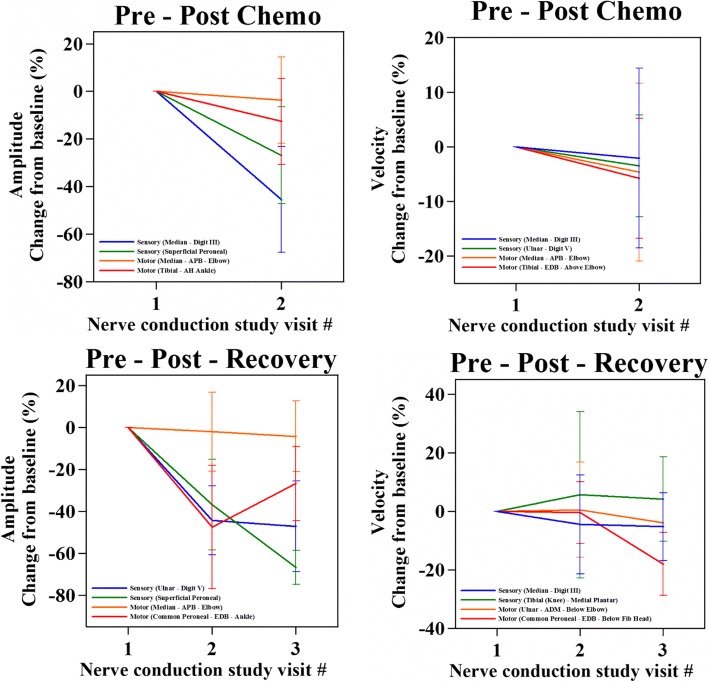
Changes observed in chemotherapy-induced peripheral neuropathy through Nerve Conduction Studies. The graph values correspond to the average of percentage differences to baseline (pre-NCS) of post-NCS and recovery-NCS

References

    1. Hausheer FH, Schilsky RL, Bain S, Berghorn EJ, Lieberman F. Diagnosis, management, and evaluation of chemotherapy-induced peripheral neuropathy. Semin Oncol. 2006;33:15–49. doi: 10.1053/j.seminoncol.2005.12.010. - DOI - PubMed
    1. Postma TJ, Heimans JJ. Grading of chemotherapy-induced peripheral neuropathy. Ann Oncol. 2000;11:509–513. doi: 10.1023/A:1008345613594. - DOI - PubMed
    1. Seretny M, Currie GL, Sena ES, Ramnarine S, Grant R, MacLeod MR, Colvin LA, Fallon M. Incidence, prevalence, and predictors of chemotherapy-induced peripheral neuropathy: a systematic review and meta-analysis. Pain. 2014;155(12):2461–2470. doi: 10.1016/j.pain.2014.09.020. - DOI - PubMed
    1. Mols F, Beijers T, Vreugdenhil G, van de Poll-Franse L. Chemotherapy-induced peripheral neuropathy and its association with quality of life: a systematic review. Support Care Cancer. 2014;22(8):2261–2269. doi: 10.1007/s00520-014-2255-7. - DOI - PubMed
    1. Miaskowski C, Mastick J, Paul SM, Topp K, Smoot B, Abrams G, Chen LM, Kober KM, Conley YP, Chesney M, Bolla K, Mausisa G, Mazor M, Wong M, Schumacher M, Levine JD. Chemotherapy-induced neuropathy in Cancer survivors. J Pain Symptom Manag. 2017;54(2):204–218. doi: 10.1016/j.jpainsymman.2016.12.342. - DOI - PMC - PubMed

Publication types

MeSH terms

Substances