


DNA methylome profiling of all-cause mortality in comparison with age-associated methylation patterns
- PMID: 30736859
- PMCID: PMC6368749
- DOI: 10.1186/s13148-019-0622-4
DNA methylome profiling of all-cause mortality in comparison with age-associated methylation patterns
Abstract
Background: Multiple epigenome-wide association studies have been performed to identify DNA methylation patterns regulated by aging or correlated with risk of death. However, the inter-relatedness of the epigenetic basis of aging and mortality has not been well investigated.
Methods: Using genome-wide DNA methylation data from the Lothian Birth Cohorts, we conducted a genome-wide association analysis of all-cause mortality and compared this with age-associated methylation patterns reported on the same samples.
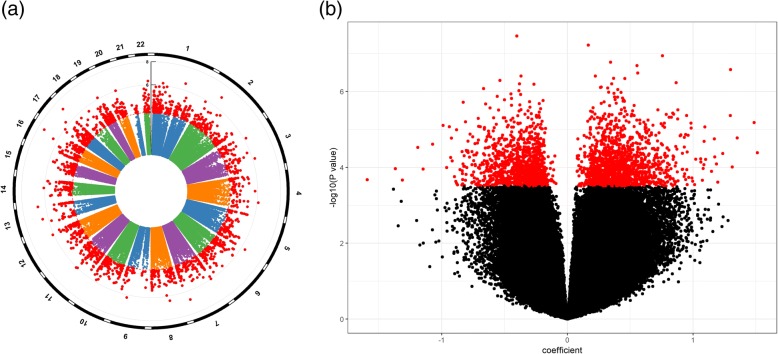
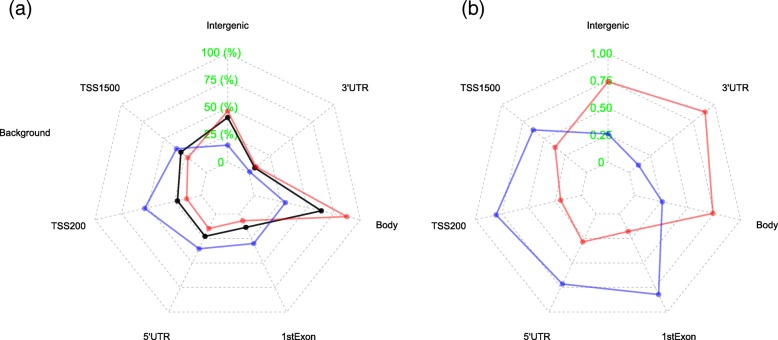
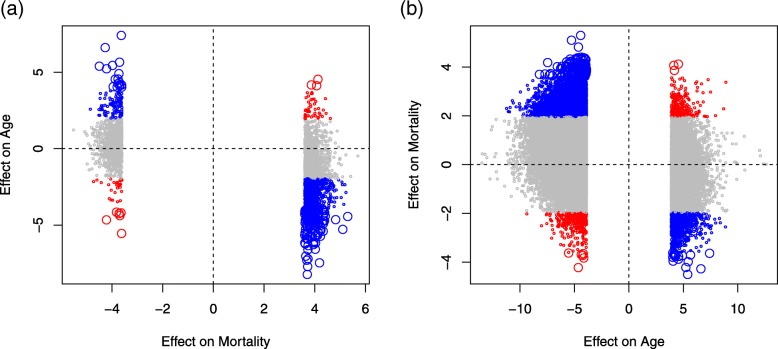
Results: Survival analysis using the Cox regression model identified 2552 CpG sites with genome-wide significance (false discovery rate < 0.05) for all-cause mortality. CpGs whose methylation levels are associated with increased mortality appear more distributed from the gene body to the intergenic regions whereas CpGs whose methylation levels are associated with decreased mortality is more concentrated at the promoter regions. In comparison with reported CpGs displaying significant age-dependent methylation patterns in the same samples, we observed a limited but highly significant overlap between mortality-associated and age-associated CpGs (p value 2.52e-06). Most importantly, the overlapping CpGs are dominated by those whose overall age-related methylation patterns reduce the risk of death.
Conclusion: All-cause mortality is significantly associated with altered methylation at multiple genomic sites with differential distribution in gene regions for CpGs correlated with increased or decreased risk of death. The age-dependent methylation changes could reflect an active response to the aging process that contributes to maintain individual survival.
Keywords: Aging; DNA methylation; Epigenome-wide association study; Mortality; Old cohorts.
Conflict of interest statement
Ethics approval and consent to participate
Ethics permission for the study protocol was obtained from the Multi-Centre Research Ethics Committee for Scotland (MREC/01/0/56) and from Lothian Research Ethics Committee (LREC/2003/2/29).
Consent for publication
Written consent was obtained for all authors.
Competing interests
The authors declare that they have no competing interests.
Publisher’s Note
Springer Nature remains neutral with regard to jurisdictional claims in published maps and institutional affiliations.
Figures
References
Publication types
MeSH terms
Grants and funding
LinkOut - more resources
Full Text Sources
