Review
. 2019 Apr;17(4):203-218.
doi: 10.1038/s41579-018-0147-4.

Methicillin-resistant Staphylococcus aureus: an overview of basic and clinical research

Affiliations
Review

Methicillin-resistant Staphylococcus aureus: an overview of basic and clinical research

Nicholas A Turner et al. Nat Rev Microbiol. 2019 Apr.

Abstract

Methicillin-resistant Staphylococcus aureus (MRSA) is one of the most successful modern pathogens. The same organism that lives as a commensal and is transmitted in both health-care and community settings is also a leading cause of bacteraemia, endocarditis, skin and soft tissue infections, bone and joint infections and hospital-acquired infections. Genetically diverse, the epidemiology of MRSA is primarily characterized by the serial emergence of epidemic strains. Although its incidence has recently declined in some regions, MRSA still poses a formidable clinical threat, with persistently high morbidity and mortality. Successful treatment remains challenging and requires the evaluation of both novel antimicrobials and adjunctive aspects of care, such as infectious disease consultation, echocardiography and source control. In this Review, we provide an overview of basic and clinical MRSA research and summarize the expansive body of literature on the epidemiology, transmission, genetic diversity, evolution, surveillance and treatment of MRSA.


Conflict of interest statement

Competing interests

T.L.H. has been a consultant for Basilea Pharmaceutica, Genentech, The Medicines Company, Motif Biosciences and Theravance Biopharma and has received grant support from Basilea Pharmaceutica and Achaogen. V.G.F. served as Chair of the V710 Scientific Advisory Committee (Merck); has received grant support from Cerexa/Actavis/Allergan, Pfizer, Advanced Liquid Logics, National Institutes of Health (NIH), MedImmune, Basilea Pharmaceutica, Karius, ContraFect, Regeneron Pharmaceuticals and Genentech; has NIH STTR/SBIR grants pending with Affinergy, Locus and Medical Surface; has been a consultant for Achaogen, AmpliPhi Biosciences, Astellas Pharma, Arsanis, Affinergy, Basilea Pharmaceutica, Bayer, Cerexa, ContraFect, Cubist, Debiopharm, Destiny Pharmaceuticals, Durata Therapeutics, Grifols, Genentech, MedImmune, Merck, The Medicines Company, Pfizer, Novartis, NovaDigm Therapeutics, Theravance Biopharma, XBiotech and Integrated BioTherapeutics; has received honoraria from Theravance Biopharma and Green Cross; and has a patent pending in sepsis diagnostics.

Figures
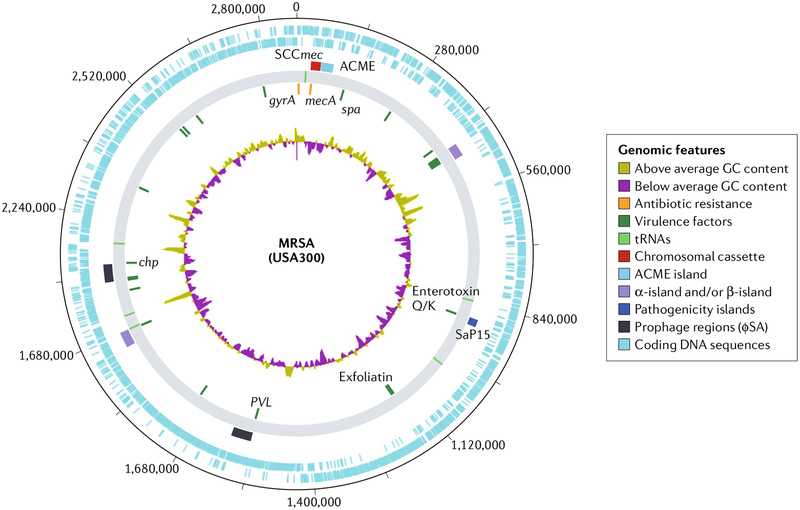
Fig. 1 |
Fig. 1 |. Major genomic elements in methicillin-resistant Staphylococcus aureus.
Representative genomic map of the USA300 strain FPR3757 (REF.). The innermost circular track (track 1) represents GC content. Moving outwards, track 2 displays select antibiotic resistance genes in orange and virulence factors in green. Track 3 shows the location of tRNAs. Track 4 displays select mobile genetic elements, with chromosomal cassettes in red, various pathogenicity islands in shades of blue through violet and prophages in black. The outer two tracks (5 and 6) represent coding sequences in blue. PVL, Panton–Valentine leukocidin. Selected annotation created using Artemis/DNAPlotter. MRSA,methicillin-resistant Staphylococcus aureus.
Fig. 2 |
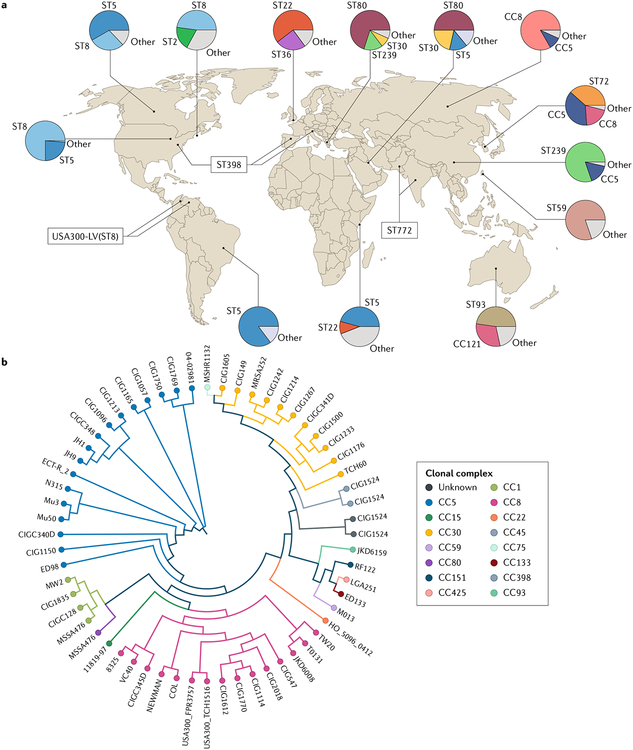
Fig. 2 |. global distribution and diversity of methicillin-resistant Staphylococcus aureus.
a | Map of major strain type distributions. Regional strain prevalence is summarized from select studies performed in Africa, Asia–,,–, Australia, Europe–,,,, the Middle East, North America,,– and South America,. The map provides an overview of strain diversity and cannot comprehensively display all relevant strain types within each region. As strain prevalence may vary by region and setting, the prevalence displayed from selected studies may not reflect strain prevalence throughout the entire region. b | Maximum likelihood SNP dendrogram for 60 Staphylococcus aureus isolates representing relationships between major clonal complexes. SNPs for each genome were concatenated to form SNP pseudosequences and used to generate a phylogenetic tree using the HKY93 algorithm with 500 bootstrap replicates. Notably, isolate grouping by multilocus sequence type is largely congruent with strain clustering by the SNP dendrogram. Part b is reproduced from REF., CC-BY-ND (https://creativecommons.org/licenses/by-nd/4.0/).
Fig. 3 |
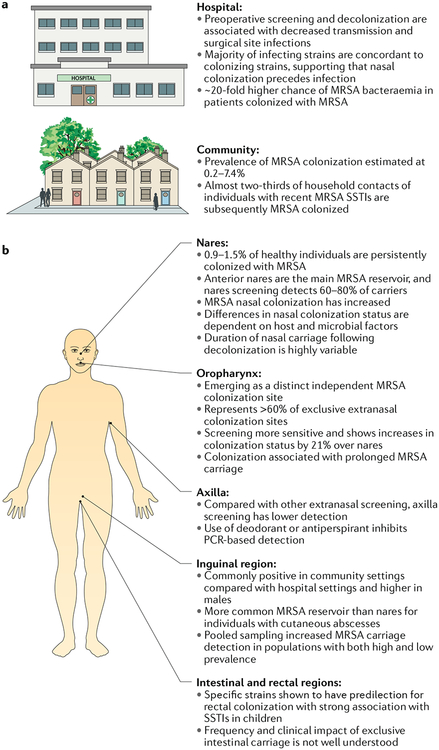
Fig. 3 |. Methicillin-resistant Staphylococcus aureus colonization.
a | Impact of methicillin-resistant Staphylococcus aureus (MRSA) colonization on hospital-acquired infection and community transmission. b | MRSA screening by anatomic site. Swab culture of nares is the most standard and widely used method for detecting MRSA carriers; however, recent data have shown that extranasal colonization is frequent. Extranasal MRSA screening increased MRSA detection by one-third over that detected by MRSA nares screening alone, indicating that sole assessments of MRSA nasal carriage are not sufficient. ICU, intensive care unit; SSTI, skin and soft tissue infection.

References

    1. Newsom SW Ogston’s coccus. J. Hosp. Infect 70, 369–372 (2008). - PubMed
    1. Harkins CP et al. Methicillin-resistant Staphylococcus aureus emerged long before the introduction of methicillin into clinical practice. Genome Biol. 18, 130 (2017). - PMC - PubMed
    1. Katayama Y, Ito T & Hiramatsu K A new class of genetic element, staphylococcus cassette chromosome mec, encodes methicillin resistance in Staphylococcus aureus. Antimicrob. Agents Chemother 44, 1549–1555 (2000). - PMC - PubMed
    1. Hartman BJ & Tomasz A Low-affinity penicillin-binding protein associated with beta-lactam resistance in. Staphylococcus aureus. J. Bacteriol 158, 513–516 (1984). - PMC - PubMed
    1. Tenover FC et al. Characterization of a strain of community-associated methicillin-resistant Staphylococcus aureus widely disseminated in the United States. J. Clin. Microbiol 44, 108–118 (2006). - PMC - PubMed

Publication types

MeSH terms