


Coexistence of Candida species and bacteria in patients with cystic fibrosis
- PMID: 30739228
- PMCID: PMC6520323
- DOI: 10.1007/s10096-019-03493-3
Coexistence of Candida species and bacteria in patients with cystic fibrosis
Abstract
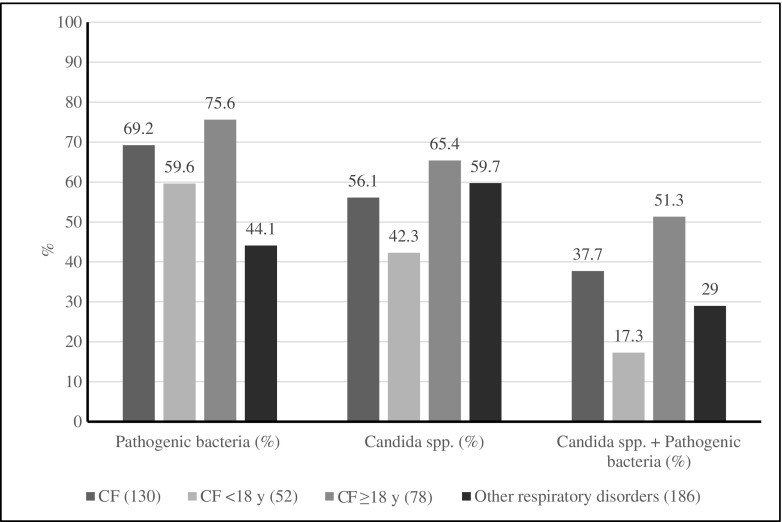
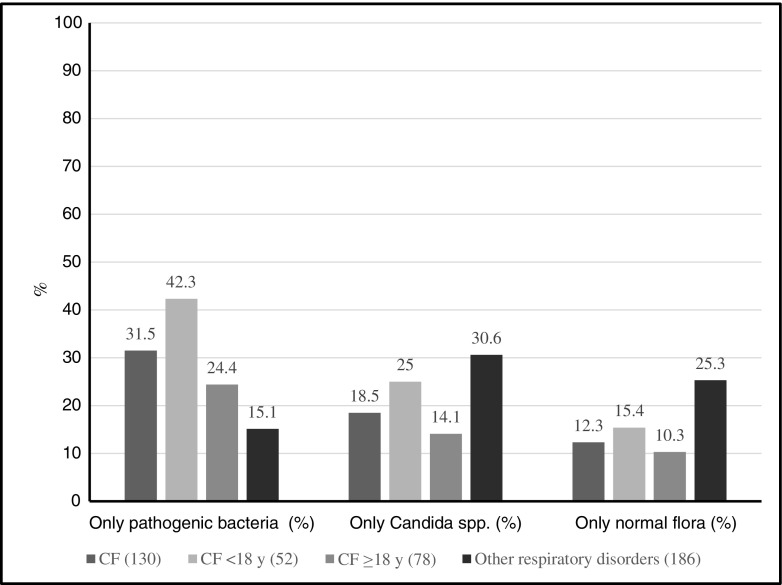
Cystic fibrosis (CF) patients become colonized by pathogenic bacteria as well as by Candida species. The interplay between different microorganisms may play a key role in the prognosis of CF. The aim of the study was to analyze the coexistence patterns of bacteria and Candida spp. in sputum samples of patients with CF and to compare these patterns with the results of patients with other respiratory disorders (ORD). Sputum samples from 130 patients with CF and 186 patients with ORD were cultured on six different agar plates promoting the growth of bacteria and yeasts. Bacterial and Candida species were identified with MALDI-TOF MS. Pathogenic bacteria were found in 69.2% of the sputum samples of the CF patients, and in 44.1% the patients with ORD. CF patients tended to have growth of Pseudomonas aeruginosa and Staphylococcus aureus in sputum more often than patients with ORD. Overall, there was no difference in the coexistence of pathogenic bacteria and Candida spp. in these patient groups. However, when analyzed at the species level, P. aeruginosa and S. aureus coexisted with Candida spp. more frequently in sputum samples of CF patients compared with patients with ORD. Also, when analyzed according to age, it was shown that the adult (≥ 18 years) CF patients had a higher rate of coexistence of any pathogenic bacteria and Candida spp. than the children with CF and the adult patients with ORD. The rate for colonization with Candida together with pathogenic bacteria is increased in adult patients with CF.
Keywords: Candida spp.; Coexistence of yeast and bacteria; Cystic fibrosis.
Conflict of interest statement
Conflict of interest
The authors declare that they have no conflict of interest.
Ethical considerations
This study was performed ex vivo and did not include human participants. The clinical samples were taken for standard microbiological analysis and no additional samples were collected for this study. The existence of bacteria and yeasts in clinical samples was analyzed with the help of the laboratory information system. The results were not used in clinical decisions. Therefore, the study did not require ethical permission.
Informed consent
The study did not require informed consent as mentioned above.
Figures
References
Publication types
MeSH terms
LinkOut - more resources
Full Text Sources
Medical
Miscellaneous
