


Circulating Pentraxin3-Specific B Cells Are Decreased in Lupus Nephritis
- PMID: 30740098
- PMCID: PMC6355680
- DOI: 10.3389/fimmu.2019.00029
Circulating Pentraxin3-Specific B Cells Are Decreased in Lupus Nephritis
Abstract
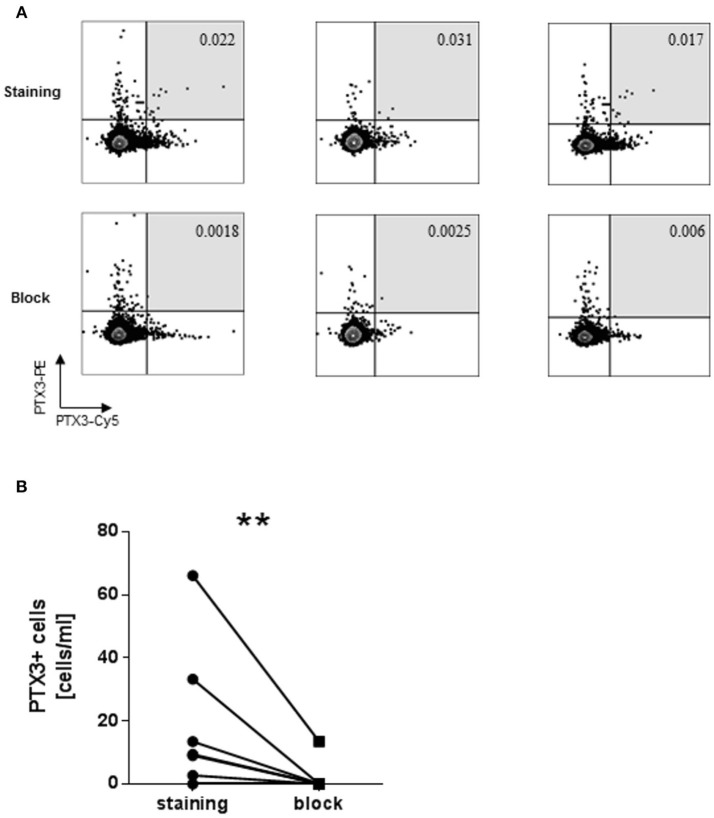
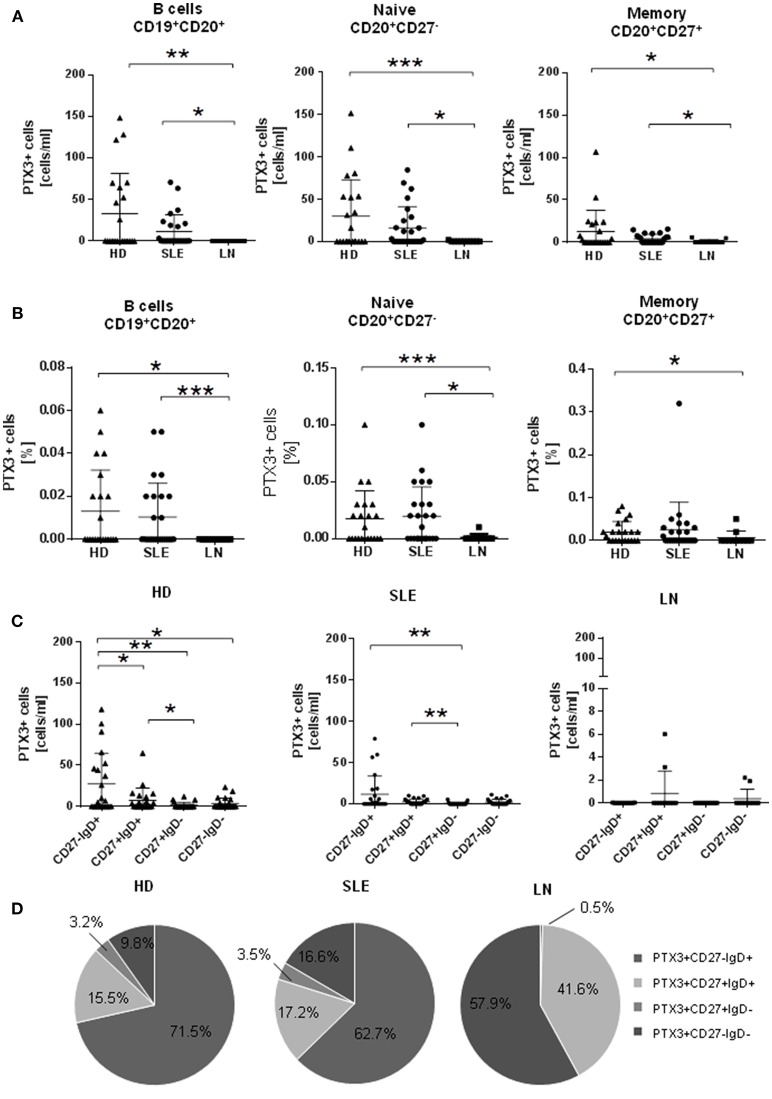
Background: Pentraxin3 (PTX3) is overexpressed in kidneys of patients developing lupus nephritis (LN). Active LN is associated with reduced anti-PTX3 antibodies. However, abnormalities of B cell differentiation against PTX3 have not been characterized in systemic lupus erythematosus (SLE). Objective: Characterization of PTX3-specific (PTX3+) B cells in peripheral blood of SLE patients with or without LN and healthy donors (HD). Patients and Methods: SLE patients without LN, biopsy-proven LN and matched HD were analyzed. Active LN was defined as proteinuria>0.5 g/day or CrCl<60 ml/min/1.73 m2 with active urinary sediment. Peripheral B cells were analyzed for direct PTX3 binding by flow cytometry using PTX3 labeled with cyanine 5 (Cy5) and phycoerythrin (PE). Results: Initially, a flow cytometry based assay to identify PTX3+ B cells was developed by demonstrating simultaneous binding of PTX3-Cy5 and PTX3-PE. Specificity of B cells was validated by blocking experiments using unlabeled PTX3. We could identify circulating PTX3+ B-cells in HD and patients. Notably, LN patients showed a significantly diminished number of PTX3+ B cells (SLE vs. LN p = 0.033; HD vs. LN p = 0.008). This decrease was identified in naïve and memory B cell compartments (naïve: SLE vs. LN p = 0.028; HD vs. LN p = 0.0001; memory: SLE vs. LN p = 0.038, HD vs. LN p = 0.011). Conclusions: Decreased PTX3+ B cells in LN within the naïve and memory compartment suggest their negative selection at early stages of B cell development potentially related to a decreased regulatory function. PTX3+ B cells could candidate for autoantigen-defined regulatory B cells as a striking abnormality of LN patients.
Keywords: PTX3+ B cells; SLE; biomarkers; flow-cytometry; lupus nephritis.
Figures
References
-
- Moroni G, Vercelloni PG, Quaglini S, Gatto M, Gianfreda D, Sacchi L, et al. Changing patterns in clinical-histological presentation and renal outcome over the last five decades in a cohort of 499 patients with lupus nephritis. Ann Rheum Dis. (2018) 77:1318–25. 10.1136/annrheumdis-2017-212732 - DOI - PubMed
Publication types
MeSH terms
Substances
LinkOut - more resources
Full Text Sources
Medical
Molecular Biology Databases
Miscellaneous
