Review
. 2018 Dec;6(24):477.
doi: 10.21037/atm.2018.10.45.

Congenital disorders of glycosylation

Affiliations
Review

Congenital disorders of glycosylation

Irene J Chang et al. Ann Transl Med. 2018 Dec.

Abstract

Congenital disorders of glycosylation are a genetically and clinically heterogeneous group of >130 diseases caused by defects in various steps along glycan modification pathways. The vast majority of these monogenic diseases are autosomal recessive and have multi-systemic manifestations, mainly growth failure, developmental delay, facial dysmorphisms, and variable coagulation and endocrine abnormalities. Carbohydrate deficient transferrin (CDT) and protein-linked glycan analysis with mass spectrometry can diagnose some subtypes of congenital disorders of glycosylation (CDG), while many currently rely on massively parallel genomic sequencing for diagnosis. Early detection is important, as a few of these disorders are treatable. Molecular and biochemical techniques continue to further our understanding of this rapidly expanding group of clinically and genetically diverse disorders.

Keywords: ALG6-CDG; Congenital disorders of glycosylation; MPI-CDG; N-linked glycosylation; O-linked glycosylation; PMM2-CDG; carbohydrate deficient glycoprotein syndrome; carbohydrate deficient transferrin; congenital disorders of glycosylation (CDG); lipid glycosylation defects.


Conflict of interest statement

Conflicts of Interest: The authors have no conflicts of interest to declare.

Figures
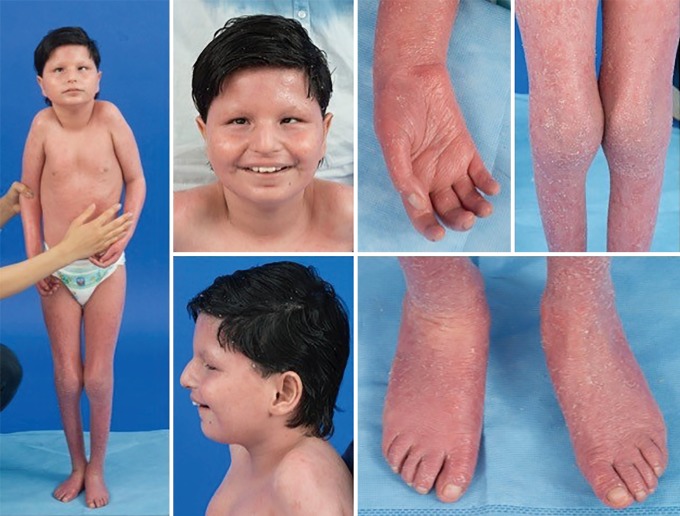
Figure 1
Figure 1
Ichthyosis, hypotonia, and strabismus in a patient with SRD5A3-CDG. Courtesy of NIH, Lynne Wolfe, CRNP, Donna Krasnewich, MD, PhD.
Figure 2
Figure 2
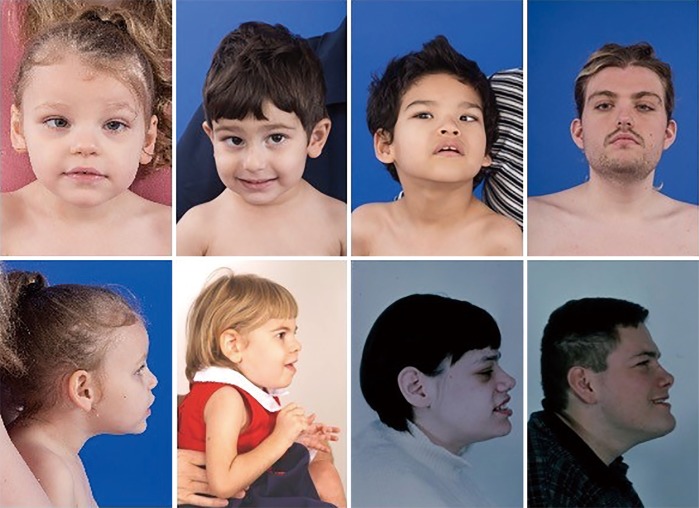
Clinical portraits of patients with PMM2-CDG from childhood to adulthood (left to right). Esotropia, long philtrum, large, hypoplastic or dysplastic ears, hypotonic facies, and downslanting palpebral fissures are seen (top row). Profile view shows the prominent chin, which is more pronounced with age (bottom row). Courtesy of NIH, Lynne Wolfe, CRNP, Donna Krasnewich, MD, PhD.
Figure 3
Figure 3
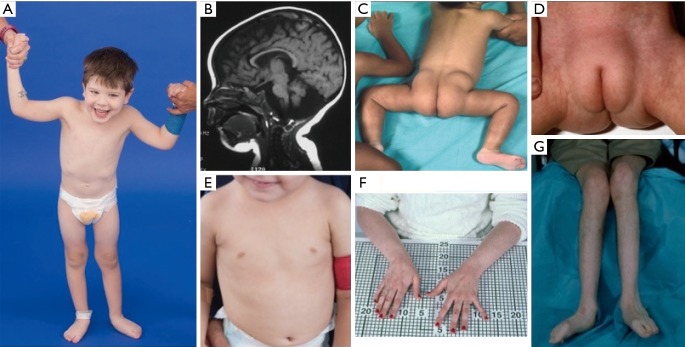
Clinical photographs of patients with PMM2-CDG. (A) Happy demeanor. Truncal hypotonia and kyphoscoliosis are often present; (B) MRI showing cerebellar vermis hypoplasia; (C) posterior suprapelvic fat pads present in approximately 25% of patients with PMM2-CDG; (D) suprapubic fat pad seen in infancy, usually disappears by 5 years of age; (E) inverted nipples; (F,G) long thin fingers and atrophied low extremities secondary to demyelinating peripheral neuropathy. Courtesy of NIH, Lynne Wolfe, CRNP, Donna Krasnewich, MD, PhD. MRI, magnetic resonance imaging.

References

    1. Jaeken J, Matthijs G. Congenital disorders of glycosylation. Annu Rev Genomics Hum Genet 2001;2:129-51. 10.1146/annurev.genom.2.1.129 - DOI - PubMed
    1. Jaeken J, Matthijs G. Congenital disorders of glycosylation: a rapidly expanding disease family. Annu Rev Genomics Hum Genet 2007;8:261-78. 10.1146/annurev.genom.8.080706.092327 - DOI - PubMed
    1. Matthijs G, Schollen E, Bjursell C, et al. Mutations in PMM2 that cause congenital disorders of glycosylation, type Ia (CDG-Ia). Hum Mutat 2000;16:386-94. 10.1002/1098-1004(200011)16:5<386::AID-HUMU2>3.0.CO;2-Y - DOI - PubMed
    1. Haeuptle MA, Hennet T. Congenital disorders of glycosylation: an update on defects affecting the biosynthesis of dolichol-linked oligosaccharides. Hum Mutat 2009;30:1628-41. 10.1002/humu.21126 - DOI - PubMed
    1. Vals MA, Pajusalu S, Kals M, et al. The Prevalence of PMM2-CDG in Estonia Based on Population Carrier Frequencies and Diagnosed Patients. JIMD Rep 2018;39:13-7. 10.1007/8904_2017_41 - DOI - PMC - PubMed