


Puberty and menstruation knowledge among young adolescents in low- and middle-income countries: a scoping review
- PMID: 30740629
- PMCID: PMC6439145
- DOI: 10.1007/s00038-019-01209-0
Puberty and menstruation knowledge among young adolescents in low- and middle-income countries: a scoping review
Abstract
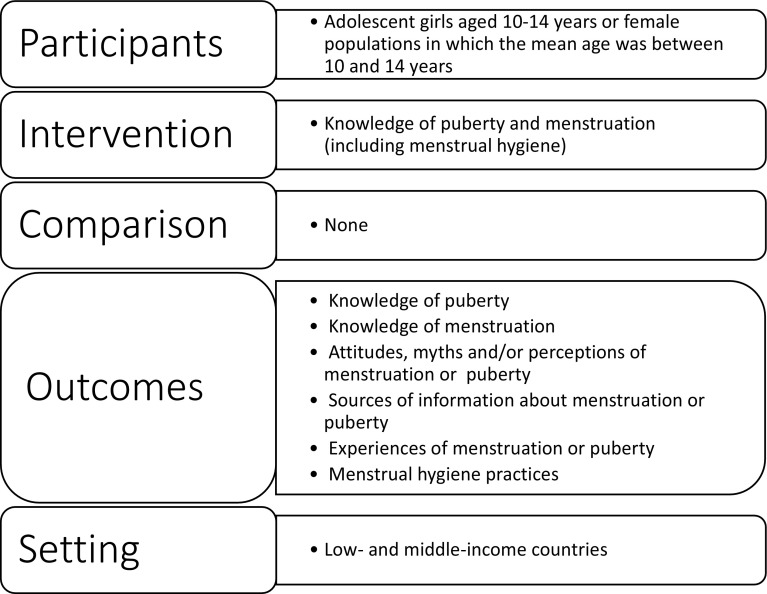
Objectives: This study presents a scoping review of evidence relating to knowledge and experiences of puberty and menstruation among females aged 10-14 years in low- and middle-income countries.
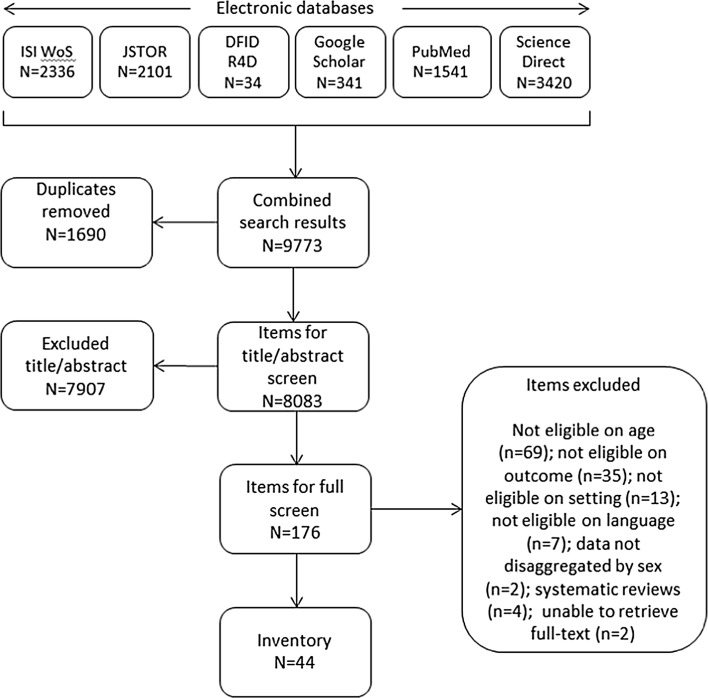
Methods: Forty-four items from 12 countries were identified from a systematic scoping review and screening of 8083 items. Included studies were quality assessed.
Results: A majority (40/44) of studies used school-based samples, and fifteen studies reported on interventions. Girls had inadequate knowledge about menstruation; menarche as a trigger for girls learning about menstruation was common. Adolescents struggled with menstrual hygiene. Negative emotions were associated with menarche and menstrual management. A minority of studies dealt explicitly with puberty. Most girls obtained information about menstruation and/or puberty from their mothers, although mothers were not necessarily girls' preferred source for learning about these topics.
Conclusions: Young adolescent girls are under-prepared for puberty and menstruation. Predominantly school-based studies mean we know little about young out-of-school adolescents. The evidence base lags behind the rise in interest from practitioners as well as the development (and evaluation) of puberty and/or menstruation interventions.
Keywords: Adolescence; Menarche; Menstruation; Puberty; Scoping review.
Conflict of interest statement
The authors declare that they have no conflict of interest.
Figures
References
-
- Adams J, Bartram J, Chartier Y, Sims J. Water, sanitation and hygiene standards for schools in low-cost settings. Geneva: WHO; 2009.
-
- Adhikari P, Kadel B, Dhungel SI, Mandal A. Knowledge and practice regarding menstrual hygiene in rural adolescent girls of Nepal. Kathmandu Univ Med J (KUMJ) 2007;5:382–386. - PubMed
-
- Afsari A, Mirghafourvand M, Valizadeh S, Abbasnezhadeh M, Galshi M, Fatahi S. The effects of educating mothers and girls on the girls’ attitudes toward puberty health: a randomized controlled trial. Int J Adolesc Med Health. 2017 - PubMed
-
- Afsari A, Valizadeh S, Fatahi S, Abbasnezhad M, Assdollahi M. Predictors of knowledge and practice of girl students about puberty health. Int J Pediatr. 2017;5(7):5229–5236.
-
- Alam MU, Luby SP, Halder AK, Islam K, Opel A, Shoab AK, Ghosh PK, Rahman M, Mahon T, Unicomb L. Menstrual hygiene management among Bangladeshi adolescent schoolgirls and risk factors affecting school absence: results from a cross-sectional survey. BMJ Open. 2017;7(7):e015508. doi: 10.1136/bmjopen-2016-015508. - DOI - PMC - PubMed
Publication types
MeSH terms
LinkOut - more resources
Full Text Sources
Medical
