


Sleep disturbances are common in patients with autoimmune encephalitis
- PMID: 30741377
- PMCID: PMC6421090
- DOI: 10.1007/s00415-019-09230-2
Sleep disturbances are common in patients with autoimmune encephalitis
Abstract
Objectives: Autoimmune encephalitis (AE) is increasingly recognized as an important cause of subacute cognitive decline, seizures, and encephalopathy, with an ever-broadening clinical phenotype. Sleep disturbances are reported in AE patients, including rapid eye movement sleep behavior disorder, hypersomnia, fragmented sleep, and sleep-disordered breathing; however, the prevalence of sleep disturbances and contributions to outcomes in AE patients remain unknown. There is a need to determine the prevalence of sleep disturbances in AE patients, and to clarify the relationship between specific autoantibodies and disruptions in sleep.
Methods: Clinical history, results of serum and cerebrospinal fluid testing, electroencephalography, and neuroimaging were reviewed from 26 AE patients diagnosed and managed at our tertiary care hospital. Polysomnography was performed in patients with clinical indications, yielding data from 12 patients.
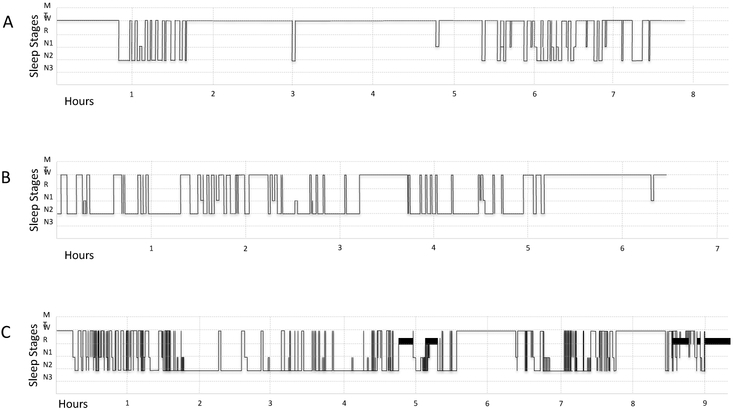
Results: The median age of AE patients was 53 years (range 18-83). Autoantibodies against intracellular antigens (including Ma and Hu autoantibodies) were identified in 6/26 (23%) patients, while autoantibodies against cell-surface neuronal antigens (including NMDAR and LGI1) were identified in 20/26 (77%) patients. New sleep complaints were reported by 19/26 (73%) AE patients, including gasping or snoring (9/19, 47%), dream enactment behavior (6/19, 32%), insomnia (5/19, 29%), hypersomnia (4/19, 21%), other parasomnias (4/19, 21%), and dream-wake confusional states (2/19, 11%). Dream enactment behaviors were particularly common in AE associated with LGI1 autoantibodies, reported in 4/7 (57%) patients. Polysomnography showed reduced total sleep time, stage 3 and rapid eye movement sleep, and prominent sleep fragmentation.
Conclusion: Sleep disturbances are common in AE, warranting active surveillance in affected patients. Improved identification and treatment of sleep disorders may reduce morbidity associated with AE and improve long-term outcomes.
Keywords: Autoimmune encephalitis; LGI1 autoantibodies; NMDAR encephalitis; Polysomnography; REM behavior disorder; Restless legs; Sleep apnea.
Conflict of interest statement
Figures
References
-
- The American Academy of Sleep Medicine (2012) The AASM Manual for the Scoring of Sleep and Associated Events. Version 2.0.
-
- The American Academy of Sleep Medicine (2016) The AASM Manual for the Scoring of Sleep and Associated Events. Version 2.3.
-
- Allen R, Picchietti D, Garcia-Borreguero D, Ondo W, Walters A, Winkelman J, Zucconi M, Ferri R, Trenkwalder C, Lee H, Group IRLSS (2014) Restless legs syndrome/Willis-Ekbom disease diagnostic criteria: updated International Restless Legs Syndrome Study Group (IRLSSG) consensus criteria--history, rationale, description, and significance. Sleep Medicine 15:860–873 - PubMed
-
- Anderson KN, Kelly TP, Griffiths TD (2013) Primary sleep disorders can cause long-term sleep disturbance in patients with autoimmune mediated limbic encephalitis. Clin Neurol Neurosurg 115:1079–1082 - PubMed
MeSH terms
Supplementary concepts
Grants and funding
LinkOut - more resources
Full Text Sources
Medical
