


The Influence of a Multimodal Health Program with Diet, Art, and Biofield Therapy on the Quality of Life of People in Japan
- PMID: 30742776
- PMCID: PMC6437628
- DOI: 10.1089/acm.2018.0291
The Influence of a Multimodal Health Program with Diet, Art, and Biofield Therapy on the Quality of Life of People in Japan
Abstract
Objective: To investigate whether the frequency of the practice of each of diet, art, and biofield therapy influences improvement in quality of life (QOL), and to examine whether the simultaneous practice of all three components increasingly improves QOL in a real-world setting.
Design: Pre-post-test design using convenience sampling methods.
Setting: Home setting.
Subjects: A total of 4681 individuals aged 16 years or older who answered the questionnaire appropriately.
Intervention: Participants agreed to practice the three components daily and self-evaluated the frequency of their weekly practice for three consecutive months. At the beginning and end of the study, they completed the MOA quality-of-life questionnaire (10-item MOA quality-of-life questionnaire [MQL-10]).
Outcome measures: Factors associated with the increase in MQL-10 scores for each component, and the relationship between the simultaneous practice of multiple components and the changes in MQL-10 scores were analyzed.
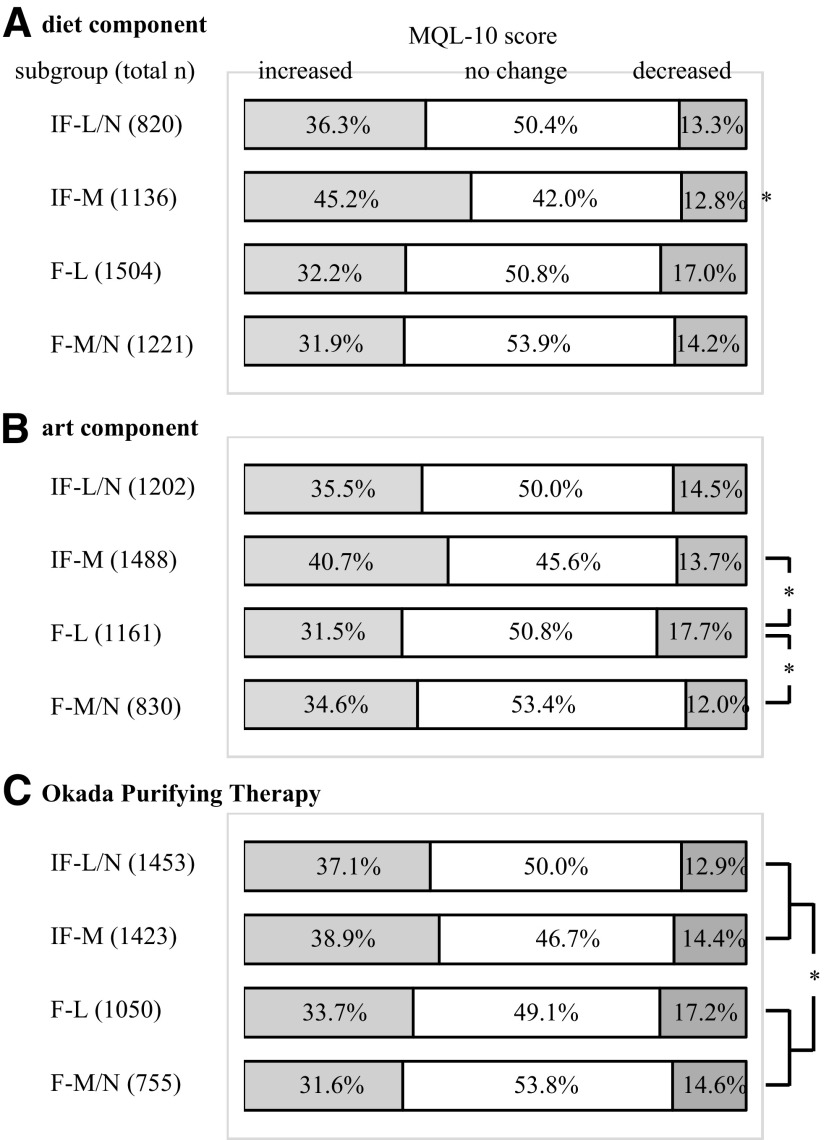
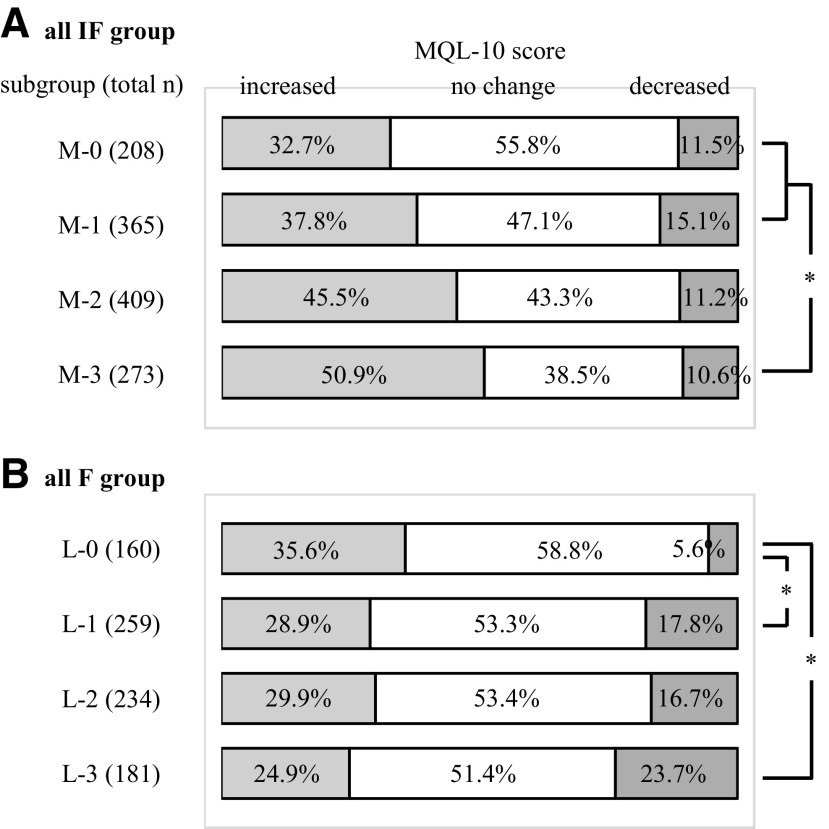
Results: Frequent practice of the diet and/or art components was associated with an increase in the term-end MQL-10 score (p < 0.001); however, receiving biofield therapy frequently was not. Participants' age, gender, and qualification as a practitioner of biofield therapy had no relationship with changes in scores, but the reasons for participation had a significant influence on changes in scores (p < 0.001). Participants who initially did not practice any components frequently but who subsequently increased the number of components and frequency of each practice had a higher likelihood of exhibiting an increase in the term-end score (p < 0.01). Participants who initially practiced all three components frequently but later decreased the number of components practiced frequently had a lower chance of increase and a higher risk of decrease in scores (p < 0.01).
Conclusions: The data suggest that the frequent practice of the diet and art components is associated with improvement in QOL. Simultaneous practice of diet, art, and biofield therapy is more likely to improve QOL. ( ClinicalTrials.gov NCT01927250).
Keywords: art therapy; biofield therapy; diet; health program; integrative approach; quality of life.
Conflict of interest statement
Neither the authors nor the MOA Health Science Foundation received any financial support from the MOA International Corporation. The research team declares no conflict of interest in preparing and publishing this article. No competing financial interests exist.
Figures
References
-
- Eriksson MK, Hagberg L, Lindholm L, et al. Quality of life and cost-effectiveness of a 3-year trial of lifestyle intervention in primary health care. Arch Intern Med 2010;170:1470–1479 - PubMed
-
- Michalsen A, Grossman P, Lehmann N, et al. Psychological and quality-of-life outcomes from a comprehensive stress reduction and lifestyle program in patients with coronary artery disease: Results of a randomized trial. Psychother Psychosom 2005;74:344–352 - PubMed
-
- Wierzchowiecki M, Poprawski K, Nowicka A, et al. A new programme of multidisciplinary care for patients with heart failure in Poznań: One-year follow-up. Kardiol Pol 2006;64:1063–1072 - PubMed
-
- Cezaretto A, Siqueira-Catania A, de Barros CR, et al. Benefits on quality of life concomitant to metabolic improvement in intervention program for prevention of diabetes mellitus. Qual Life Res 2012;21:105–113 - PubMed
MeSH terms
Associated data
LinkOut - more resources
Full Text Sources
Medical
