


The lineage-specific transcription factor CDX2 navigates dynamic chromatin to control distinct stages of intestine development
- PMID: 30745430
- PMCID: PMC6432663
- DOI: 10.1242/dev.172189
The lineage-specific transcription factor CDX2 navigates dynamic chromatin to control distinct stages of intestine development
Abstract
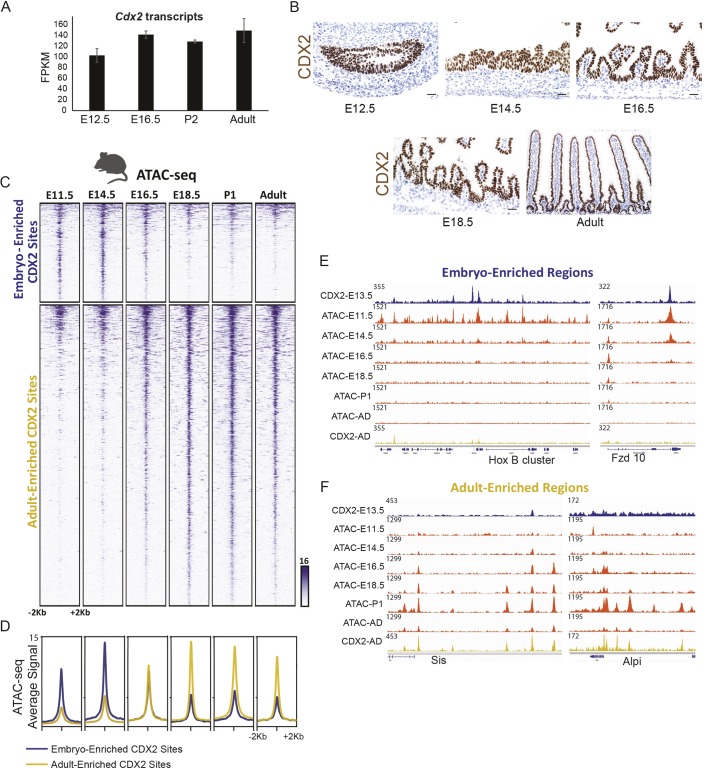
Lineage-restricted transcription factors, such as the intestine-specifying factor CDX2, often have dual requirements across developmental time. Embryonic loss of CDX2 triggers homeotic transformation of intestinal fate, whereas adult-onset loss compromises crucial physiological functions but preserves intestinal identity. It is unclear how such diverse requirements are executed across the developmental continuum. Using primary and engineered human tissues, mouse genetics, and a multi-omics approach, we demonstrate that divergent CDX2 loss-of-function phenotypes in embryonic versus adult intestines correspond to divergent CDX2 chromatin-binding profiles in embryonic versus adult stages. CDX2 binds and activates distinct target genes in developing versus adult mouse and human intestinal cells. We find that temporal shifts in chromatin accessibility correspond to these context-specific CDX2 activities. Thus, CDX2 is not sufficient to activate a mature intestinal program; rather, CDX2 responds to its environment, targeting stage-specific genes to contribute to either intestinal patterning or mature intestinal function. This study provides insights into the mechanisms through which lineage-specific regulatory factors achieve divergent functions over developmental time.
Keywords: Chromatin; Development; Intestine; Lineage-specifying; Patterning; Transcription factor.
© 2019. Published by The Company of Biologists Ltd.
Conflict of interest statement
Competing interestsThe authors declare no competing or financial interests.
Figures
References
-
- Babeu J.-P., Darsigny M., Lussier C. R. and Boudreau F. (2009). Hepatocyte nuclear factor 4alpha contributes to an intestinal epithelial phenotype in vitro and plays a partial role in mouse intestinal epithelium differentiation. Am. J. Physiol. Gastrointest. Liver Physiol. 297, G124-G134. 10.1152/ajpgi.90690.2008 - DOI - PubMed
-
- Banerjee K. K., Saxena M., Kumar N., Chen L., Cavazza A., Toke N. H., O'Neill N. K., Madha S., Jadhav U., Verzi M. P. et al. (2018). Enhancer, transcriptional, and cell fate plasticity precedes intestinal determination during endoderm development. Genes Dev. 32, 1430-1442. 10.1101/gad.318832.118 - DOI - PMC - PubMed
Publication types
MeSH terms
Substances
Grants and funding
LinkOut - more resources
Full Text Sources
Molecular Biology Databases
Research Materials