Review
. 2019 Jul;39(4):1398-1426.
doi: 10.1002/med.21568. Epub 2019 Feb 11.

Current advances of tubulin inhibitors as dual acting small molecules for cancer therapy

Affiliations
Review

Current advances of tubulin inhibitors as dual acting small molecules for cancer therapy

Kinsie E Arnst et al. Med Res Rev. 2019 Jul.

Abstract

Microtubule (MT)-targeting agents are highly successful drugs as chemotherapeutic agents, and this is attributed to their ability to target MT dynamics and interfere with critical cellular functions, including, mitosis, cell signaling, intracellular trafficking, and angiogenesis. Because MT dynamics vary in the different stages of the cell cycle, these drugs tend to be the most effective against mitotic cells. While this class of drug has proven to be effective against many cancer types, significant hurdles still exist and include overcoming aspects such as dose limited toxicities and the development of resistance. Newer generations of developed drugs attack these problems and alternative approaches such as the development of dual tubulin and kinase inhibitors are being investigated. This approach offers the potential to show increased efficacy and lower toxicities. This review covers different categories of MT-targeting agents, recent advances in dual inhibitors, and current challenges for this drug target.

Keywords: chemotherapeutics; dual inhibitors; kinases; multidrug resistance; tubulin.


Figures

FIGURE 1
FIGURE 1
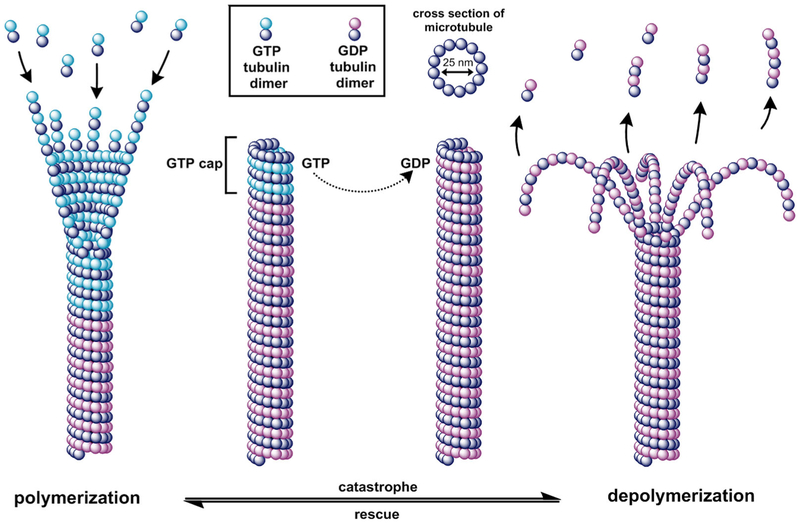
Microtubule dynamic instability. Conformational changes of microtubules during catastrophe and rescue phases. During polymerization, GTP-tubulin is added to the growing end of the microtubule. During depolymerization, GTP is hydrolyzed to GDP and GDP protofilaments peel away from the microtubule and are released. A GTP rich cap stabilizes the microtubule and acts as a primer for tubulin polymerization. GDP, guanosine diphosphate; GTP, guanosine-5′-triphosphate [Color figure can be viewed at wileyonlinelibrary.com]
FIGURE 2
FIGURE 2
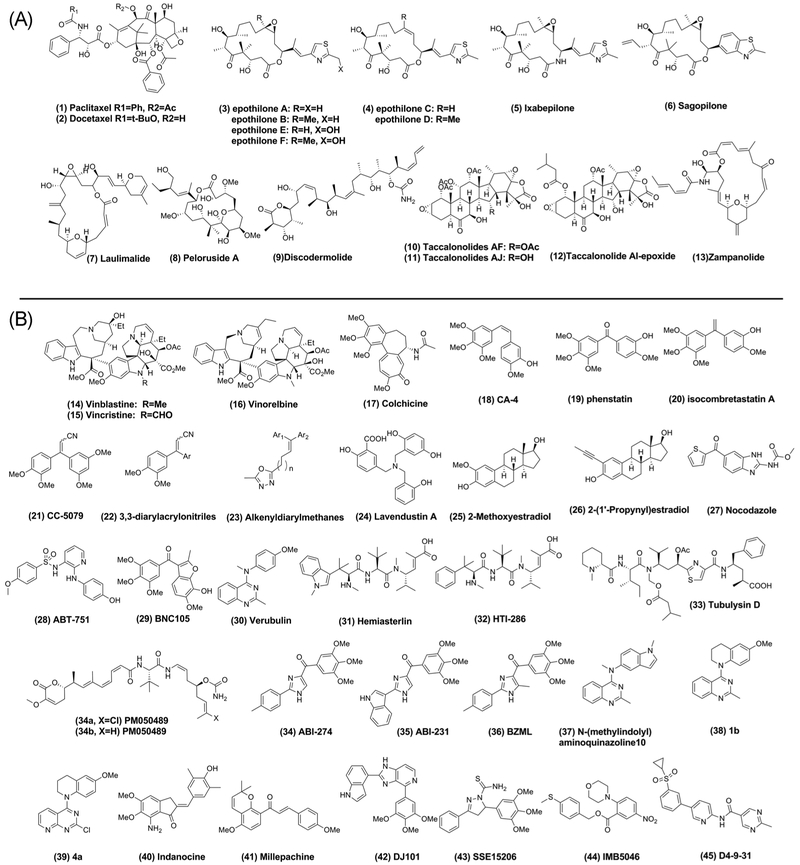
Chemical structures of microtubule targeting agents. A, Microtubule stabilizing compounds. B, Microtubule destabilizing compounds
FIGURE 3
FIGURE 3
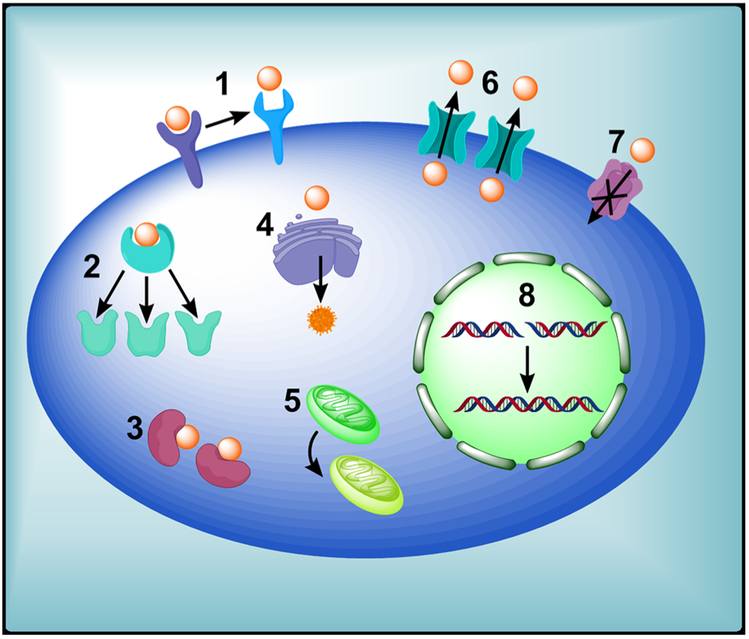
Drug-resistance mechanisms in tumor cells. 1, Loss or change of surface receptor. 2, Mutations in drug targets. 3, Enzymatic deactivation. 4, Altered drug metabolism. 5, Change in apoptotic pathways. 6, Increased drug efflux. 7, Decreased drug influx (solute carriers). 8, Increased DNA repair [Color figure can be viewed at wileyonlinelibrary.com]
FIGURE 4
FIGURE 4
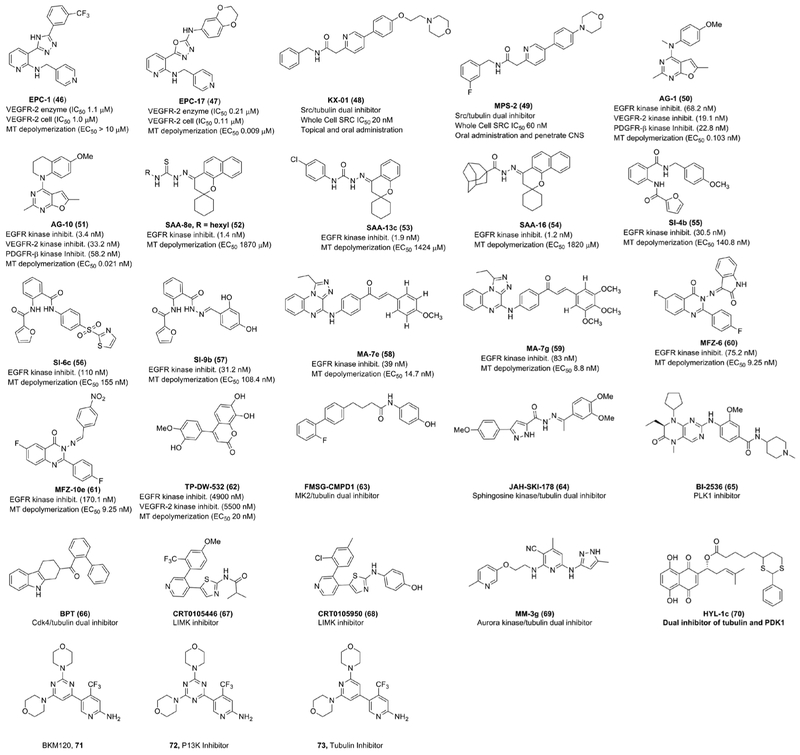
Recently developed kinase inhibitors with secondary tubulin inhibitory activity or ability to render strong drug synergistic effects with microtubule targeting agents [Color figure can be viewed at wileyonlinelibrary.com]

References

    1. Jordan MA, Wilson L. Microtubules as a target for anticancer drugs. Nat Rev Cancer. 2004;4(4):253–265. - PubMed
    1. Sept D Microtubule polymerization: one step at a time. Curr Biol. 2007;17(17):R764–R766. - PubMed
    1. Horio T, Murata T. The role of dynamic instability in microtubule organization. Front Plant Sci. 2014;5:511. - PMC - PubMed
    1. Brouhard GJ, Rice LM. Microtubule dynamics: an interplay of biochemistry and mechanics. Nat Rev Mol Cell Biol. 2018;19(7):451–463. - PMC - PubMed
    1. Brouhard GJ, Rice LM. The contribution of alphabeta-tubulin curvature to microtubule dynamics. J Cell Biol. 2014;207(3):323–334. - PMC - PubMed

Publication types

MeSH terms

LinkOut - more resources