


The Role of Biomarkers in Alzheimer's Disease Drug Development
- PMID: 30747416
- PMCID: PMC6750734
- DOI: 10.1007/978-3-030-05542-4_2
The Role of Biomarkers in Alzheimer's Disease Drug Development
Abstract
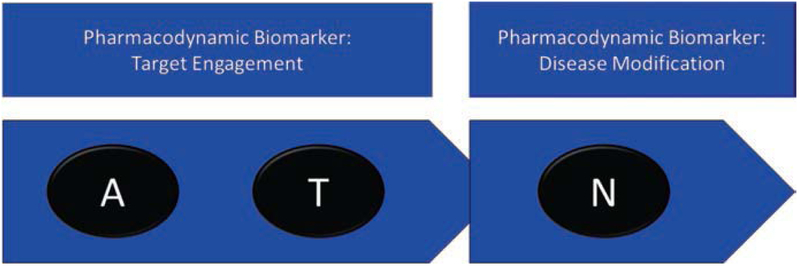
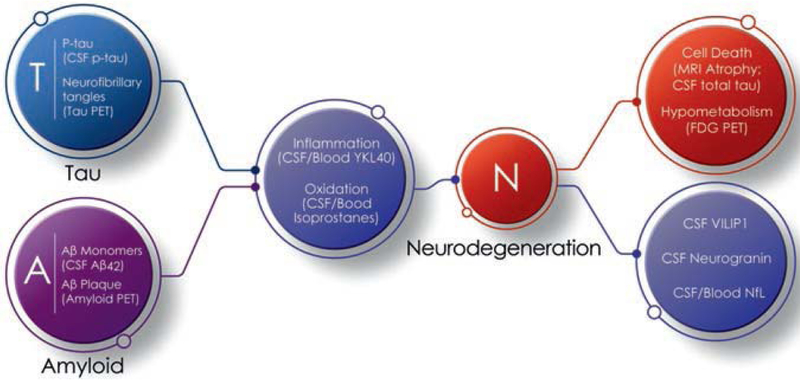
Biomarkers have a key role in Alzheimer's disease (AD) drug development. Biomarkers can assist in diagnosis, demonstrate target engagement, support disease modification, and monitor for safety. The amyloid (A), tau (T), neurodegeneration (N) Research Framework emphasizes brain imaging and CSF measures relevant to disease diagnosis and staging and can be applied to drug development and clinical trials. Demonstration of target engagement in Phase 2 is critical before advancing a treatment candidate to Phase 3. Trials with biomarker outcomes are shorter and smaller than those required to show clinical benefit and are important to understanding the biological impact of an agent and inform go/no-go decisions. Companion diagnostics are required for safe and effective use of treatments and may emerge in AD drug development programs. Complementary biomarkers inform the use of therapies but are not mandatory for use. Biomarkers promise to de-risk AD drug development, attract sponsors to AD research, and accelerate getting new drugs to those with or at risk for AD.
Keywords: Alzheimer’s disease; Amyloid; Biomarker; Clinical trials; Drug development; Neurodegeneration; Positron-emission tomography; Tau.
Figures
References
-
- Scheltens P, Blennow K, Breteler MM, de Strooper B, Frisoni GB, Salloway S et al. (2016) Alzheimer’s disease. Lancet 388:505–517 - PubMed
-
- Alzheimer’s Association (2016) 2016 Alzheimer’s disease facts and figures. Alzheimers Dement 12:459–509 - PubMed
-
- Prince M, Wimo A, Guerchet M, Ali GC, Wu YT, Prina M et al. (2015) Alzheimer’s Disease International World Alzheimer Report 2015: the global impact of dementia, an analysis of prevalence, incidence, cost and trends. London, 2015. https://www.alz.co.uk/research/world-report-2015
Publication types
MeSH terms
Substances
Grants and funding
LinkOut - more resources
Full Text Sources
Other Literature Sources
Medical
