


Implementing Blockchains for Efficient Health Care: Systematic Review
- PMID: 30747714
- PMCID: PMC6390185
- DOI: 10.2196/12439
Implementing Blockchains for Efficient Health Care: Systematic Review
Abstract
Background: The decentralized nature of sensitive health information can bring about situations where timely information is unavailable, worsening health outcomes. Furthermore, as patient involvement in health care increases, there is a growing need for patients to access and control their data. Blockchain is a secure, decentralized online ledger that could be used to manage electronic health records (EHRs) efficiently, therefore with the potential to improve health outcomes by creating a conduit for interoperability.
Objective: This study aimed to perform a systematic review to assess the feasibility of blockchain as a method of managing health care records efficiently.
Methods: Reviewers identified studies via systematic searches of databases including PubMed, MEDLINE, Scopus, EMBASE, ProQuest, and Cochrane Library. Suitability for inclusion of each was assessed independently.
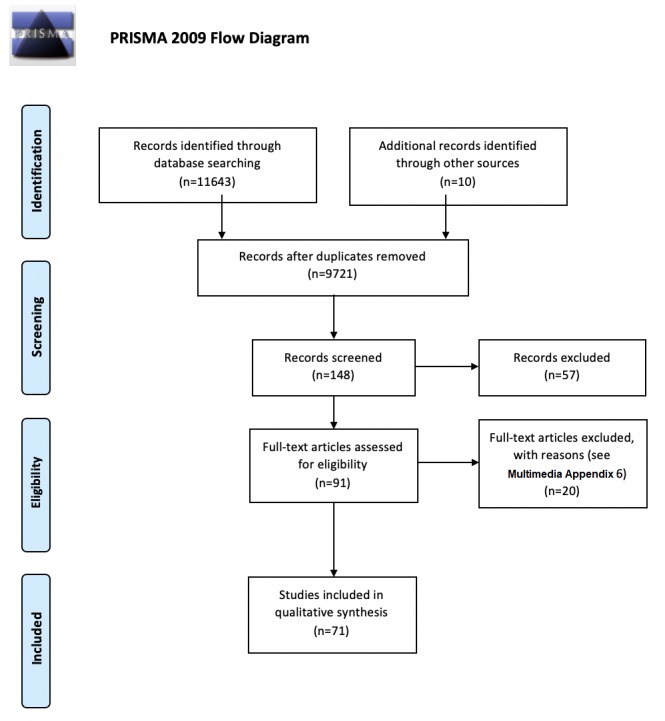
Results: Of the 71 included studies, the majority discuss potential benefits and limitations without evaluation of their effectiveness, although some systems were tested on live data.
Conclusions: Blockchain could create a mechanism to manage access to EHRs stored on the cloud. Using a blockchain can increase interoperability while maintaining privacy and security of data. It contains inherent integrity and conforms to strict legal regulations. Increased interoperability would be beneficial for health outcomes. Although this technology is currently unfamiliar to most, investments into creating a sufficiently user-friendly interface and educating users on how best to take advantage of it would lead to improved health outcomes.
International registered report identifier (irrid): RR2-10.2196/10994.
Keywords: blockchain; computers; efficiency; electronic health records; health; information science; interoperability.
©Anuraag A Vazirani, Odhran O'Donoghue, David Brindley, Edward Meinert. Originally published in the Journal of Medical Internet Research (http://www.jmir.org), 12.02.2019.
Conflict of interest statement
Conflicts of Interest: DB is a stockholder in Translation Ventures Ltd (Charlbury, UK), IP Asset Ventures Ltd, and Biolacuna Ltd (Oxford, UK), companies that, among other services, provide biomanufacturing, regulatory, and financial advice to pharmaceutical clients. DB is also subject to the CFA Institute's codes, standards, and guidelines, so he must stress that this piece is provided for academic interest only and must not be construed in any way as an investment recommendation. Additionally, at time of publication, DB and the organizations with which he is affiliated may or may not have agreed to and/or pending funding commitments from the organizations named herein.
Figures
References
-
- Sample I. The Guardian. [2018-11-14]. 'It's going to create a revolution': how AI is transforming the NHS https://www.theguardian.com/technology/2018/jul/04/its-going-create-revo... .
-
- Ding Y, Sohn JH, Kawczynski MG, Trivedi H, Harnish R, Jenkins NW, Lituiev D, Copeland TP, Aboian MS, Aparici CM, Behr SC, Flavell RR, Huang S, Zalocusky KA, Nardo L, Seo Y, Hawkins RA, Pampaloni MH, Hadley D, Franc BL. A deep learning model to predict a diagnosis of alzheimer disease by using F-FDG PET of the brain. Radiology. 2018 Nov 6;:180958. doi: 10.1148/radiol.2018180958. - DOI - PMC - PubMed
-
- Brock J. Healthcare Innovation. 2017. May 25, [2019-02-02]. Healing revenue cycle management https://www.hcinnovationgroup.com/finance-revenue-cycle/article/13008199... .
-
- CRICO. 2015. Malpractice Risks in Communication Failures https://www.rmf.harvard.edu/Malpractice-Data/Annual-Benchmark-Reports/Ri....
-
- Capita. [2019-02-02]. Capita statement on cervical screening correspondence delay https://www.capita.com/news/news/2018/capita-statement-on-cervical-scree...
Publication types
MeSH terms
LinkOut - more resources
Full Text Sources
Medical
Miscellaneous
