


Acute rhinosinusitis among pediatric patients with allergic rhinitis: A nationwide, population-based cohort study
- PMID: 30753196
- PMCID: PMC6372145
- DOI: 10.1371/journal.pone.0211547
Acute rhinosinusitis among pediatric patients with allergic rhinitis: A nationwide, population-based cohort study
Abstract
Background: While chronic rhinosinusitis is a common complication of allergic rhinitis, the link between acute rhinosinusitis and allergic rhinitis is unclear. The aim of this study was to evaluate the risk of incident acute rhinosinusitis among pediatric patients with allergic rhinitis, using a nationwide, population-based health claims research database.
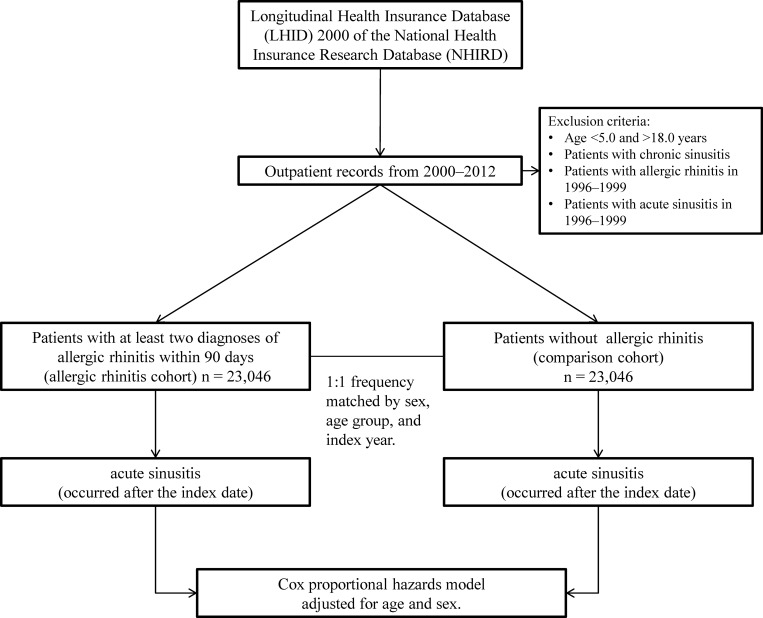
Methods: Newly diagnosed allergic rhinitis patients aged 5-18 years were identified from the health claim records of the Longitudinal Health Insurance Database 2000 of Taiwan's National Health Insurance Research Database. A comparison cohort was assembled by randomly selecting patients from the same database with frequency matching by sex, age group, and index year. All patients were followed until a diagnosis of acute rhinosinusitis or the end of the follow-up period. Cox proportional hazards model was used to assess the association between allergic rhinitis and acute rhinosinusitis.
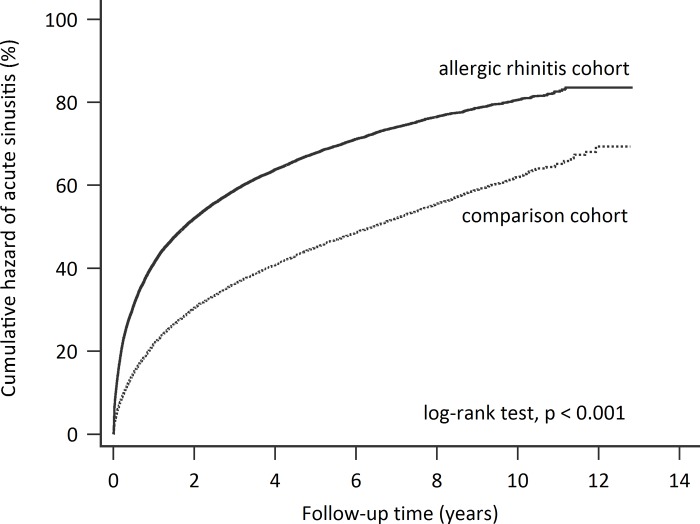
Results: Of the 43,588 pediatric patients included in this study, 55.4% were male and 43.9% were between the ages of 5.0-7.9 years. The risk of acute rhinosinusitis was significantly higher in pediatric patients with allergic rhinitis compared to those without the condition (adjusted hazard ratio = 3.03, 95% confidence interval = 2.89-3.18). Similar hazard ratios were observed between male and female pediatric patients.
Conclusions: This secondary cohort study using a nationwide, population-based health claim data of the Taiwan's NHIRD showed that allergic rhinitis was significantly associated with a higher risk of acute rhinosinusitis among pediatric patients.
Conflict of interest statement
The authors have declared that no competing interests exist.
Figures
References
-
- Kirtsreesakul V, Naclerio RM. Role of allergy in rhinosinusitis. Curr Opin Allergy Clin Immunol. 2004;4(1):17–23. . - PubMed
MeSH terms
LinkOut - more resources
Full Text Sources
Medical
