


Exercise, or exercise and diet for the management of polycystic ovary syndrome: a systematic review and meta-analysis
- PMID: 30755271
- PMCID: PMC6371542
- DOI: 10.1186/s13643-019-0962-3
Exercise, or exercise and diet for the management of polycystic ovary syndrome: a systematic review and meta-analysis
Abstract
Background: Typically, management of PCOS focuses on lifestyle changes (exercise and diet), aiming to alleviate symptoms, and lower the associated risk of type 2 diabetes and cardiovascular disease. Our objective was to analyse evidence on the effectiveness of exercise in the management of PCOS, when compared to (i) usual care, (ii) diet alone, and (iii) exercise combined with diet, and also exercise combined with diet, compared to (i) control or usual care and (ii) diet alone.
Methods: Relevant databases were searched (June 2017) with no time limit for trial inclusion. Eligible trials employed a randomised or quasi-randomised design to measure the chronic effects of exercise, or exercise and diet in women with PCOS.
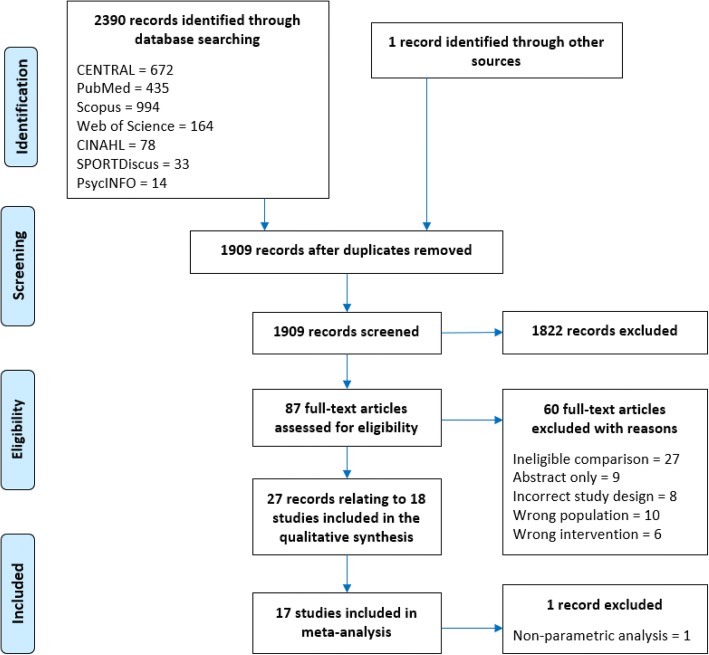
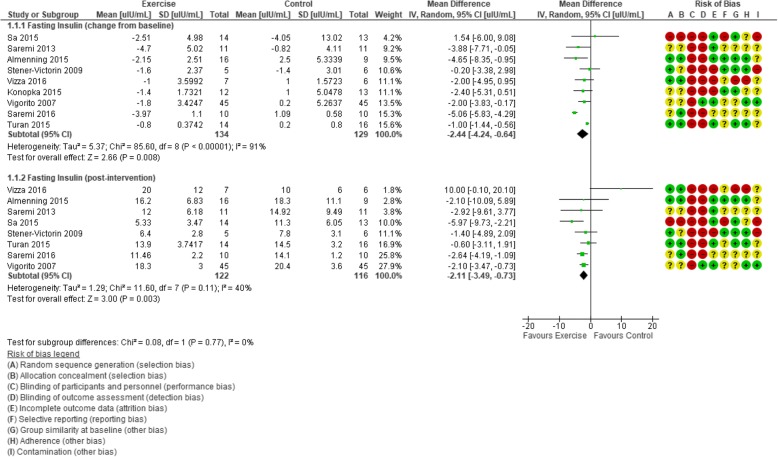
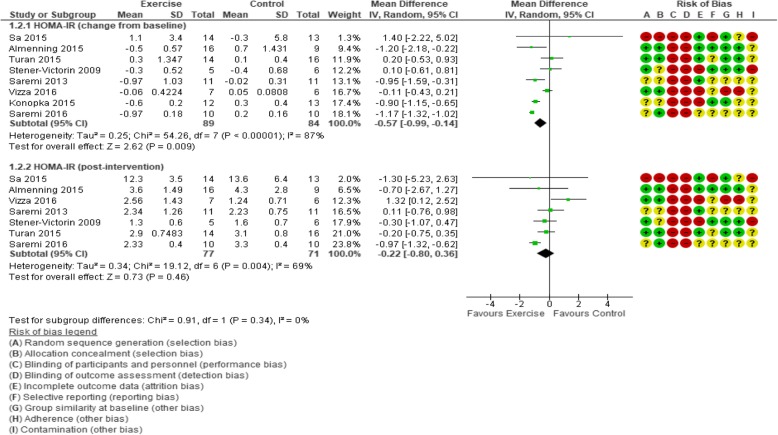
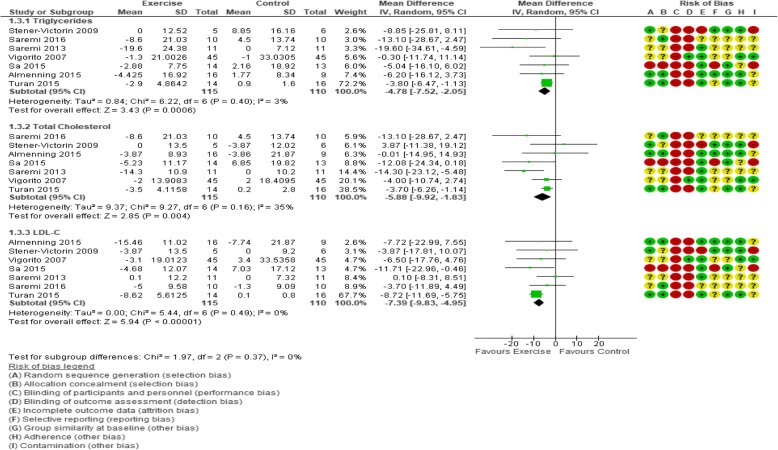
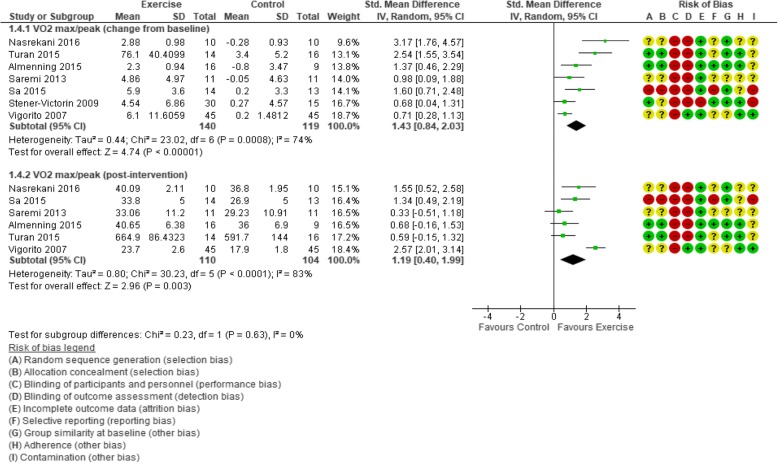
Results: Searches returned 2390 articles; of those, 27 papers from 18 trials were included. Results are presented as mean difference (MD) and 95% confidence intervals (95% CI). Compared with control, exercise had a statistical effect on change from baseline fasting insulin (MD - 2.44 μIU/mL, 95% CIs - 4.24 to - 0.64; very low-quality evidence), HOMA-IR (- 0.57, - 0.99 to - 0.14; very low-quality evidence), total cholesterol (- 5.88 mg/dL, - 9.92 to - 1.83; low-quality evidence), LDL cholesterol (- 7.39 mg/dL, - 9.83 to - 4.95; low-quality evidence), and triglycerides (- 4.78 mg/dL, - 7.52 to - 2.05; low-quality evidence). Exercise also improved VO2 max (3.84 ml/kg/min, 2.87 to 4.81), waist circumference (- 2.62 cm, - 4.13 to - 1.11), and body fat percentage (- 1.39%, - 2.61 to - 0.18) when compared with usual care. No effect was found for change value systolic/diastolic blood pressure, fasting glucose, HDL cholesterol (all low-quality evidence), or waist-to-hip ratio. Many favourable change score findings were supported by post-intervention value analyses: fasting insulin (- 2.11 μIU/mL, - 3.49 to - 0.73), total cholesterol (- 6.66 mg/dL, - 11.14 to - 2.17), LDL cholesterol (- 6.91 mg/dL, - 12.02 to - 1.80), and VO2 max (5.01 ml/kg/min, 3.48 to 6.54). Statistically lower BMI (- 1.02 kg/m2, - 1.81 to - 0.23) and resting heart rate (- 3.26 beats/min - 4.93 to - 1.59) were also revealed in post-intervention analysis. Subgroup analyses revealed the greatest improvements in overweight/obese participants, and more outcomes improved when interventions were supervised, aerobic in nature, or of a shorter duration. Based on limited data, we found no differences for any outcome between the effects of exercise and diet combined, and diet alone. It was not possible to compare exercise vs diet or exercise and diet combined vs diet.
Conclusion: Statistically beneficial effects of exercise were found for a range of metabolic, anthropometric, and cardiorespiratory fitness-related outcomes. However, caution should be adopted when interpreting these findings since many outcomes present modest effects and wide CIs, and statistical effects in many analyses are sensitive to the addition/removal of individual trials. Future work should focus on rigorously designed, well-reported trials that make comparisons involving both exercise and diet.
Systematic review registration: This systematic review was prospectively registered on the Prospero International Prospective Register of Systematic Reviews ( CRD42017062576 ).
Keywords: Cardiorespiratory fitness; Cardiovascular risk; Diet; Exercise; Insulin resistance; Physical activity; Polycystic ovary syndrome.
Conflict of interest statement
Authors’ information
CK is a PhD research student; IML is a senior lecturer in sport and exercise physiology; IA is a medical researcher; DRB is a senior lecturer in physical activity, health and exercise science; HR is a professor in the study of diabetes, endocrinology and metabolism; IK is a clinical lecturer in metabolic medicine and nutrition; JEB is a senior lecturer in biology and biomedical science.
Ethics approval and consent to participate
Not Applicable.
Consent for publication
Not Applicable.
Competing interests
The authors declare that they have no competing interests.
Publisher’s Note
Springer Nature remains neutral with regard to jurisdictional claims in published maps and institutional affiliations.
Figures
References
-
- Ma YM, Li R, Qiao J, Zhang XW, Wang SY, Zhang QF, Li L, Tu BB, Zhang X. Characteristics of abnormal menstrual cycle and polycystic ovary syndrome in community and hospital populations. Chinese Med J-Peking. 2010;123(16):2185–2189. - PubMed
-
- Costello MF, Shrestha B, Eden J, Johnson N, Moran LJ. Insulin-sensitising drugs versus the combined oral contraceptive pill for hirsutism, acne and risk of diabetes, cardiovascular disease, and endometrial cancer in polycystic ovary syndrome. Cochrane Database Syst Rev. 2007;1(CD005552). - PubMed
Publication types
MeSH terms
LinkOut - more resources
Full Text Sources
Medical
