. 2019 Feb 13;19(1):38.
doi: 10.1186/s12866-019-1409-7.

Mangrove derived Streptomyces sp. MUM265 as a potential source of antioxidant and anticolon-cancer agents

Affiliations

Mangrove derived Streptomyces sp. MUM265 as a potential source of antioxidant and anticolon-cancer agents

Loh Teng-Hern Tan et al. BMC Microbiol. .

Abstract

Background: Colon cancer is the third most commonly diagnosed cancer worldwide, with a commensurately high mortality rate. The search for novel antioxidants and specific anticancer agents which may inhibit, delay or reverse the development of colon cancer is thus an area of great interest; Streptomyces bacteria have been demonstrated to be a source of such agents.

Results: The extract from Streptomyces sp. MUM265- a strain which was isolated and identified from Kuala Selangor mangrove forest, Selangor, Malaysia- was analyzed and found to exhibit antioxidant properties as demonstrated via metal-chelating ability as well as superoxide anion, DPPH and ABTS radical scavenging activities. This study also showed that MUM265 extract demonstrated cytotoxicity against colon cancer cells as evidenced by the reduced cell viability of Caco-2 cell line. Treatment with MUM265 extract induced depolarization of mitochondrial membrane potential and accumulation of subG1 cells in cell cycle analysis, suggesting that MUM265 exerted apoptosis-inducing effects on Caco-2 cells.

Conclusion: These findings indicate that mangrove derived Streptomyces sp. MUM265 represents a valuable bioresource of bioactive compounds for the future development of chemopreventive agents, with particular promise suggested for treatment of colon cancer.

Keywords: Antioxidant; Colon cancer; Cytotoxic; Mangroves; Streptomyces.


Conflict of interest statement

Ethics approval and consent to participate

Not applicable.

Consent for publication

Not applicable.

Competing interests

The authors declare that they have no competing interests.

Publisher’s Note

Springer Nature remains neutral with regard to jurisdictional claims in published maps and institutional affiliations.

Figures
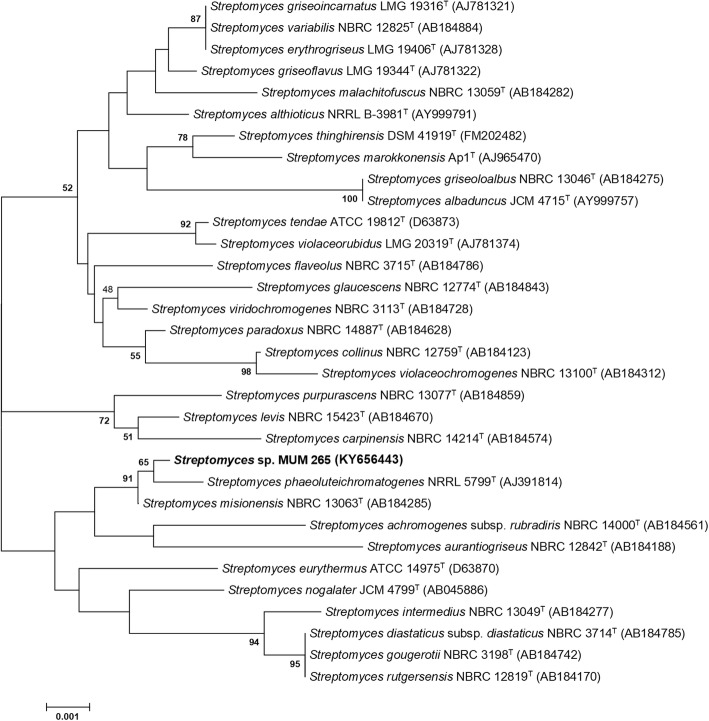
Fig. 1
Fig. 1
Neighbour-joining phylogenetic tree based on 16S rRNA sequences of strain MUM265 and other related taxa. Bootstrap values (> 50%) based on 1000 re-sampled datasets are shown at branch nodes. Bar, 0.001 substitutions per site
Fig. 2
Fig. 2
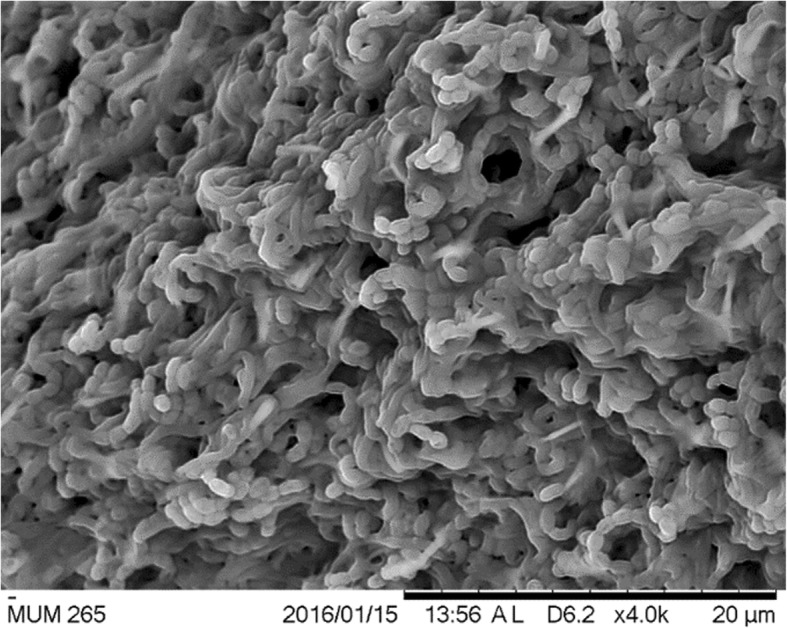
The scanning electron micrographs of Streptomyces sp. MUM265. It appears as filaments and branch to form a network of filaments called mycelium. Spiral shape spore chains are also clearly visible in SEM micrographs
Fig. 3
Fig. 3
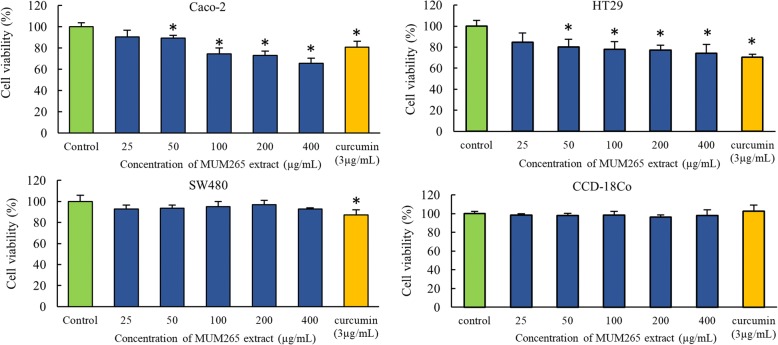
Cytotoxicity of Streptomyces sp. MUM265 extract against human colon cancer cell lines. The cytotoxicity of Streptomyces sp. MUM265 extract against the colon cancer cell lines and non-cancerous CCD-18Co cell measured using MTT assay. Each bar represents the mean of the cell viability of the cell lines after exposure to extract at respective concentrations tested for 72 h (n = 5). The vertical lines associated with the bars represent the SD of the mean. Symbol (*) indicates P < 0.05 significant difference compared to control (0.5% DMSO). Curcumin (3 μg/mL) was used as the positive control
Fig. 4
Fig. 4
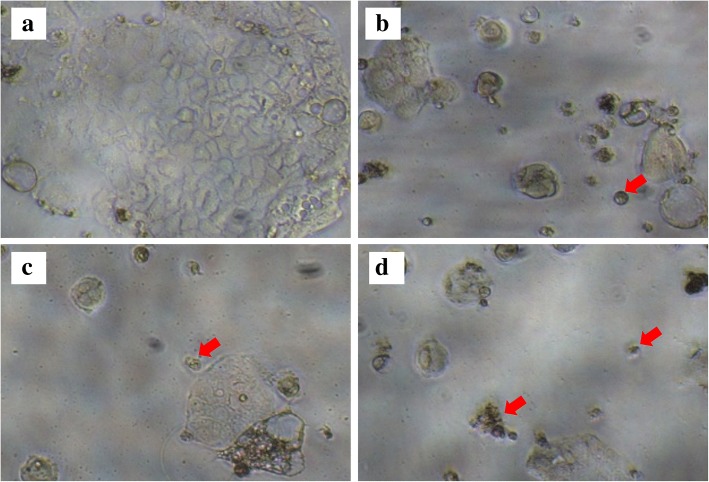
Morphology of Caco-2 cells after treatment with and without Streptomyces sp. MUM265 extract. Comparison of the morphological features of Caco-2 after the 72 h incubation without Streptomyces sp. MUM265 extract (0.5% DMSO) (a) and with the extract (b, c and d) observed under an inverted microscope with objective lens × 40. Arrow indicates the abnormal morphological features resulted from the cytotoxic effect of MUM265 extract (b, c and d)
Fig. 5
Fig. 5
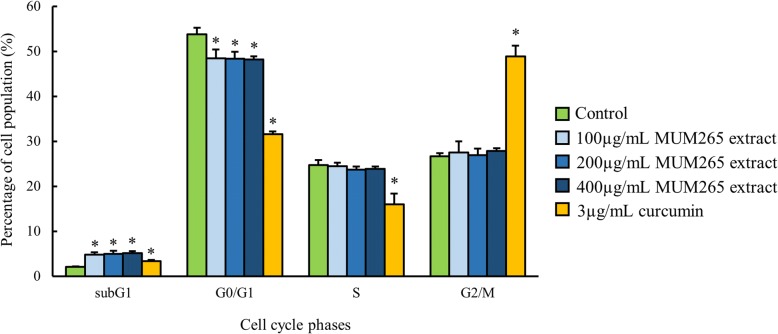
Effect of MUM265 extract on DNA distribution pattern of Caco-2 cells. PI fluorescent intensity was analyzed using flow cytometry. DNA distribution in different phases of cells followed by 24 h exposure to extract concentrations ranging from 100 μg/mL to 400 μg/mL. The data represents mean ± S.D. of quadruplicates (n = 4). Symbol (*) indicates p < 0.05 significant difference compared to control (0.5% DMSO). Curcumin (3 μg/mL) was used as positive control
Fig. 6
Fig. 6
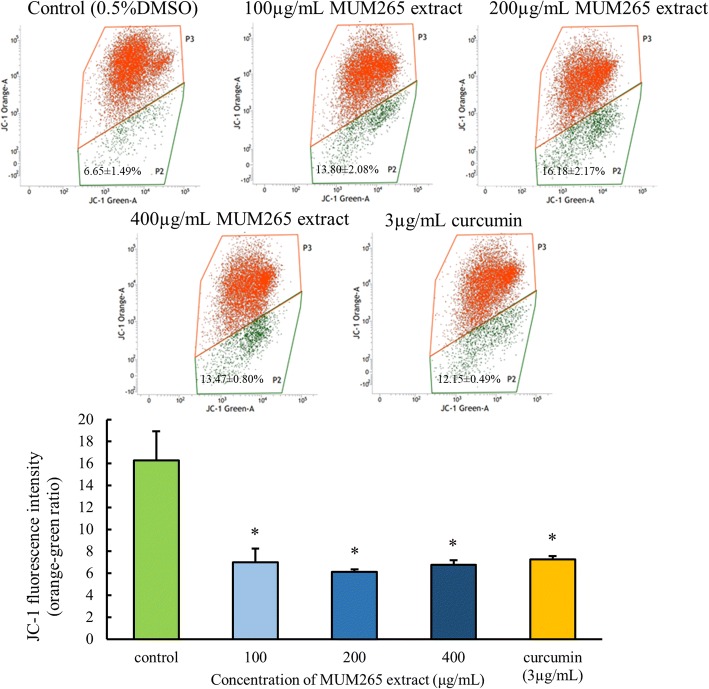
Flow cytometric analysis of MUM265 extract on MMP in Caco-2 cells. a) Representative dot plots of JC-1 aggregates (orange fluorescence) versus JC-1 monomers (green fluorescence). b) The bar chart shows that MUM265 extract has induced the reduction of orange/green fluorescence corresponding to the loss of MMP. The data expressed as mean ± S.D. of quadruplicates (n = 4). Symbol (*) indicates p < 0.05 significant difference compared to control (0.5% DMSO). Curcumin (3 μg/mL) was used as positive control
Fig. 7
Fig. 7
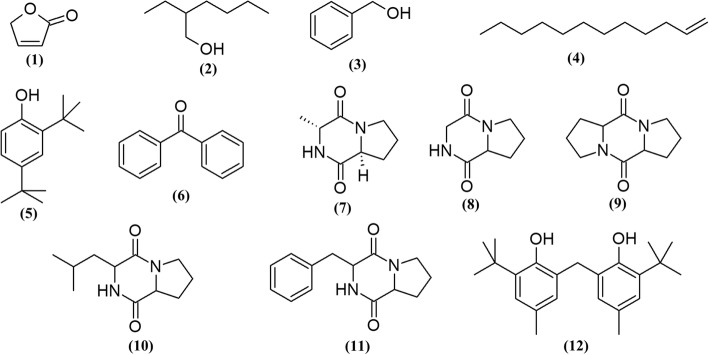
Chemical structures of constituents detected in MUM265 extract

References

    1. Ferlay J, Soerjomataram I, Dikshit R, Eser S, Mathers C, Rebelo M, Parkin DM, Forman D, Bray F. Cancer incidence and mortality worldwide: sources, methods and major patterns in GLOBOCAN 2012. Int J Cancer. 2015;136(5):E359–E386. doi: 10.1002/ijc.29210. - DOI - PubMed
    1. Pourhoseingholi MA. Epidemiology and burden of colorectal cancer in Asia-Pacific region: what shall we do now? Transl Gastrointest Cancer. 2014;3(4):169–173.
    1. Key TJ, Allen NE, Spencer EA, Travis RC. The effect of diet on risk of cancer. Lancet. 2002;360(9336):861–868. doi: 10.1016/S0140-6736(02)09958-0. - DOI - PubMed
    1. Haggar FA, Boushey RP. Colorectal cancer epidemiology: incidence, mortality, survival, and risk factors. Clin Colon Rectal Surg. 2009;22(4):191. doi: 10.1055/s-0029-1242458. - DOI - PMC - PubMed
    1. Watson AJ, Collins PD. Colon cancer: a civilization disorder. Dig Dis. 2011;29(2):222–228. doi: 10.1159/000323926. - DOI - PubMed

Publication types