


The cerebral mechanism of acupuncture for treating knee osteoarthritis: study protocol for a randomized controlled trial
- PMID: 30760314
- PMCID: PMC6375127
- DOI: 10.1186/s13063-019-3233-7
The cerebral mechanism of acupuncture for treating knee osteoarthritis: study protocol for a randomized controlled trial
Abstract
Background: Acupuncture is safe and effective for reducing the symptoms of knee osteoarthritis (KOA), but the underlying mechanisms of acupuncture for treating KOA are not fully understood.
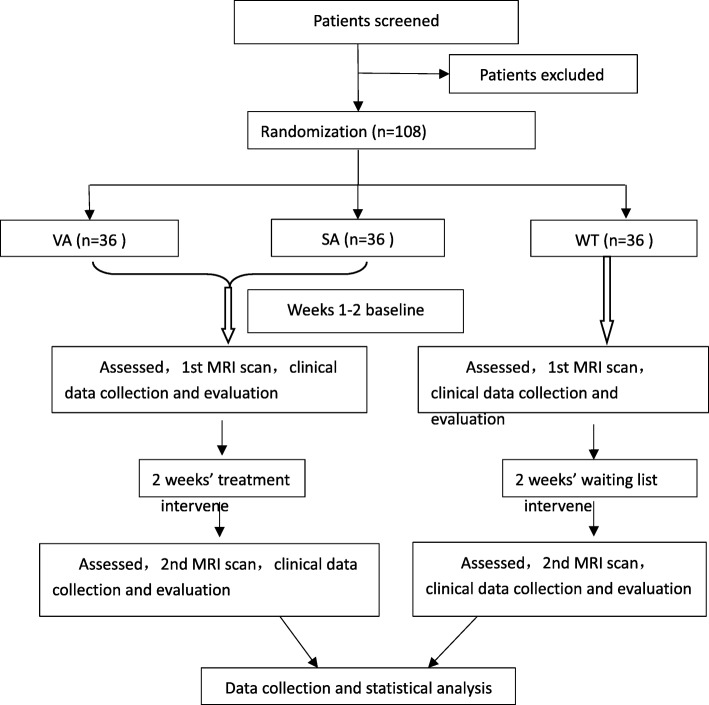
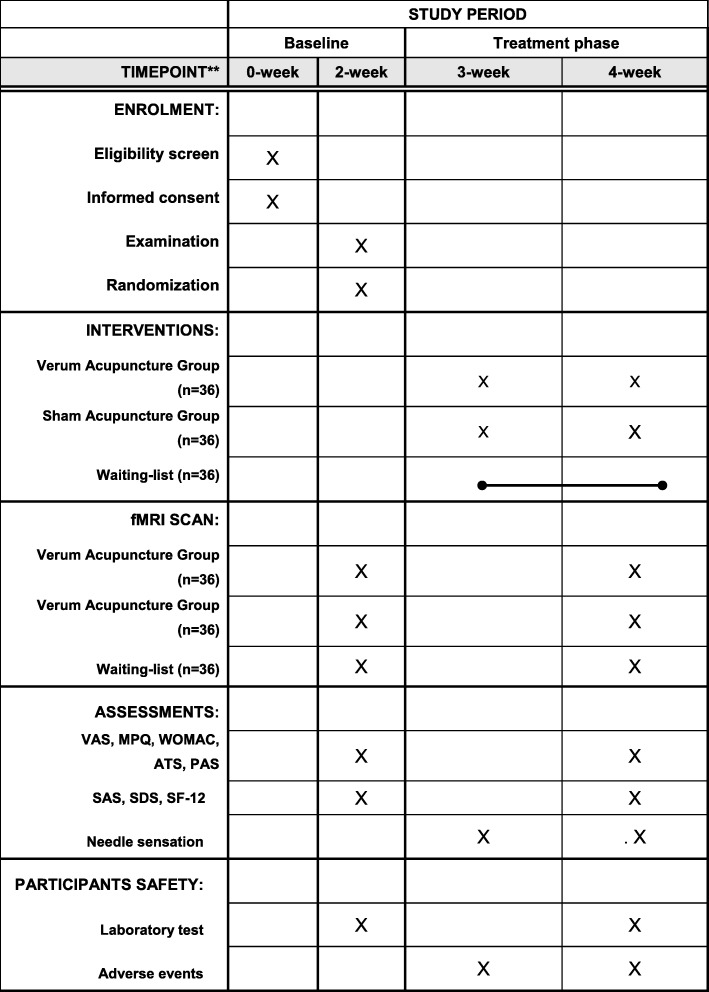
Methods/design: In total, 108 participants diagnosed with KOA will be recruited. They will be blinded to group assignment and randomized to either verum acupuncture, sham acupuncture or waiting-list groups with 36 patients in each group. Each patient in the acupuncture group will receive five treatments per week for 2 weeks. This study will focus on detecting the cerebral functional connectivity changes elicited by acupuncture treatment. The Visual Analog Scale and the short form of the McGill Pain Questionnaire, the Western Ontario and McMaster Universities Osteoarthritis Index, the Attention Test Scale, the Pain Assessment of Sphygmomanometer and the 12-Item Short Form Health Survey will be used to evaluate the symptoms and quality of life improvement at the baseline and the end of treatment. The Self-rating Anxiety Scale and the Self-rating Depression Scale will be used at the baseline and the end of treatment to investigate the influence of emotional state on brain activity and clinical variable. To ensure the consistency of acupuncture manipulation, the deqi scale will be performed after each acupuncture treatment. During the procedure of outcome evaluation and data analysis, the evaluators and statisticians will be blinded to the group allocation. The repeated measures analysis of variance (3 groups × 2 time points ANOVA) will be employed to analyze numerical variables of the clinical and neuroimaging data generated in the study, then the t test will be used in the post-hoc analysis.
Discussion: The results of this randomized, sham- and waiting-list-controlled functional magnetic resonance imaging (fMRI) study will help to investigate the influence of verum acupuncture treatment on the brain activities of patients with KOA, which might provide evidence for the clinical application of verum acupuncture for KOA management.
Trial registration: Chinese Clinical Trial Registry, ID: ChiCT-IOR-17012364 . Registered on 14 August 2017.
Keywords: Acupuncture; Central mechanism; Functional magnetic resonance imaging; Knee pain.
Conflict of interest statement
Ethics approval and consent to participate
This study will be performed according to the guidance and principles of the Declaration of Helsinki. The protocol has been approved by the supervision of the Sichuan Regional Ethics Review Committee on traditional Chinese medicine (ethical approval number 2016KL-017) and has been registered in the Chinese Clinical Trial Registry (ID: ChiCT-IOR-17012364). Only patients who have signed the informed consent form will be included.
Consent for publication
Not applicable.
Competing interests
The authors declare that they have no competing interests.
Publisher’s Note
Springer Nature remains neutral with regard to jurisdictional claims in published maps and institutional affiliations.
Figures
References
Publication types
MeSH terms
Grants and funding
- No.81774400/National Natural Science Foundation of China
- No. 81590951/National Natural Science Foundation of China
- No.81603708/National Natural Science Foundation of China
- No.17ZA0157/Department of Science and Technology of Sichuan Province
- No. ZRQN1662/Chengdu University of Traditional Chinese Medicine
LinkOut - more resources
Full Text Sources
Medical
