


Heart Rate Acquisition and Threshold-Based Training Increases Oxygen Uptake at Metabolic Threshold in Triathletes: A Pilot Study
- PMID: 30761193
- PMCID: PMC6355121
- DOI: 10.70252/HNHZ4958
Heart Rate Acquisition and Threshold-Based Training Increases Oxygen Uptake at Metabolic Threshold in Triathletes: A Pilot Study
Abstract
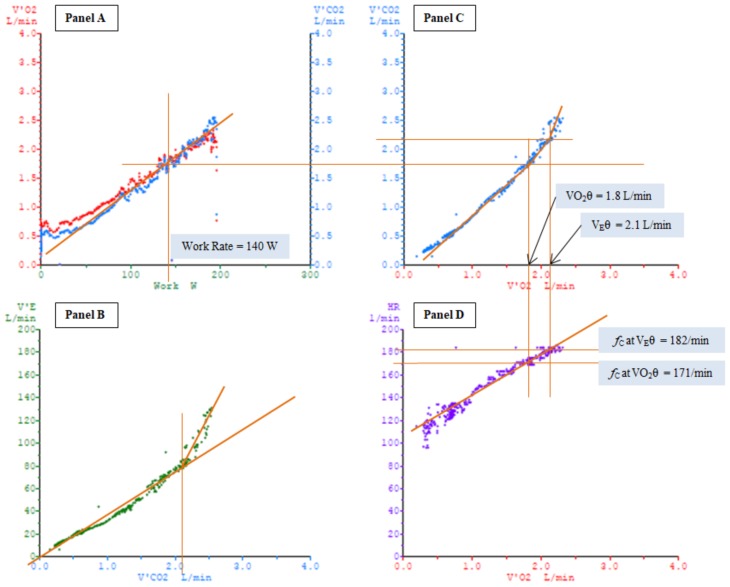
Exercise intensity is a critical component of the exercise prescription model. However, current research employing various non-specific exercise intensity protocols have reported wide variability in maximum oxygen uptake (VO2max) improvement after training, suggesting a present lack of consensus regarding optimal heart rate (fC) training zones for maximal athletic performance. This study examined the relationship between percentage of time (%time) spent training between the metabolic (VO2θ) and ventilatory thresholds (VEθ), and the resultant change in markers of aerobic performance. Thirteen (6 males) collegiate club-level triathletes were recruited for eight weeks of remote fC monitoring during all running and cycling sessions. Participants donned a forearm-worn optical fC sensor paired to a smartphone that collected and stored fCs. Subjects were categorized into Low and High groups based on %time spent training between the VO2θ and VEθ. Significant increases were observed in relative VO2max (P = 0.007, g = 0.48), VO2θ (P = 0.018, g = 0.35), and VEθ (P = 0.030, g = 0.29) from baseline after eight weeks for both groups. A 95% bootstrapped confidence interval that did not include zero (-0.38, -0.03; g = 1.26) revealed a large and significantly greater change in VO2θ in the High group (0.37 ± 0.15 L/min) versus the Low group (0.17 ± 0.14 L/min). No significant differences were observed in other variables between groups. Increasing triathletes' %time spent exercising between VO2θ and VEθ may optimize increases in VO2θ after eight weeks of training.
Keywords: Maximal oxygen uptake; athletic performance; exercise intensity; training zones; ventilatory threshold.
Figures
References
-
- Borg GA. Psychophysical bases of perceived exertion. Med Sci Sports Exerc. 1982;14(5):377–381. - PubMed
-
- Dolezal BA, Lau MJ, Abrazado M, Storer TW, Cooper CB. Validity of two commercial grade bioelectrical impedance analyzers for measurement of body fat percentage. J Exerc Physiol Online. 2013;16(4):74–83.
-
- Esteve-Lanao J, Foster C, Seiler S, Lucia A. Impact of training intensity distribution on performance in endurance athletes. J Strength Cond Res. 2007;21(3):943–949. - PubMed
LinkOut - more resources
Full Text Sources